Wind Turbine Bearing Lubrication Solutions Guide
Introduction
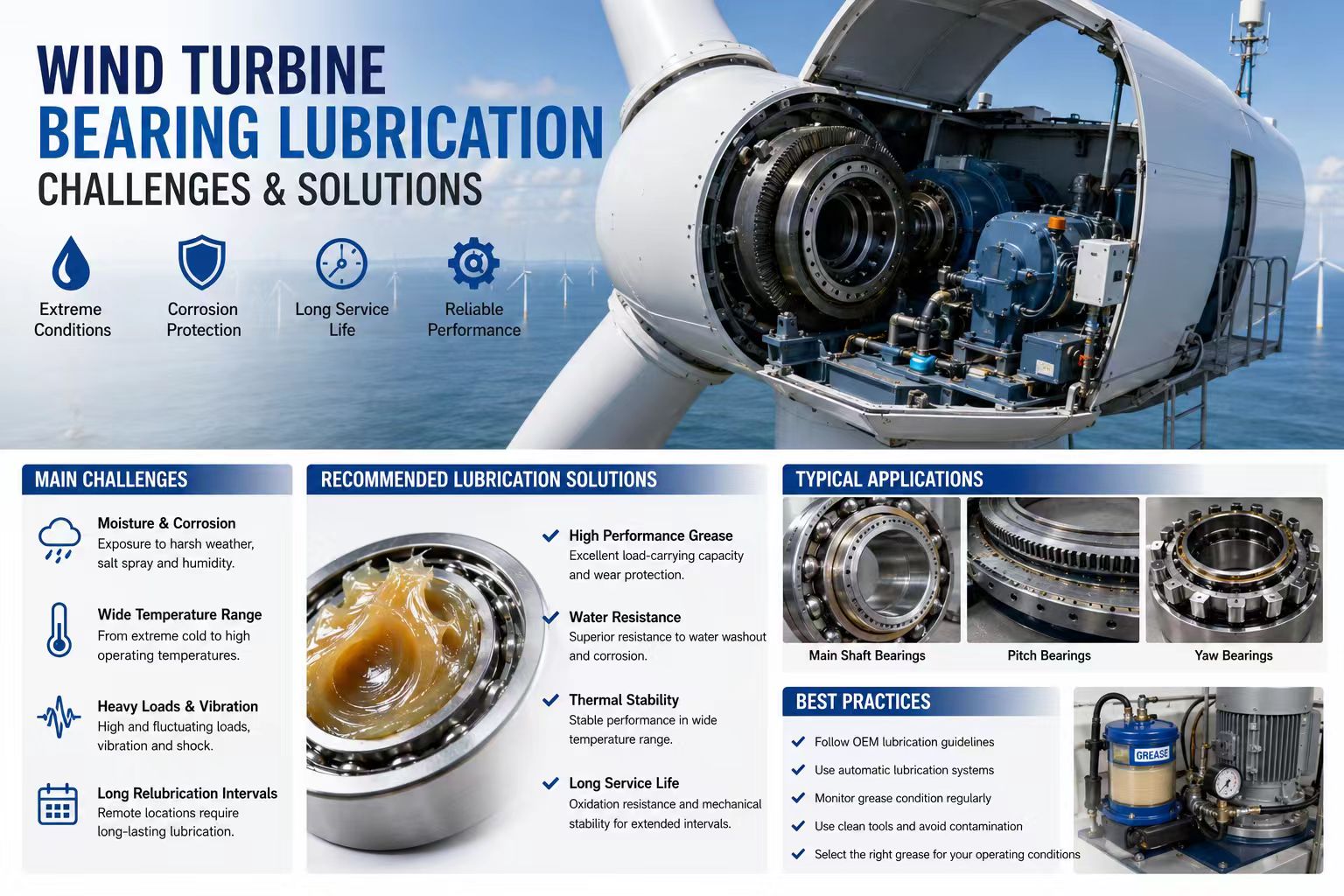
Effective wind turbine bearing lubrication is essential for ensuring long-term reliability, reducing maintenance costs, and maximizing power generation efficiency.
Wind turbines operate under highly variable environmental conditions, making proper wind turbine grease selection critical for bearing protection and operational stability.
This article explains the major lubrication challenges faced in wind energy systems and provides practical bearing lubrication solutions for industrial applications.
Why Wind Turbine Bearings Face Severe Operating Conditions
Wind turbine bearings are exposed to:
- Heavy and fluctuating loads
- Low rotational speeds
- Constant vibration
- Moisture and salt contamination
- Wide temperature variations
These demanding conditions make industrial grease wind turbine applications far more challenging than standard industrial machinery.
Main Lubrication Challenges in Wind Turbines
1. False Brinelling and Fretting Corrosion
Due to vibration and small oscillating movements, bearings may develop:
- Surface wear
- Microscopic damage
- Premature fatigue failure
This is especially common during transportation and low-speed operation.
2. Water and Moisture Contamination
Wind turbines are often installed in:
- Offshore environments
- Humid climates
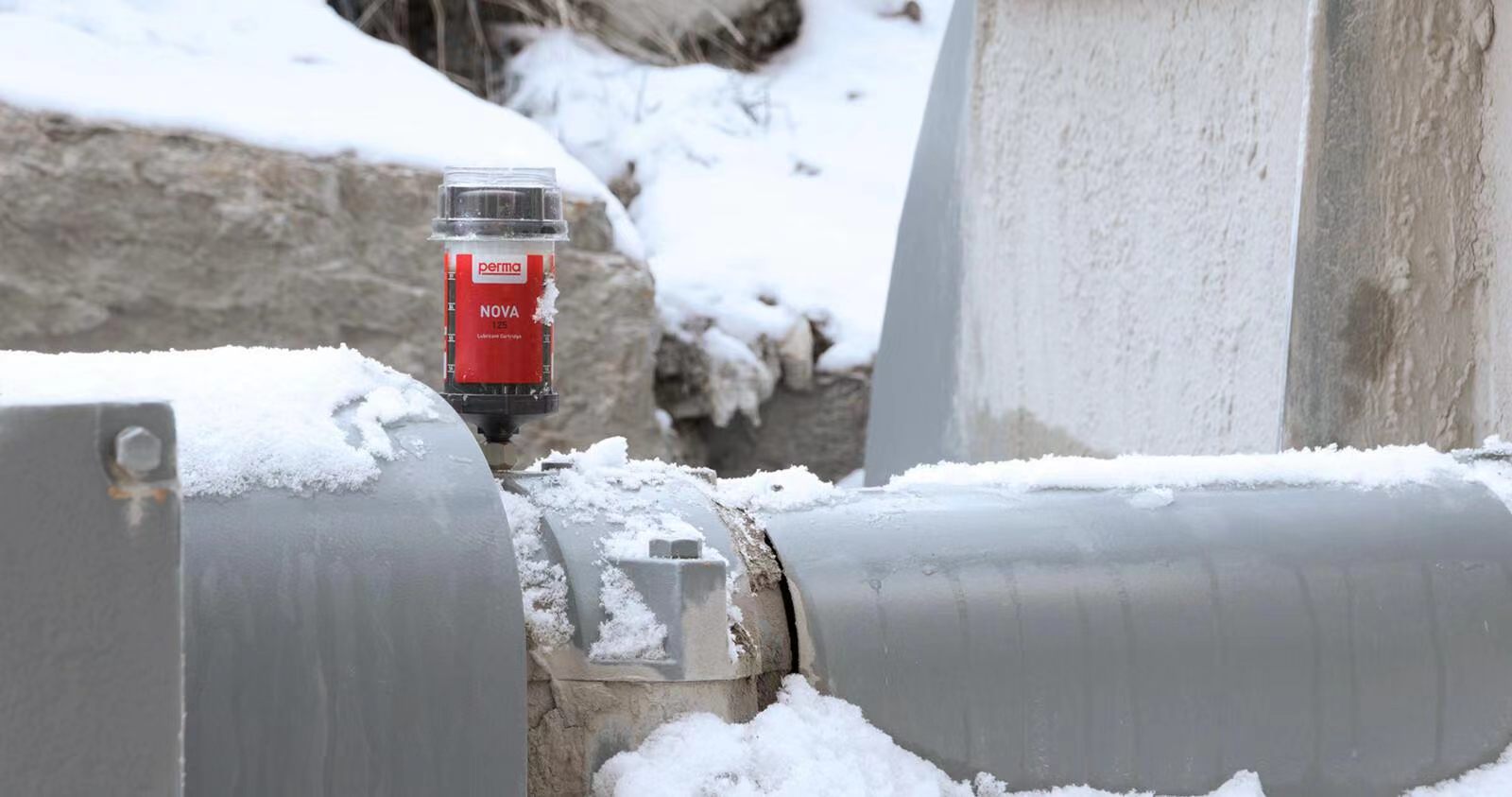
- Rain and snow conditions
Moisture contamination can lead to:
- Rust formation
- Grease degradation
- Reduced bearing life
3. Extreme Temperature Variations
Wind turbines must operate in:
- Freezing winters
- High summer temperatures
Grease must maintain:
- Low-temperature pumpability
- High-temperature stability
4. Heavy Loads and Shock Loads
Main shaft and pitch bearings experience:
- High axial loads
- Dynamic stress
- Shock loading during wind changes
Lubricants must provide strong load-carrying performance.
5. Long Relubrication Intervals
Wind turbines are often located in remote areas, making maintenance difficult and expensive.
Therefore, wind turbine bearing lubrication requires:
- Long grease life
- Oxidation resistance
- Mechanical stability
Key Factors in Wind Turbine Grease Selection
Base Oil Type
Synthetic oils are commonly preferred because they provide:
- Better low-temperature performance
- Improved oxidation resistance
- Longer service life
Thickener System
Common options include:
- Lithium complex
- Calcium sulfonate complex
- Polyurea
Each offers different benefits in terms of water resistance and load capacity.
Extreme Pressure (EP) Performance
Wind turbine bearings require grease with:
- High EP protection
- Anti-wear additives
- Surface protection under heavy load
Corrosion Resistance
High-quality grease should protect bearings from:
- Water washout
- Salt spray
- Humidity-related corrosion
Common Bearing Applications in Wind Turbines
Main Shaft Bearings
Require:
- Heavy-load protection
- Long grease life
Pitch and Yaw Bearings
Require:
- Anti-fretting performance
- Corrosion protection
Generator Bearings
Require:
- Low noise
- High-speed stability
- Electrical protection in some systems
Best Lubrication Practices
To improve turbine reliability:
- Follow OEM lubrication intervals
- Use automatic lubrication systems when possible
- Avoid mixing incompatible greases
- Monitor grease condition regularly
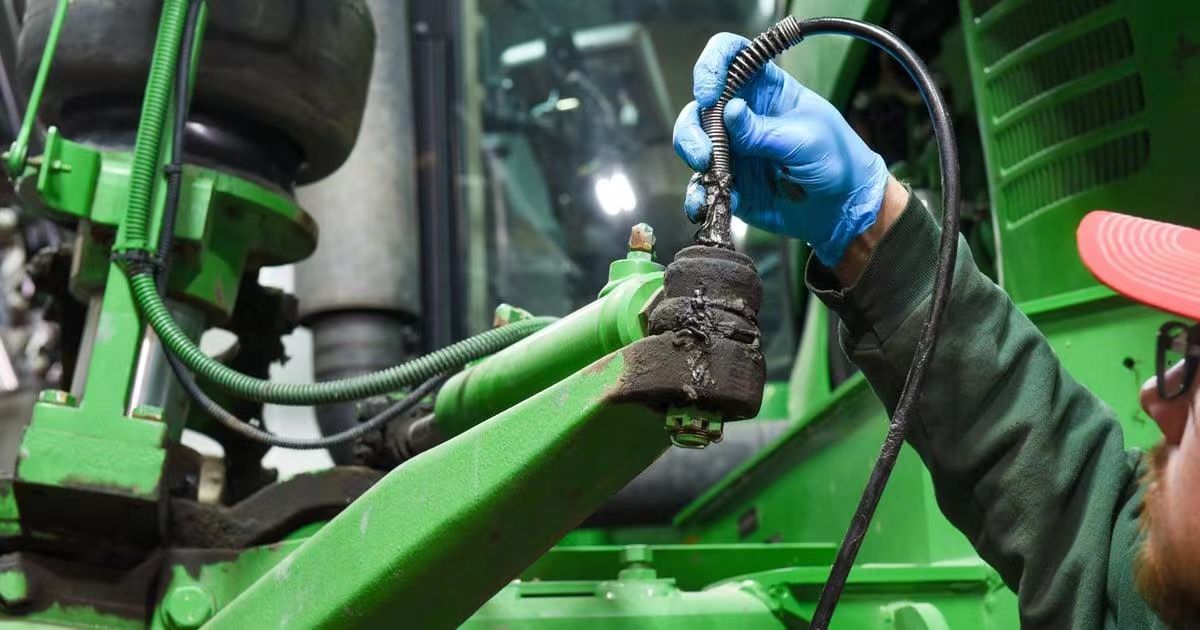
- Use clean lubrication tools
Common Lubrication Mistakes
Over-Greasing
Can cause:
- Excessive heat
- Seal damage
- Grease leakage
Incorrect Grease Selection
Using general-purpose grease may lead to:
- Premature bearing wear
- Poor corrosion resistance
- Reduced grease life
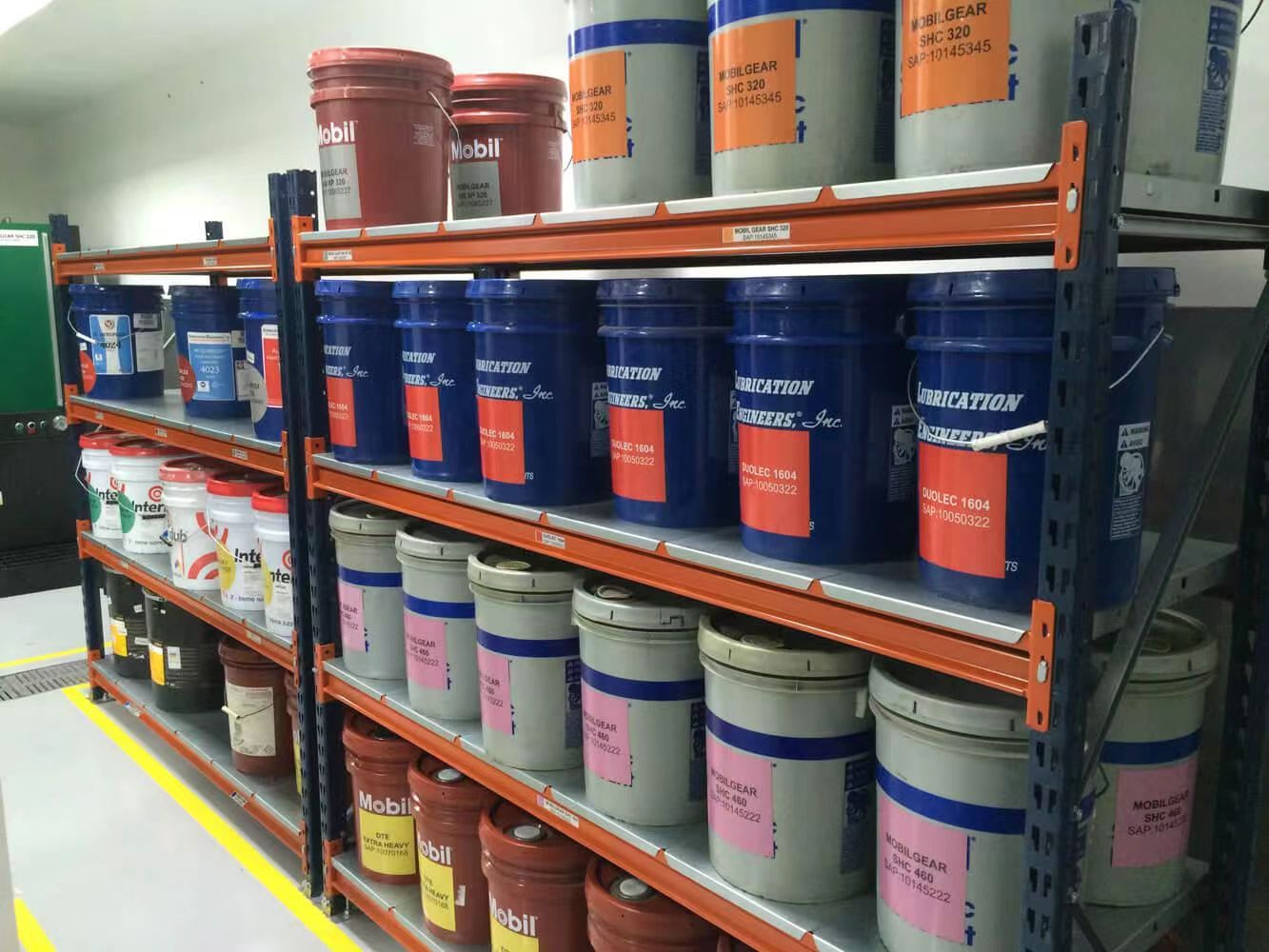
Poor Storage Conditions
Contaminated grease can quickly damage bearings.
Conclusion
Reliable wind turbine bearing lubrication is critical for maximizing turbine efficiency and reducing maintenance costs. By selecting the right wind turbine grease and implementing proper maintenance practices, operators can improve bearing life and ensure stable long-term operation.
High Temperature Grease for Steel Industry Applications
Automotive Assembly Grease Selection Guide
Related Article