Grease Thickener Types: A Complete Guide
What Is a Grease Thickener?
A grease is generally composed of base oil, thickener and additives. The thickener forms a semi-solid structure that holds the base oil in place and gives the grease its consistency.
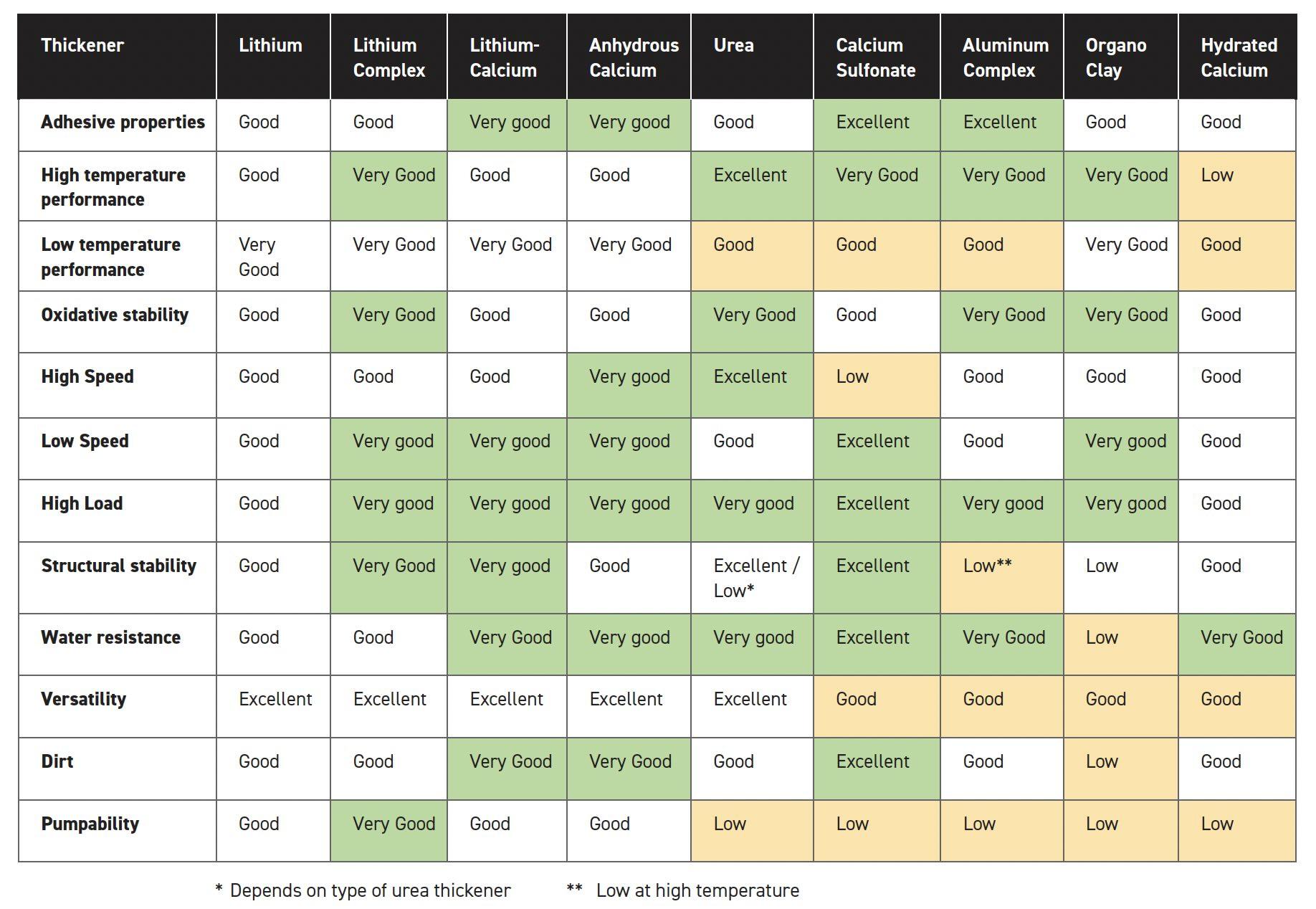
Different thickener systems can produce significantly different performance characteristics, so NLGI grade alone is not enough to evaluate a grease.
Main Types of Grease Thickeners
| Thickener Type | Key Characteristics | Typical Applications |
|---|---|---|
| Lithium | Good general performance, versatile | Bearings, motors, general machinery |
| Lithium Complex | Better high-temperature and mechanical stability | Heavy-duty bearings, industrial equipment |
| Calcium | Good water resistance, limited high-temperature capability | General machinery, wet environments |
| Calcium Complex | Improved temperature and water resistance | Heavy-duty and wet applications |
| Aluminum Complex | Good water resistance and adhesion | Industrial bearings, wet environments |
| Calcium Sulfonate Complex | Excellent water resistance, corrosion protection and load capability | Steel mills, paper machines, heavy-duty equipment |
| Polyurea | Good oxidation stability and long-life bearing lubrication | Electric motors, fans, high-temperature bearings |
| Clay / Non-soap | Good high-temperature capability | Selected high-temperature applications |
SKF's grease-selection guidance also emphasizes that compatibility between thickener types varies, and some combinations require individual testing.
Which Thickener Should You Choose?
Lithium Grease
Lithium grease remains one of the most widely used general-purpose grease types because of its balanced performance and broad industrial use.
Lithium Complex Grease
Lithium complex formulations are often selected when higher temperature resistance and mechanical stability are required compared with conventional lithium soap greases.
Calcium Sulfonate Complex Grease
This type is particularly useful in water-rich and heavily loaded environments. Its thickener technology can provide inherent corrosion protection and EP performance.
Polyurea Grease
Polyurea grease is widely used for electric motor bearings, fan bearings and high-temperature bearing applications. For example, Mobil Polyrex EM uses a polyurea thickener and is designed for long-life electric motor bearing lubrication.
Thickener Type Is Not the Only Selection Factor
A good grease selection should consider:
- Thickener type
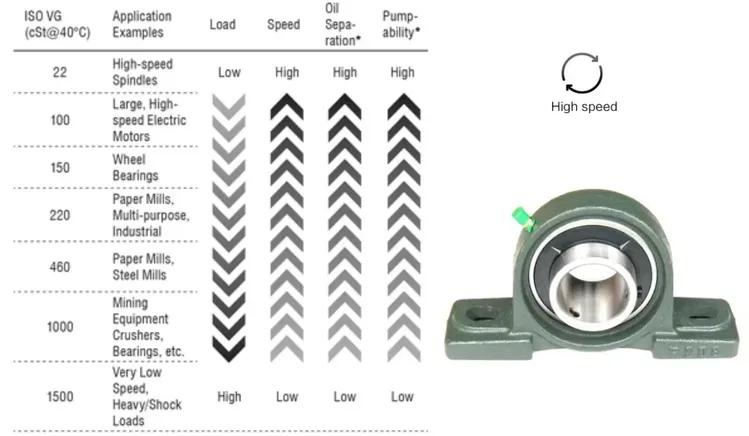
- Base oil type and viscosity
- NLGI grade
- Operating temperature
- Speed
- Load
- Water exposure
- Lubrication method
- Grease compatibility
For example, two NLGI 2 greases can use completely different thickener systems and base oils, resulting in very different application ranges.
Grease Compatibility Matters
Do not assume that different grease types can simply be mixed together. SKF and Mobil compatibility charts show that some thickener combinations are compatible, while others are incompatible or require individual testing.
When changing grease, it is safer to check the manufacturer's compatibility data or perform a compatibility test, and clean the old grease when necessary.
Conclusion
The thickener is one of the key components that determines grease behavior. Lithium and lithium complex are common general-purpose choices, calcium sulfonate complex is well suited to demanding wet and heavy-load environments, while polyurea is widely used for long-life bearing and electric motor applications.
The best grease is not determined by thickener type alone. The complete formulation and actual operating conditions must be considered.
Synthetic Grease vs Mineral Grease: Key Differences
How Base Oil Viscosity Affects Lubrication Performance
Related Article