Food Grade Grease (NSF H1): A Basic Guide
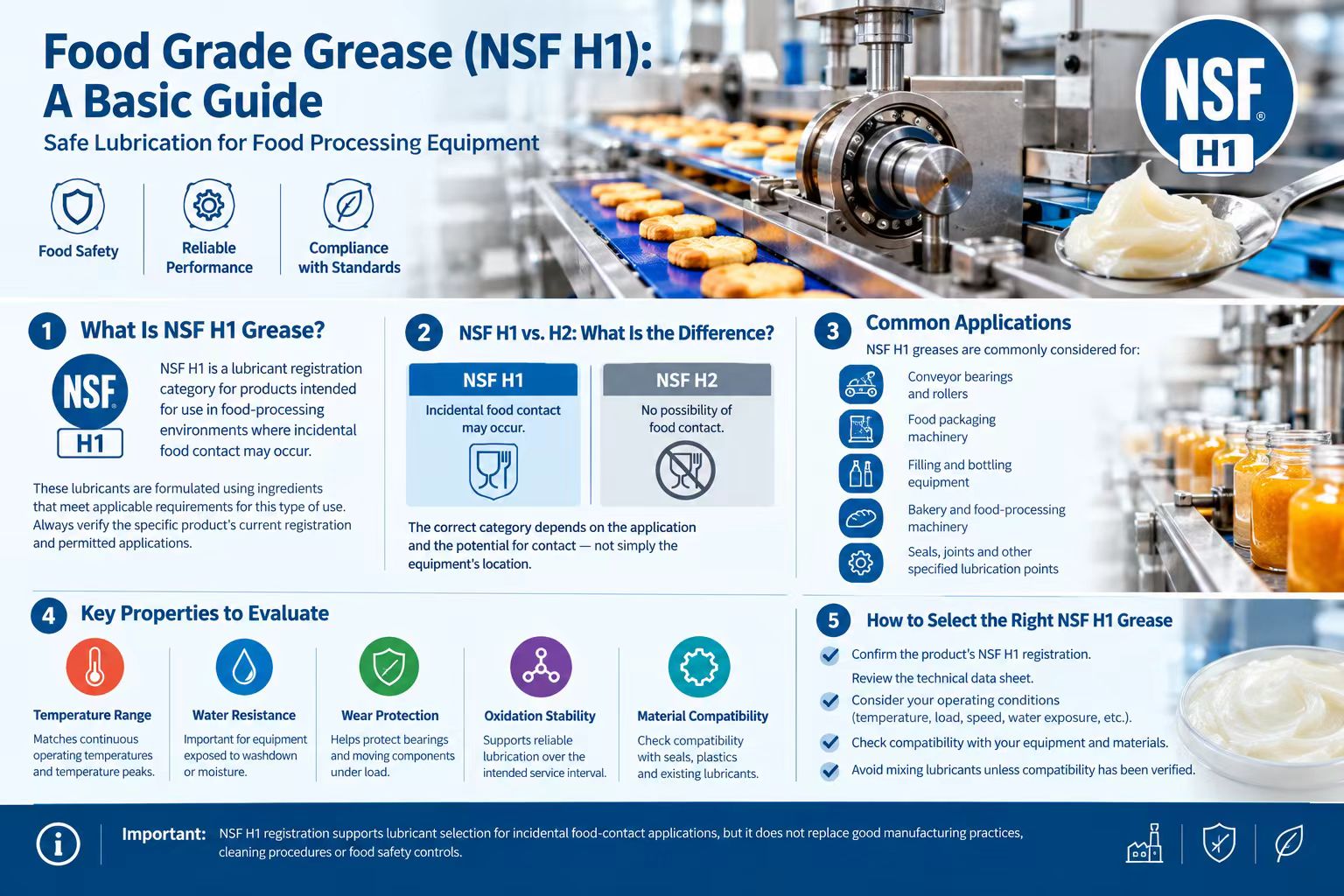
Food processing equipment requires reliable lubrication while maintaining strict hygiene standards. NSF H1 food grade grease is designed for applications where incidental contact with food may occur.
However, H1 registration does not mean a lubricant is edible or suitable for unrestricted contact with food. Correct product selection and proper lubricant management remain essential.
1. What Is NSF H1 Grease?
NSF H1 is a lubricant registration category for products intended for use in food-processing environments where incidental food contact may occur.
These lubricants are formulated using ingredients that meet applicable requirements for this type of use. Always verify the specific product's current registration and permitted applications.
2. NSF H1 vs. H2: What Is the Difference?
-
NSF H1: For applications where incidental food contact may occur.
-
NSF H2: For use in food-processing environments where there is no possibility of food contact.
The correct category depends on the application and the potential for contact—not simply the equipment's location.
3. Common Applications of Food Grade Grease
NSF H1 greases are commonly considered for:
-
Conveyor bearings and rollers
-
Food packaging machinery
-
Filling and bottling equipment
-
Bakery and food-processing machinery
-
Seals, joints, and other specified lubrication points
The selected grease must also meet the equipment's temperature, load, speed, water-resistance, and material-compatibility requirements.
4. Key Properties to Evaluate
When choosing food grade grease, consider:
-
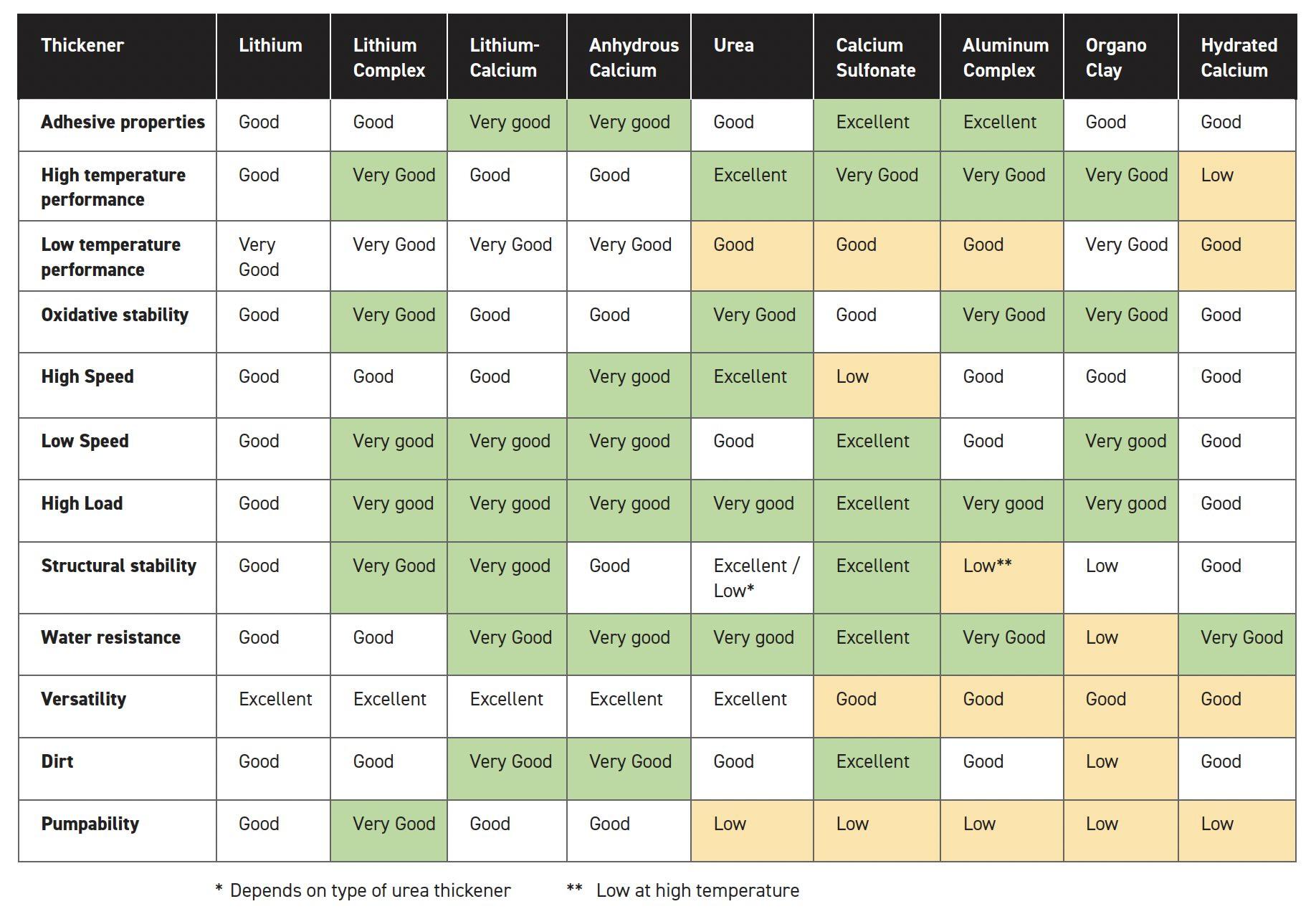
Temperature range: Must match continuous operating temperatures and temperature peaks.
-
Water resistance: Important for equipment exposed to washdown or moisture.
-
Wear protection: Helps protect bearings and moving components under load.
-
Oxidation stability: Supports reliable lubrication over the intended service interval.
-
Material compatibility: Check compatibility with seals, plastics, and existing lubricants.
Not every H1 grease provides the same performance. Registration category alone does not determine technical suitability.
5. How to Select the Right NSF H1 Grease
Before purchasing, confirm the exact product's NSF H1 registration, technical data sheet, operating conditions, and equipment requirements. Avoid mixing lubricants unless compatibility has been verified.
Important: NSF H1 registration supports lubricant selection for incidental food-contact applications, but it does not replace good manufacturing practices, cleaning procedures, or food safety controls.
High Temperature Grease: Key Properties Explained
Related Article