Solid Lubrication Technology: Types, Benefits, and Industrial Applications
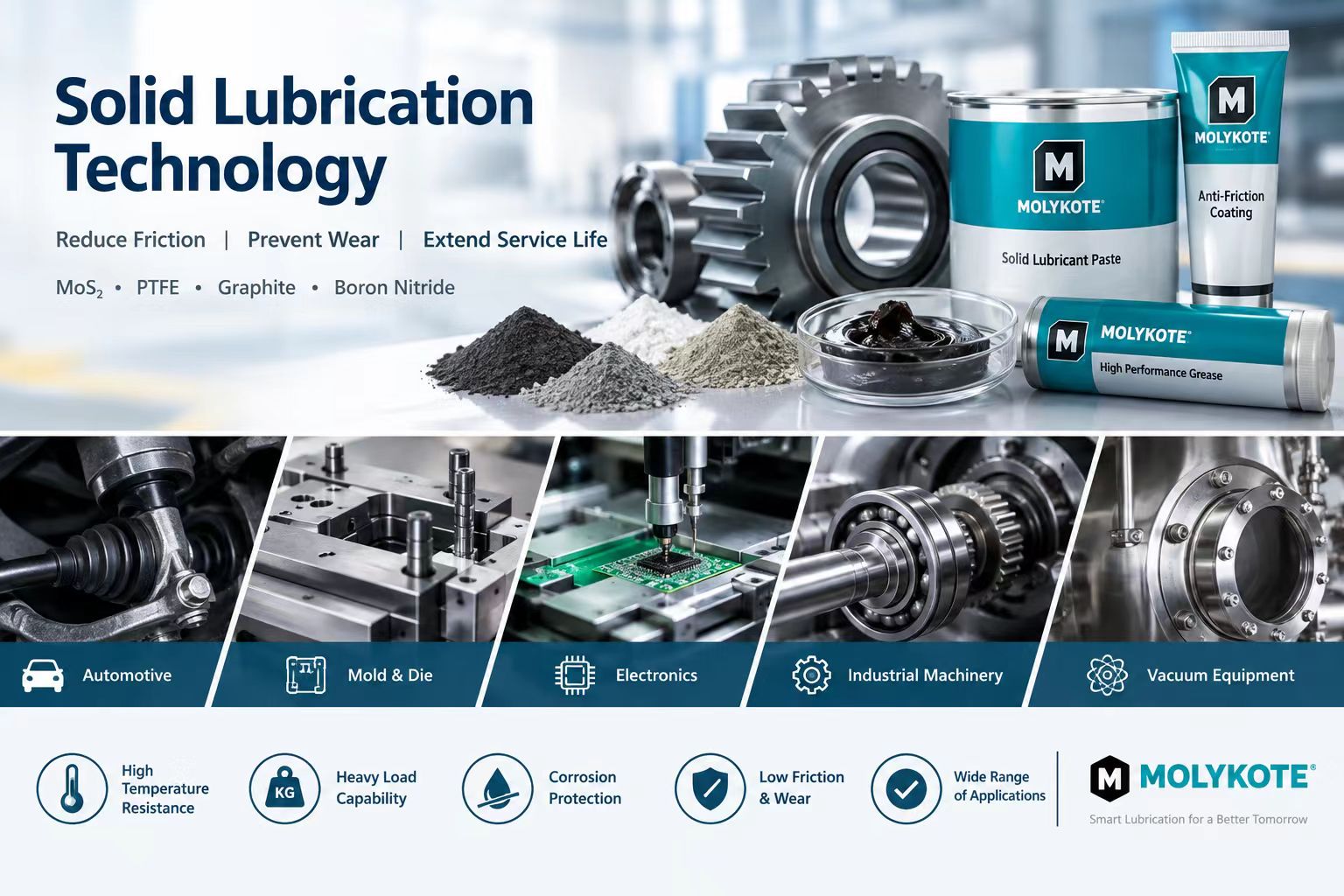
Solid Lubrication Technology: Types and Applications
Solid lubrication technology uses solid materials to reduce friction and wear in industrial equipment. It is suitable for applications where conventional oils or greases may not meet specific operating requirements.
1. What Is Solid Lubrication?
Solid lubricants form a low-shear layer between contacting surfaces. Common materials include molybdenum disulfide (MoS₂), PTFE, graphite, and boron nitride.
They can be applied as dry film coatings, pastes, grease additives, or self-lubricating materials.
2. Types of Solid Lubricants
-
MoS₂: Used in selected high-load and boundary lubrication applications.
-
PTFE: Offers low friction and chemical resistance.
-
Graphite: Suitable for certain sliding contacts and elevated-temperature applications.
-
Solid lubricant coatings: Provide a lubricating film for selected precision and industrial components.
Performance depends on temperature, load, atmosphere, and material compatibility.
3. Industrial Applications
Solid lubrication technology is used in several industries:
-
Automotive: Sliding components, joints, and mechanical assemblies.
-
Mold maintenance: Guide pins, ejector mechanisms, and sliding surfaces.
-
Electronics: Precision mechanisms requiring controlled lubricant migration.
-
Industrial machinery: Selected high-temperature and heavily loaded contacts.
-
Vacuum equipment: Specialized applications requiring low outgassing or reduced contamination.
The lubricant must be selected according to the actual operating conditions.
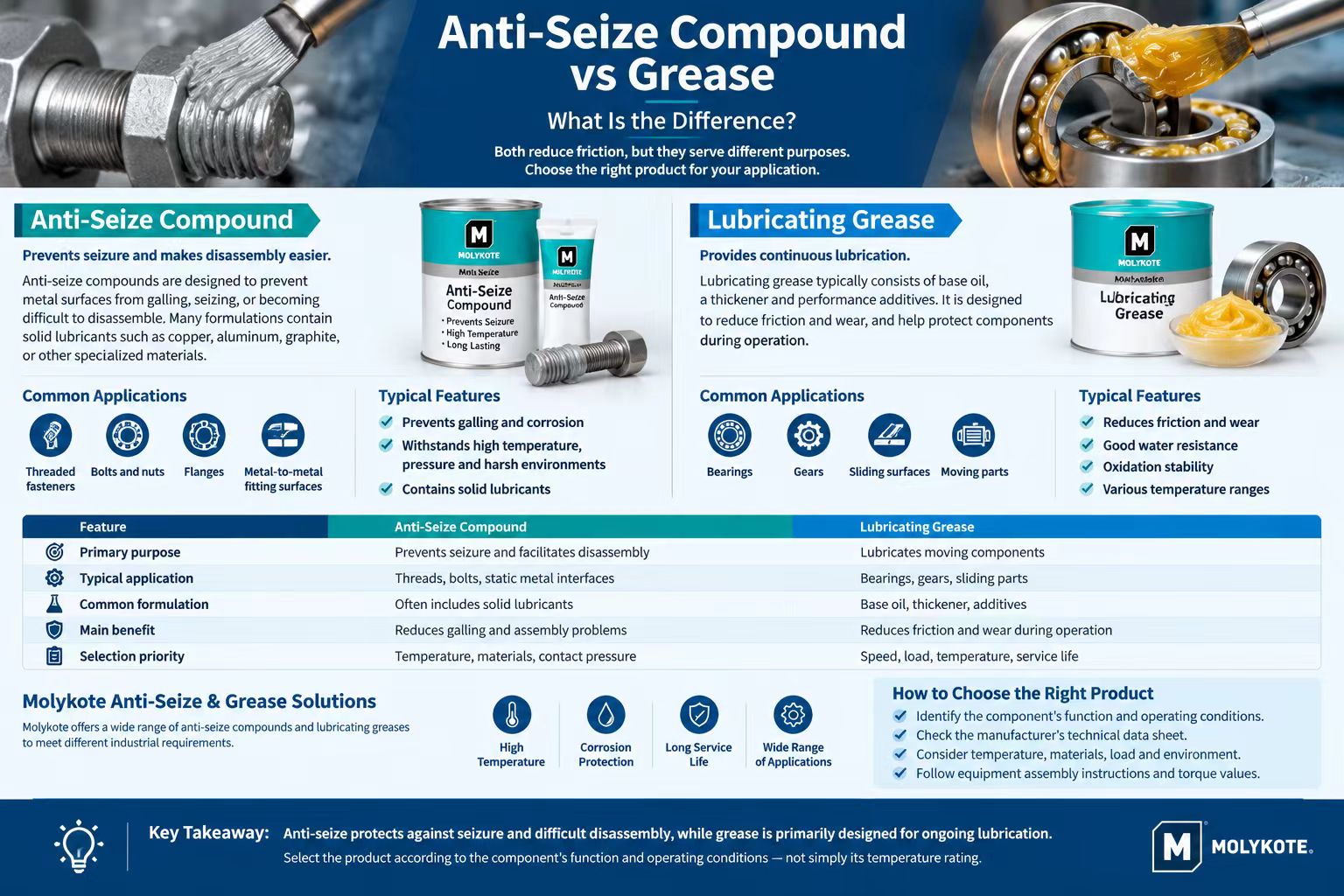
4. Solid Lubricants vs. Grease
|
Feature |
Solid Lubricants |
Lubricating Grease |
|---|---|---|
|
Form |
Solid material or coating |
Semi-solid lubricant |
|
Main function |
Reduce friction at contacting surfaces |
Lubricate moving components |
|
Typical use |
Sliding contacts and dry-film applications |
Bearings, gears, and guides |
|
Selection factors |
Load, temperature, coating durability |
Speed, load, temperature, service life |
Solid lubricants can also be incorporated into grease. The two technologies are complementary rather than mutually exclusive.
5. How to Choose a Solid Lubricant
Consider these key factors before selecting a product:
-
Operating temperature and peak temperature
-
Contact pressure, load, and sliding speed
-
Environmental conditions and chemical exposure
-
Substrate and seal compatibility
-
Application method and maintenance requirements
Always consult the manufacturer's technical data sheet before use.
6. Molykote Solid Lubrication Solutions
Product suitability should be confirmed against the latest manufacturer documentation.
Molykote offers industrial lubrication products including solid lubricant pastes, anti-friction coatings, and greases containing solid lubricants.
-
Solid lubricant pastes: For selected assembly and highly loaded sliding applications.
-
Anti-friction coatings: For components requiring a durable lubricating film.
-
Specialized greases: For moving parts requiring continuous lubrication and wear protection.
Not all Molykote products are solid lubricants. Select the appropriate grade according to the component design and operating conditions.
Conclusion
Solid lubrication technology helps control friction and wear in demanding industrial applications. Choosing between solid lubricants, coatings, and grease depends on load, speed, temperature, environment, and maintenance needs. Always verify product specifications before application.
Anti-Seize Compound vs Grease: What Is the Difference?
Related Article