Impact of REACH and RoHS on Lubricant Products and Certification Requirements
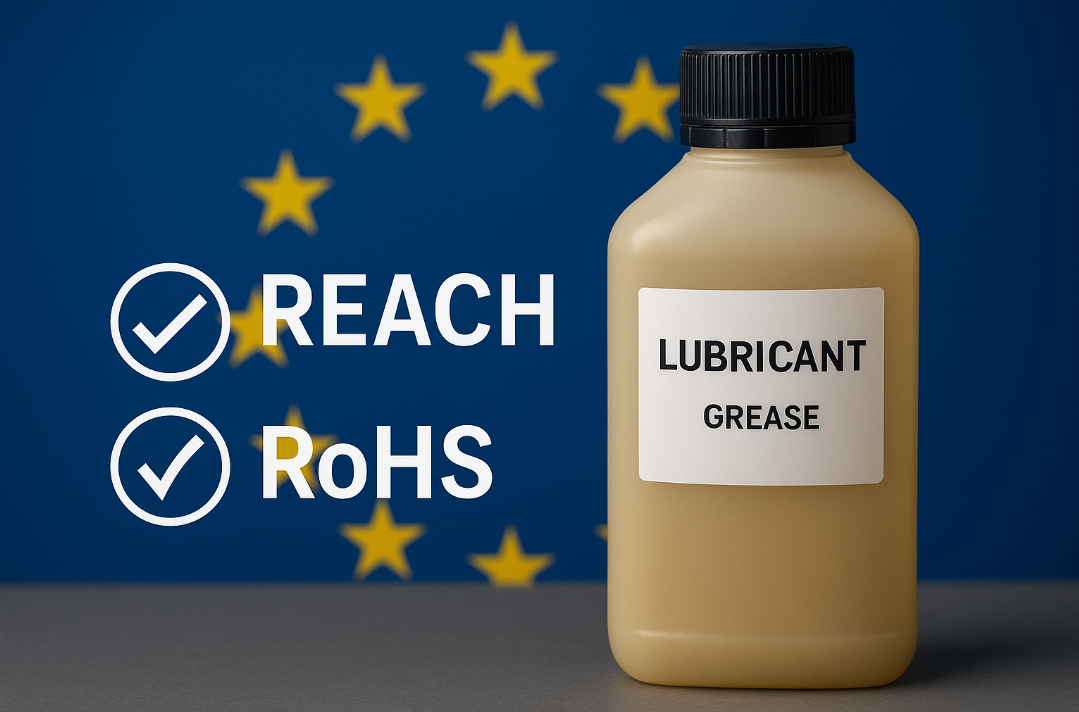
With growing global emphasis on environmental protection and chemical safety, compliance with REACH (Registration, Evaluation, Authorisation and Restriction of Chemicals) and RoHS (Restriction of Hazardous Substances) has become a fundamental requirement for lubricant manufacturers and users alike. These regulations directly influence the formulation, labeling, and market access of industrial lubricants.
1. Overview of REACH and RoHS Regulations
-
REACH, enforced by the European Chemicals Agency (ECHA), aims to ensure that all substances used in the EU are safe for human health and the environment. It requires manufacturers and importers to register and evaluate all chemical substances above one tonne per year.
-
RoHS, primarily applied to electronic and electrical equipment, restricts the use of specific hazardous substances such as lead (Pb), mercury (Hg), cadmium (Cd), and certain brominated flame retardants (PBB, PBDE).
2. Implications for Lubricant Products
Although lubricants are not electronic products, they often come into direct contact with RoHS-regulated components, such as motors, connectors, and circuit assemblies. Therefore, lubricant suppliers must ensure that:
-
Their products do not contain restricted substances beyond allowable limits.
-
Formulations avoid SVHCs (Substances of Very High Concern) under REACH Annex XVII.
-
Safety Data Sheets (SDS) and Material Declarations (MD) reflect up-to-date compliance data.
Fluorinated, synthetic, and ester-based greases often undergo REACH evaluation due to their unique chemical compositions. Leading brands such as Klüber, LUBE, and Molykote provide compliant formulations for SMT, robotics, and injection molding applications.
3. Certification and Documentation Requirements
To meet customer and regulatory expectations, lubricant manufacturers typically provide:
-
REACH registration numbers for base substances.
-
RoHS compliance declarations confirming no restricted substances.
-
Third-party test reports or material compliance statements.
-
SVHC-free certifications, especially for export to the EU and Japan.
4. Conclusion
Compliance with REACH and RoHS is not only a legal obligation but also a mark of product reliability and environmental responsibility. By ensuring chemical transparency and traceability, lubricant manufacturers help customers maintain sustainable and globally compliant production chains.
Lubricant Compatibility and Mixing Risks: The Impact of Mixing Different Brands and Types of Grease
High-Temperature Grease Evaporation and Relubrication Cycle Analysis
Related Article