Paper Mill Equipment Lubrication Challenges and Solutions
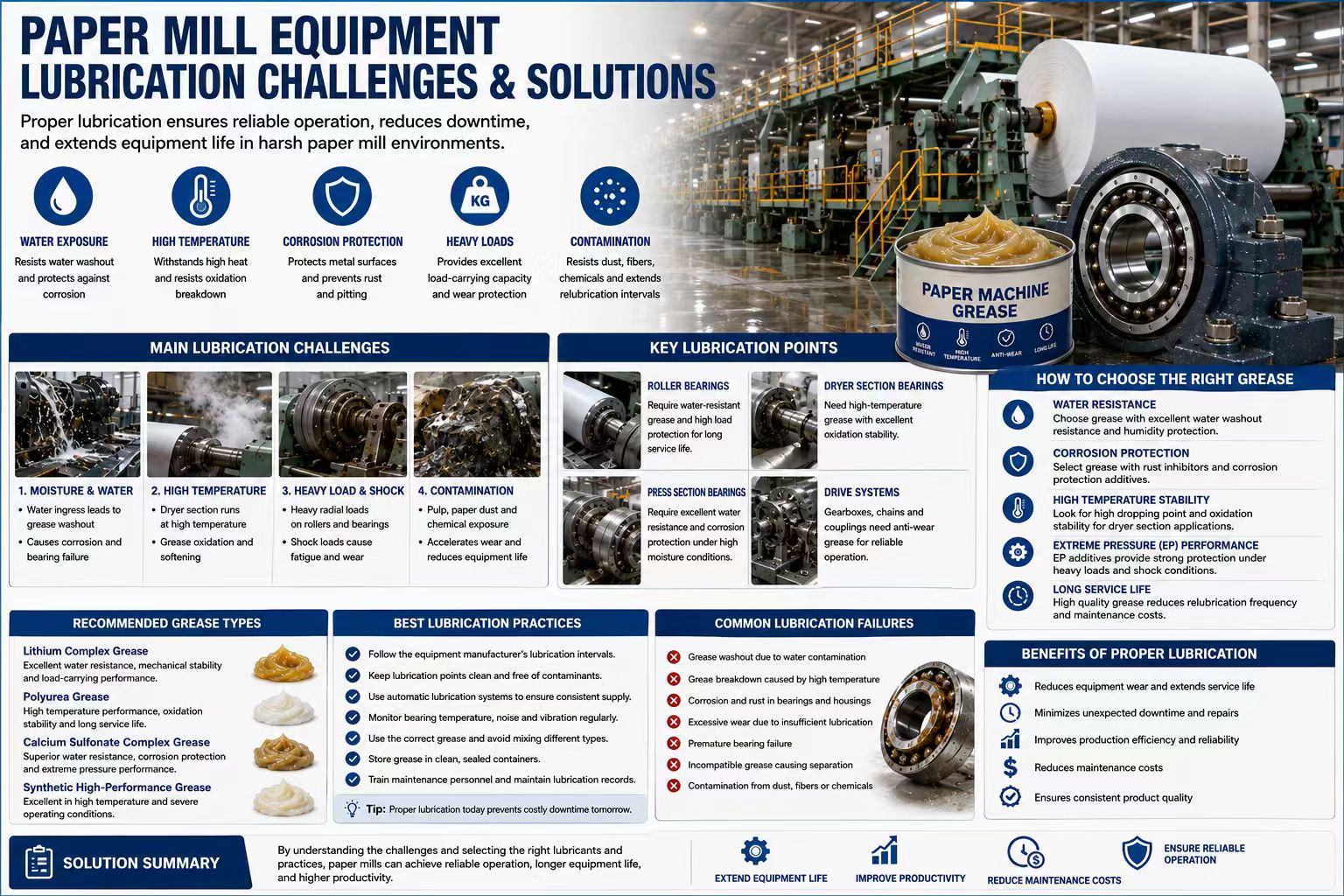
Effective paper mill lubrication is essential for maintaining equipment reliability, reducing downtime, and extending component life. Paper manufacturing environments present unique lubrication challenges, including high humidity, water contamination, elevated temperatures, and continuous operation.
This guide discusses common lubrication problems and practical industrial lubrication solutions for paper machine applications.
Why Paper Machines Require Specialized Lubrication
Paper production equipment operates under demanding conditions:
- Continuous 24/7 operation
- High humidity and water exposure
- Steam and elevated temperatures
- Heavy bearing loads
- Dust, pulp, and chemical contamination
These factors place significant stress on lubricants and make proper paper machine grease selection critical.
Main Lubrication Challenges in Paper Mills
1. Water Contamination
Water is one of the biggest challenges in paper production.
Potential issues include:
- Grease washout
- Reduced lubrication performance
- Corrosion and rust formation
- Shortened bearing life
2. High Temperature Exposure
Dryer sections and heated rollers can operate at elevated temperatures.
Lubricants must provide:
- Thermal stability
- Oxidation resistance
- Long service life
3. Heavy Loads and Shock Loads
Bearings supporting rollers and production equipment often experience:
- High radial loads
- Continuous pressure
- Vibration and shock loading
4. Contamination from Pulp and Dust
Paper fibers, dust, and process chemicals can enter lubrication systems and accelerate wear.
Critical Lubrication Points in Paper Machines
Roller Bearings
Require:
- Water-resistant grease
- Heavy-load protection
- Long relubrication intervals
Dryer Section Bearings
Need:
- High-temperature grease
- Oxidation resistance
- Mechanical stability
Press Section Bearings
Require:
- Excellent water resistance
- Corrosion protection
- Strong load-carrying capability
Conveyor and Drive Systems
Need:
- Anti-wear protection
- Long-lasting lubrication
- Reduced friction
Choosing the Right Paper Machine Grease
Water Resistance
Grease should resist:
- Water washout
- Steam exposure
- Humidity
Corrosion Protection
Important features include:
- Rust prevention
- Moisture protection
- Surface preservation
High Temperature Stability
For dryer sections, lubricants should provide:
- Low evaporation loss
- High dropping point
- Excellent oxidation stability
Extreme Pressure Performance
Heavy-load bearings benefit from:
- EP additives
- Anti-wear protection
- Stable lubrication films
Best Lubrication Practices
Establish a Lubrication Schedule
Regular lubrication helps:
- Reduce wear
- Improve reliability
- Prevent unexpected failures
Avoid Mixing Greases
Different grease technologies may be incompatible and reduce performance.
Monitor Bearing Conditions
Check regularly for:
- Excessive temperature
- Noise
- Vibration
- Grease leakage
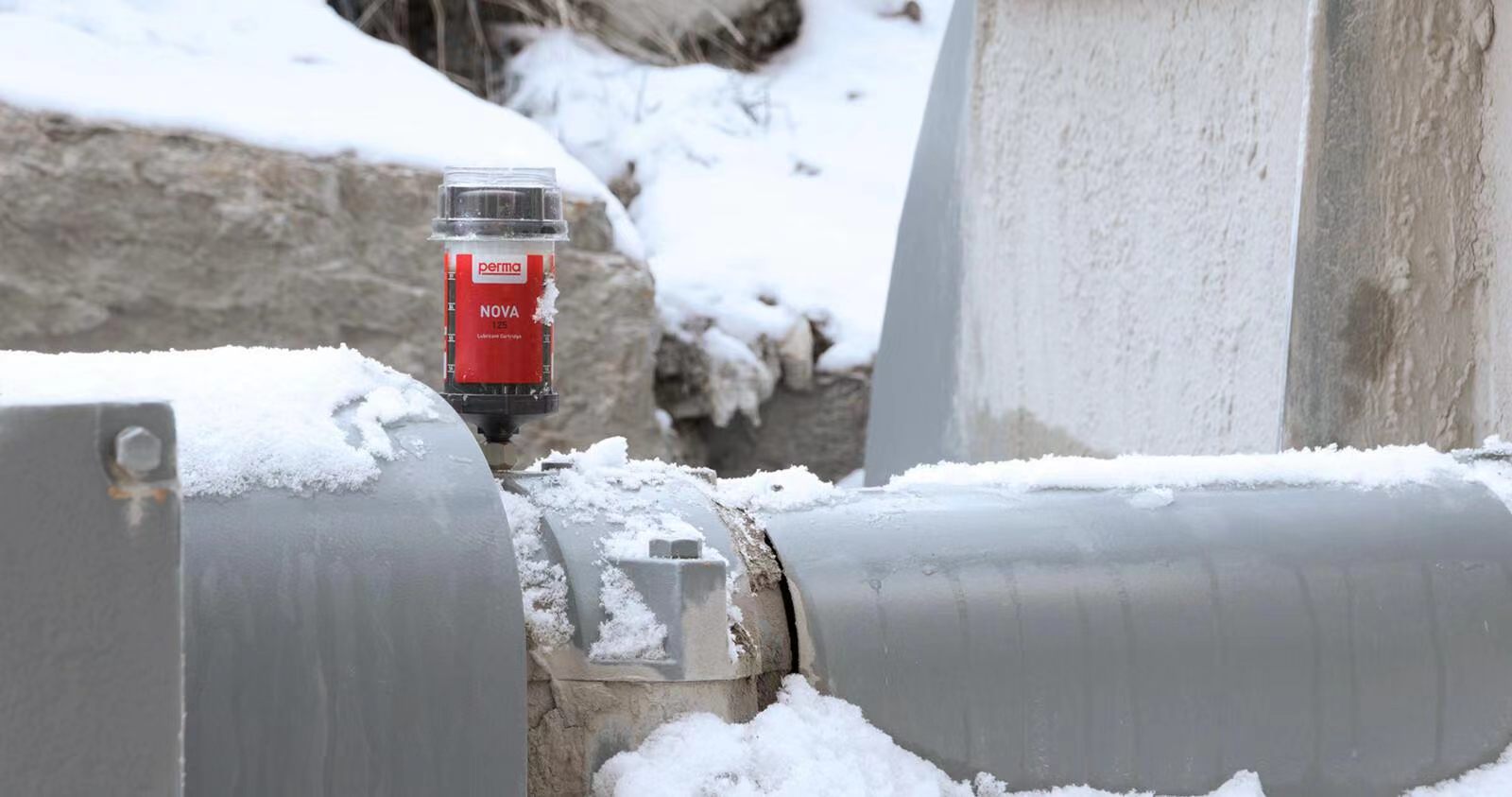
Use Automatic Lubrication Systems
Benefits include:
- Consistent grease supply
- Reduced maintenance labor
- Improved bearing life
Common Lubrication Failures
Bearing Corrosion
Often caused by:
- Water ingress
- Insufficient protection
- Improper grease selection
Grease Breakdown
Can result from:
- High temperatures
- Oxidation
- Contamination
Premature Bearing Failure
Usually linked to:
- Incorrect lubricant selection
- Poor maintenance practices
- Contamination issues
Conclusion
Successful paper mill lubrication depends on selecting lubricants that can withstand moisture, heat, heavy loads, and contamination. By implementing effective industrial lubrication solutions, paper manufacturers can reduce downtime, improve productivity, and extend equipment service life.
Heavy Duty Grease Selection for Mining Equipment
Injection Molding Machine Lubrication Guide
Related Article