Lubrication Safety and Contamination Prevention Requirements for Injection Molding Mold Parting Lines
In injection molding, the mold parting line is a critical zone that directly affects both product quality and mold maintenance. Proper lubrication in this area not only ensures smooth mold opening and closing but also prevents damage caused by friction, corrosion, and wear. However, due to the high demands of product cleanliness, especially in industries like food, medical devices, and electronics, lubrication safety and contamination prevention are essential considerations.
1. Importance of Lubrication at the Mold Parting Line
The mold parting line is the interface where the mold halves separate after each molding cycle. This area typically experiences significant mechanical stress and friction as the mold opens and closes multiple times during a production run.
Lubrication is required to:
-
Reduce friction and prevent scoring or galling
-
Protect metal surfaces from corrosion and wear
-
Facilitate smooth mold opening and closing
-
Ensure long-term mold life and reliability
Proper lubrication minimizes maintenance downtime and ensures consistent product quality by maintaining accurate mold alignment and avoiding defects.
2. Lubrication Safety and Non-Toxicity Requirements
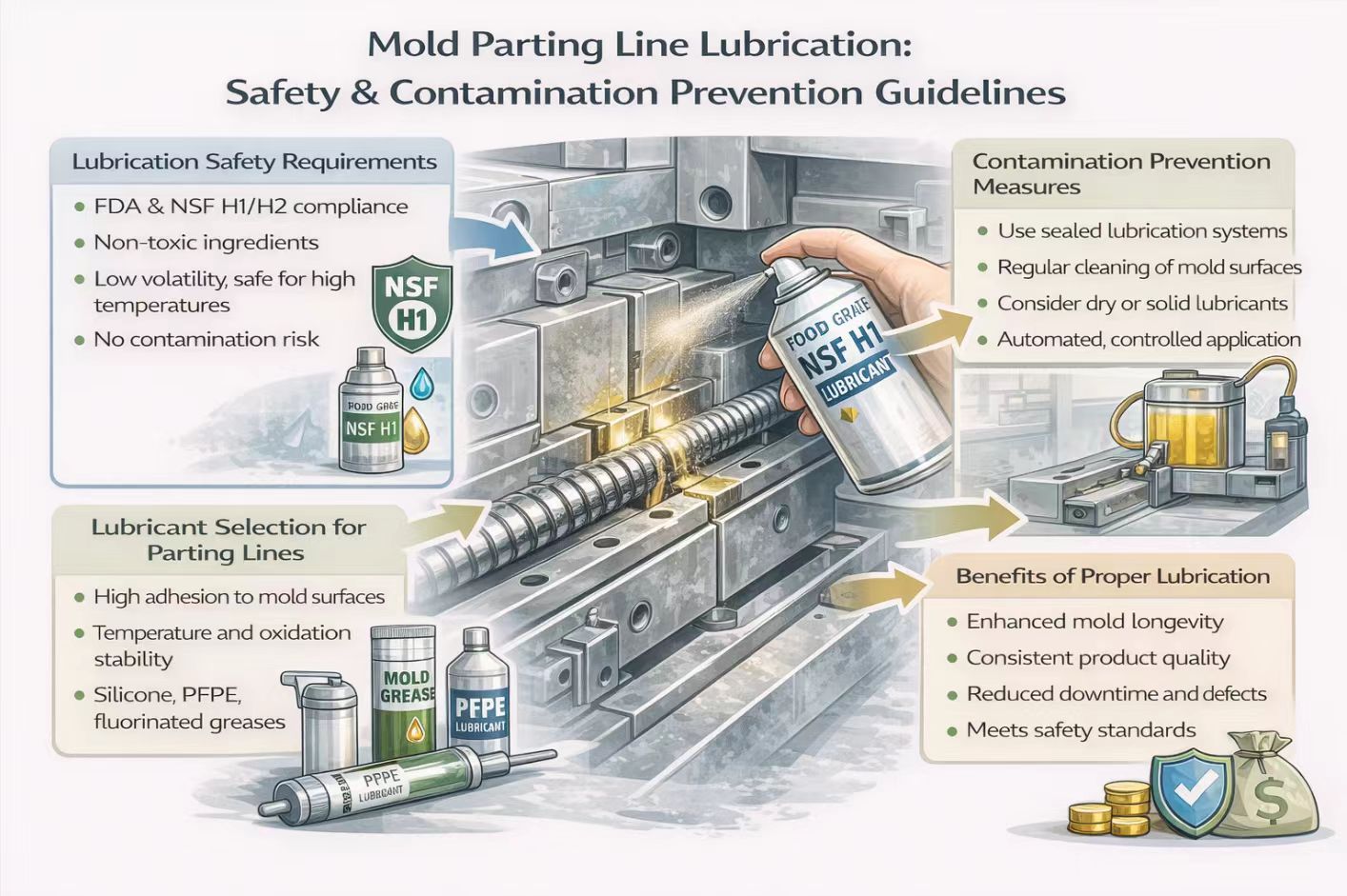
In industries where products come into direct contact with the molded components (such as food packaging, medical devices, or electronic enclosures), lubricant safety is critical. The following safety and non-toxicity requirements must be met:
-
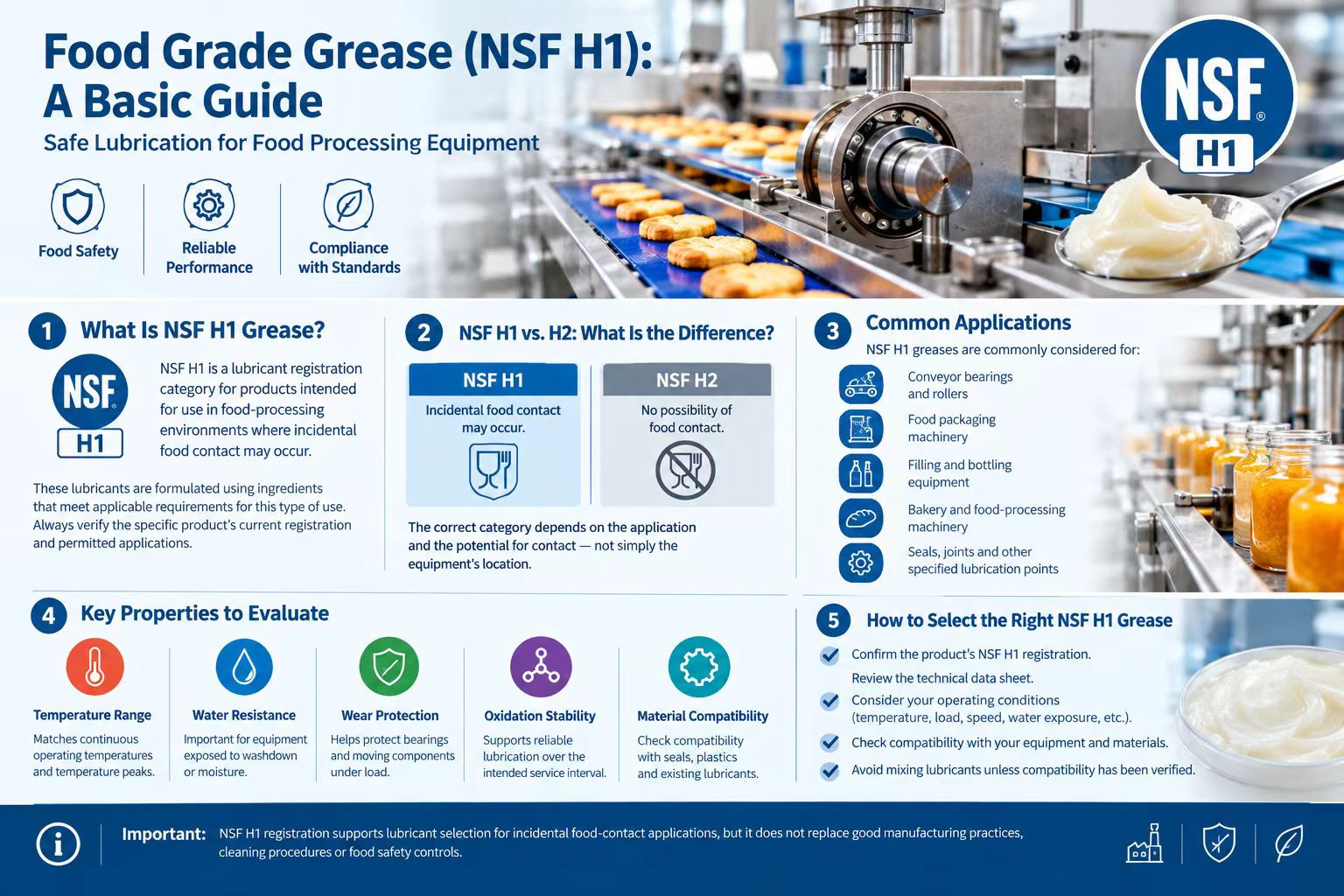
FDA compliance: The lubricants must meet FDA regulations for food-safe applications (NSF H1 or H2).
-
Non-toxic ingredients: Lubricants must be free from harmful chemicals, especially those that could migrate to the molded product.
-
Low volatility: Lubricants should have low evaporation rates to avoid the formation of harmful fumes during high-temperature cycles.
-
No contamination risk: The lubricant should not contaminate the product or cause surface residues that could interfere with product performance.
NSF H1 certified lubricants are often used in these high-sensitivity applications.
3. Contamination Prevention Measures
Contamination control is another crucial factor, particularly in molding processes that require stringent cleanliness standards. Contaminants such as dust, debris, resin residues, and unclean lubricants can lead to mold defects, surface marks, and compromised product integrity.
To prevent contamination, the following measures should be implemented:
-
Use of sealed lubrication systems: Seals around the mold cavity prevent contamination ingress during the injection process.
-
Regular cleaning: The mold parting line area should be cleaned regularly to remove any build-up of lubricants or residue.
-
Dry lubrication: In certain cases, dry lubricants or solid lubricants can be used to reduce the risk of liquid lubricant contamination.
-
Lubricant application methods: Automated and controlled lubrication delivery systems minimize excess lubrication and ensure precise application.
4. Lubricant Selection for Mold Parting Lines
The selection of the appropriate lubricant is essential for optimizing mold performance and longevity. Lubricants should meet the following criteria:
-
High adhesion: The lubricant should adhere well to mold surfaces to reduce friction and wear, even during high-speed cycles.
-
Temperature stability: It should be able to withstand the temperatures encountered during the injection process without breaking down.
-
Oxidation resistance: The lubricant should resist oxidation at high temperatures to maintain lubrication effectiveness.
Common lubricants used in parting line applications include silicone-based greases, fluorinated lubricants (PFPE), and specialized mold release agents.
5. Benefits of Proper Lubrication and Contamination Control
Adopting effective lubrication and contamination prevention strategies provides significant benefits:
-
Improved mold longevity: Reduces wear and tear on mold components, extending the useful life of the mold.
-
Enhanced product quality: Consistent mold movement ensures accurate and smooth products without defects or surface blemishes.
-
Reduced downtime: By preventing friction-related mold issues, lubrication minimizes the need for frequent maintenance and mold replacement.
-
Compliance with industry standards: Ensures safety and non-toxicity for sensitive applications.
Conclusion
Effective lubrication and contamination prevention at the mold parting line are crucial for maintaining mold performance, product quality, and safety in injection molding operations. By selecting the right lubricant, ensuring proper application, and adopting cleaning and contamination control practices, manufacturers can improve both operational efficiency and compliance with industry standards.
Selection of Anti-Stick and Anti-Wear Lubrication Materials in Electronic Component Assembly
Impact of Ball Screw and Guideway Lubrication on CNC Machining Accuracy
Related Article