Lubricant Compatibility and Mixing Risks: The Impact of Mixing Different Brands and Types of Grease
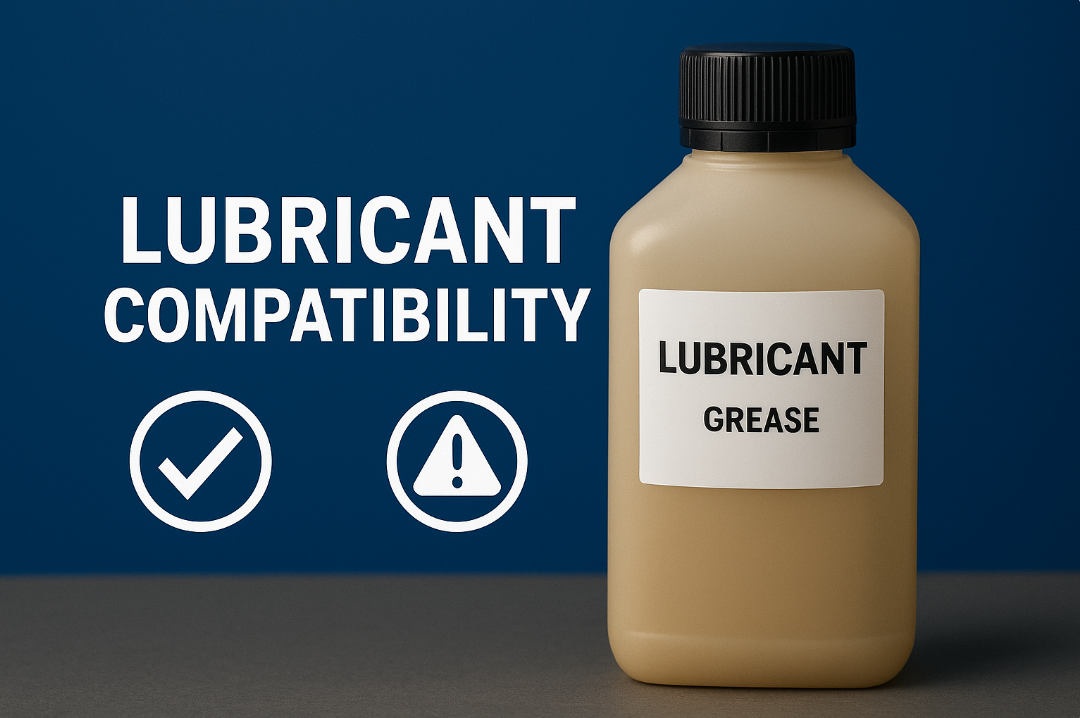
In industrial equipment maintenance, selecting the right lubricant is critical to ensuring operational reliability. However, an often-overlooked issue is lubricant compatibility — what happens when different greases or oils are mixed. Even small amounts of incompatible lubricants can lead to chemical instability, loss of lubrication performance, and premature bearing failure.
Each grease formulation is a precise combination of base oil, thickener, and additives. When mixed, chemical reactions or physical separation can occur, resulting in oil bleeding, hardening, or complete breakdown of the lubrication film. For example, a lithium-complex grease may not be compatible with polyurea or calcium sulfonate types, as their thickeners react differently under temperature and load.
According to industrial reliability studies, mixing lubricants from different manufacturers—even if they appear similar in NLGI grade or viscosity—can produce unpredictable results. The differences in additive chemistry may compromise oxidation resistance and corrosion protection.
To manage compatibility risks, companies should:
-
Avoid mixing different lubricant brands or types whenever possible.
-
Consult compatibility charts or conduct lab tests before introducing a new grease.
-
Thoroughly clean components when switching lubricants.
-
Maintain detailed lubrication records and follow OEM specifications.
By prioritizing lubricant compatibility, manufacturers can prevent equipment downtime, extend bearing life, and reduce maintenance costs — ensuring safer and more sustainable operations.
Chain Lubrication Solutions for Automated Production Lines: Spray vs Brush vs Automatic Greasing
Impact of REACH and RoHS on Lubricant Products and Certification Requirements
Related Article