Low Noise Grease: Technology and Industrial Applications
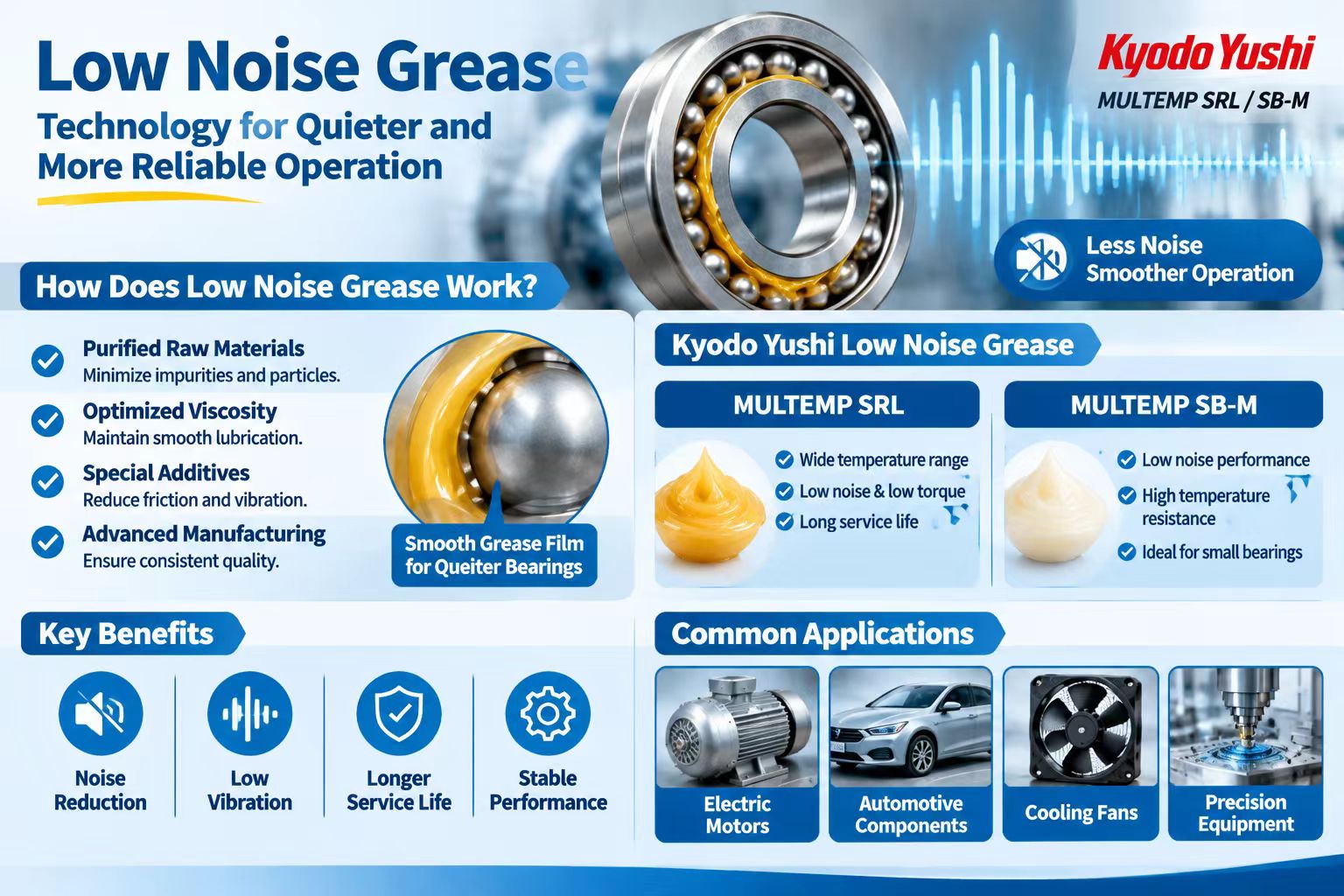
Noise generated by rolling bearings is a common concern in electric motors, automotive components, and precision equipment. Low noise grease is specially formulated to support quieter bearing operation while maintaining reliable lubrication.
1. How Does Low Noise Grease Work?
Low noise grease focuses on controlling factors that may contribute to bearing noise and vibration.
-
Purified raw materials: Reducing impurities and unwanted particles that may interfere with bearing contact.
-
Optimized base oil viscosity: Selecting suitable viscosity to maintain lubrication without excessive resistance.
-
Carefully selected additives: Supporting lubrication performance while avoiding undesirable effects on bearing noise.
-
Special manufacturing processes: Improving product consistency and controlling contamination.
2. Why Is Grease Quality Important?
Even small amounts of contamination or inconsistent grease properties can affect precision bearing operation.
The grease filling quantity, consistency, base oil viscosity, and bearing design also influence noise performance. Therefore, low noise performance requires both suitable formulation and proper application.
3. Kyodo Yushi: Examples of Low Noise Grease
Japanese manufacturer Kyodo Yushi offers several products designed for quiet bearing operation.
-
MULTEMP SRL: A wide-temperature ball bearing grease featuring low noise performance, long service life, and low torque characteristics. It uses lithium soap thickener and ester base oil.
-
MULTEMP SB-M: A low-noise grease for high-temperature and high-speed small bearings, formulated with diurea thickener and synthetic hydrocarbon oil.
These products demonstrate how base oil selection, thickener technology, and manufacturing processes work together to improve bearing performance.
4. Common Applications
Low noise greases are commonly used in:
-
Electric motor bearings
-
Automotive electrical equipment
-
Cooling fan motors
-
Household appliances
-
Precision instruments and information devices
5. How to Select Low Noise Grease
Consider bearing speed, operating temperature, load, noise requirements, base oil viscosity, and grease filling quantity. Always verify the product's technical data and compatibility with the bearing.
The key takeaway: Low noise grease is not simply a low-friction lubricant. Its performance depends on material purity, formulation consistency, viscosity selection, and manufacturing quality.
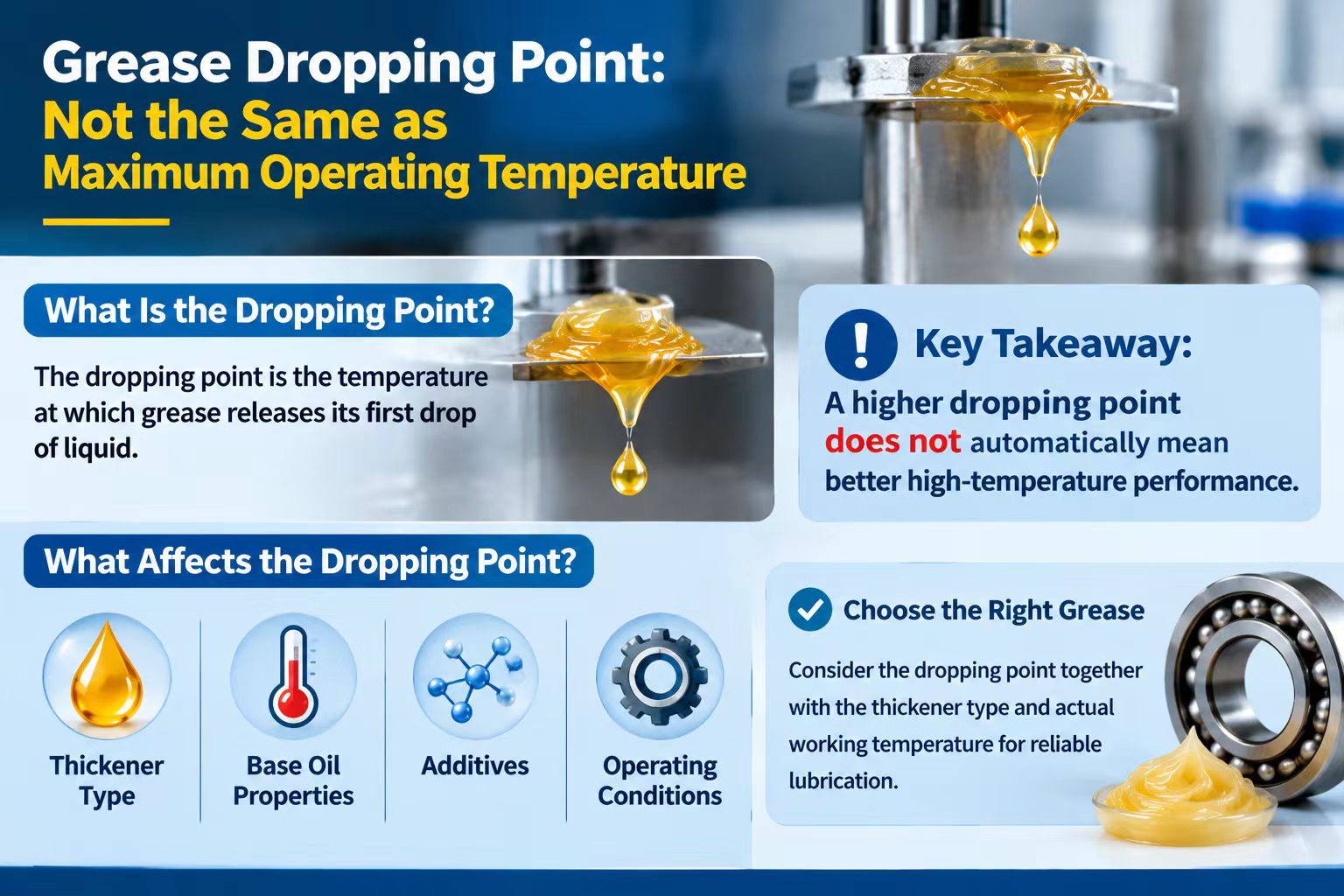
How Does Dropping Point Affect Grease Performance?
Related Article