How Does Dropping Point Affect Grease Performance?
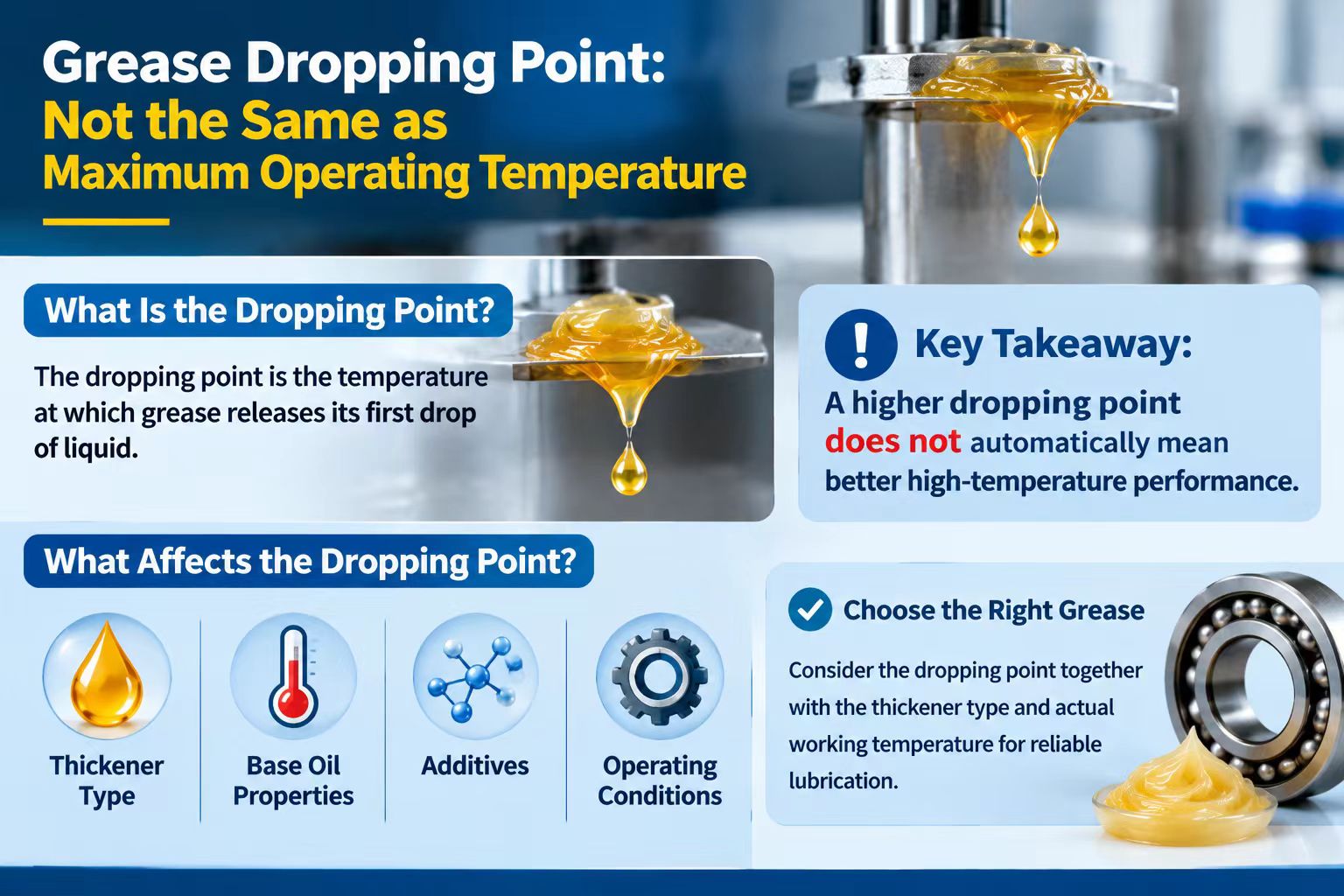
When selecting grease for high-temperature applications, the dropping point is one of the technical parameters worth checking. However, a higher dropping point does not automatically mean better lubrication performance.
To select the right grease, it is important to understand what the dropping point measures and how it relates to actual operating conditions.
1. What Is the Dropping Point of Grease?
The dropping point is the temperature at which grease releases its first drop of liquid under a specified test method.
It is mainly associated with the thermal behavior of the grease thickener structure. When heated, the thickener may lose its ability to retain the base oil, causing the grease to soften and eventually release liquid.
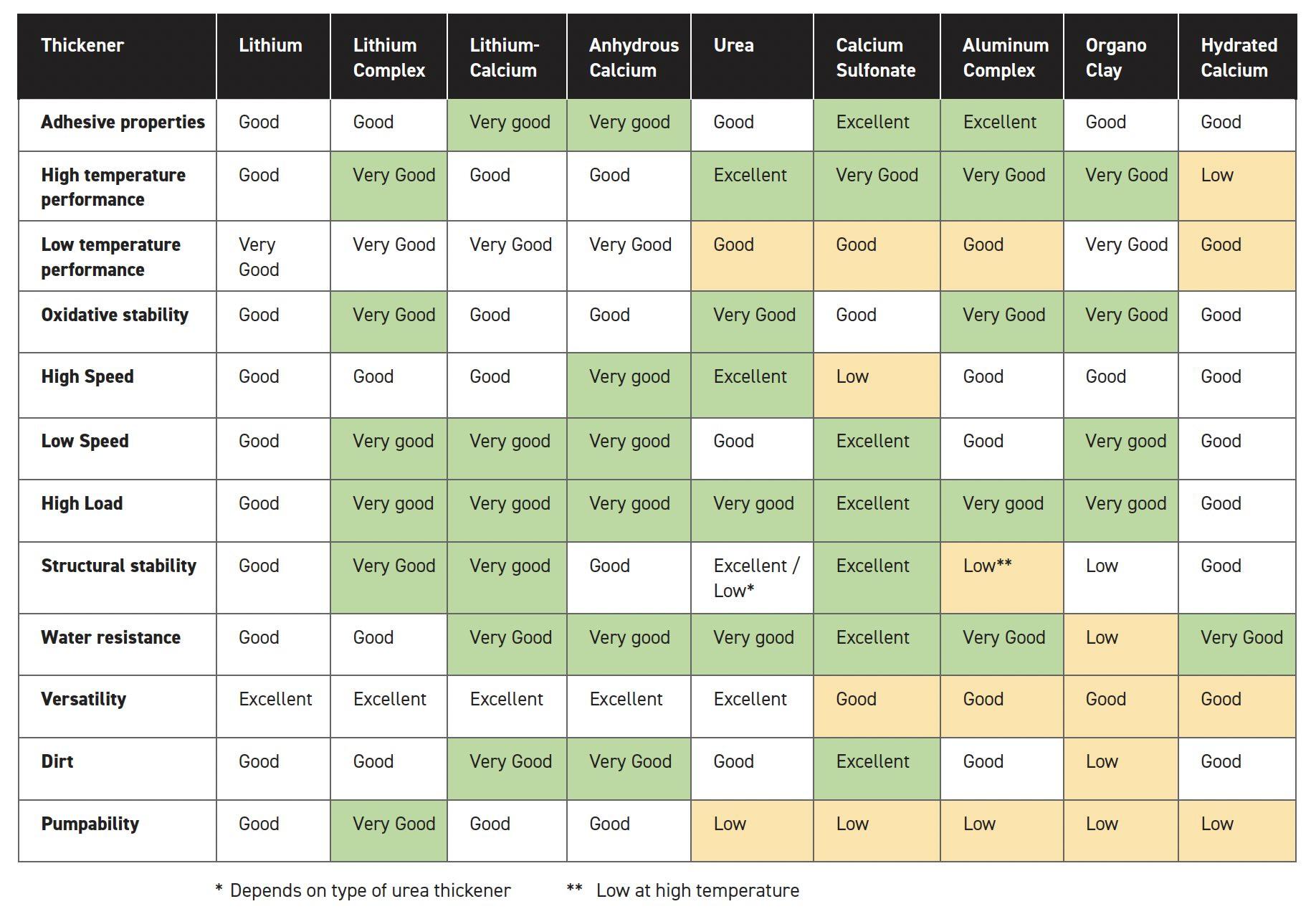
Different thickener systems have different dropping point characteristics.
2. How Does Dropping Point Affect Grease Performance?
The dropping point provides useful information about a grease's thermal characteristics.
-
High-temperature resistance: A higher dropping point may indicate that the thickener structure can withstand higher temperatures before releasing oil.
-
Structural stability: It helps evaluate how the grease responds to heating.
-
Application suitability: It can assist in comparing greases with different thickener systems.
However, dropping point alone cannot determine oxidation resistance, oil evaporation, lubrication life, or bearing performance.
3. Dropping Point of Different Grease Types
Different thickener technologies typically show different dropping point characteristics.
| Grease Type | Typical Dropping Point Characteristics |
|---|---|
| Lithium grease | Around 180–190°C |
| Lithium complex grease | Often above 250°C |
| Polyurea grease | Varies by formulation, often high |
| Calcium sulfonate complex grease | Often above 300°C |
| Conventional calcium grease | Generally lower, often around 90–110°C |
Values are indicative ranges, not guaranteed specifications. Actual results depend on formulation and test method.
Some non-soap or specialized thickener systems may not exhibit a conventional dropping point.
4. Dropping Point Is Not the Maximum Operating Temperature
This is one of the most important points in grease selection.
A grease with a dropping point of 260°C should not automatically be considered suitable for continuous operation at 260°C.
Actual operating temperature limits depend on several factors:
-
Base oil oxidation and evaporation resistance
-
Thickener thermal stability
-
Mechanical stability
-
Load and rotational speed
-
Lubrication method and relubrication interval
For example, a grease may have a high dropping point but still experience rapid oxidation or oil evaporation during prolonged exposure to elevated temperatures.
5. How to Choose Grease Based on Dropping Point
When selecting high-temperature grease, consider the following:
-
Check the dropping point as one reference for thermal characteristics.
-
Review the recommended continuous operating temperature.
-
Evaluate base oil viscosity and oxidation stability.
-
Consider bearing speed, load, and operating conditions.
-
Check the manufacturer's technical data sheet and relubrication recommendations.
The key takeaway: Dropping point is an important grease evaluation parameter, but it is not a standalone indicator of high-temperature performance. A suitable grease must maintain its lubrication properties under the actual operating conditions.
Solid Lubrication Technology: Types, Benefits, and Industrial Applications
Related Article