Significance of ISO 21469 and NSF H1 Certifications for Industrial Lubricants
ISO 21469 and NSF H1 are two globally recognized standards that define the safety and hygiene requirements for lubricants used in food, beverage, pharmaceutical, and cosmetic manufacturing environments. These certifications ensure both product safety and compliance throughout the entire manufacturing and application process.
1. ISO 21469: Hygiene and Risk-Control Standard
ISO 21469 specifies the hygiene requirements for lubricants that may come into incidental contact with food. The standard evaluates not only the formulation but also the entire production environment.
Key elements include:
• Safety assessment of all raw materials
• Controlled and audited manufacturing processes
• Cross-contamination prevention measures
• Traceability and risk-management systems
• Yearly inspections to ensure consistent quality
A lubricant certified to ISO 21469 demonstrates that it is produced under strict sanitary controls and meets international hygiene requirements for sensitive applications.
2. NSF H1: Food-Grade Formulation Certification
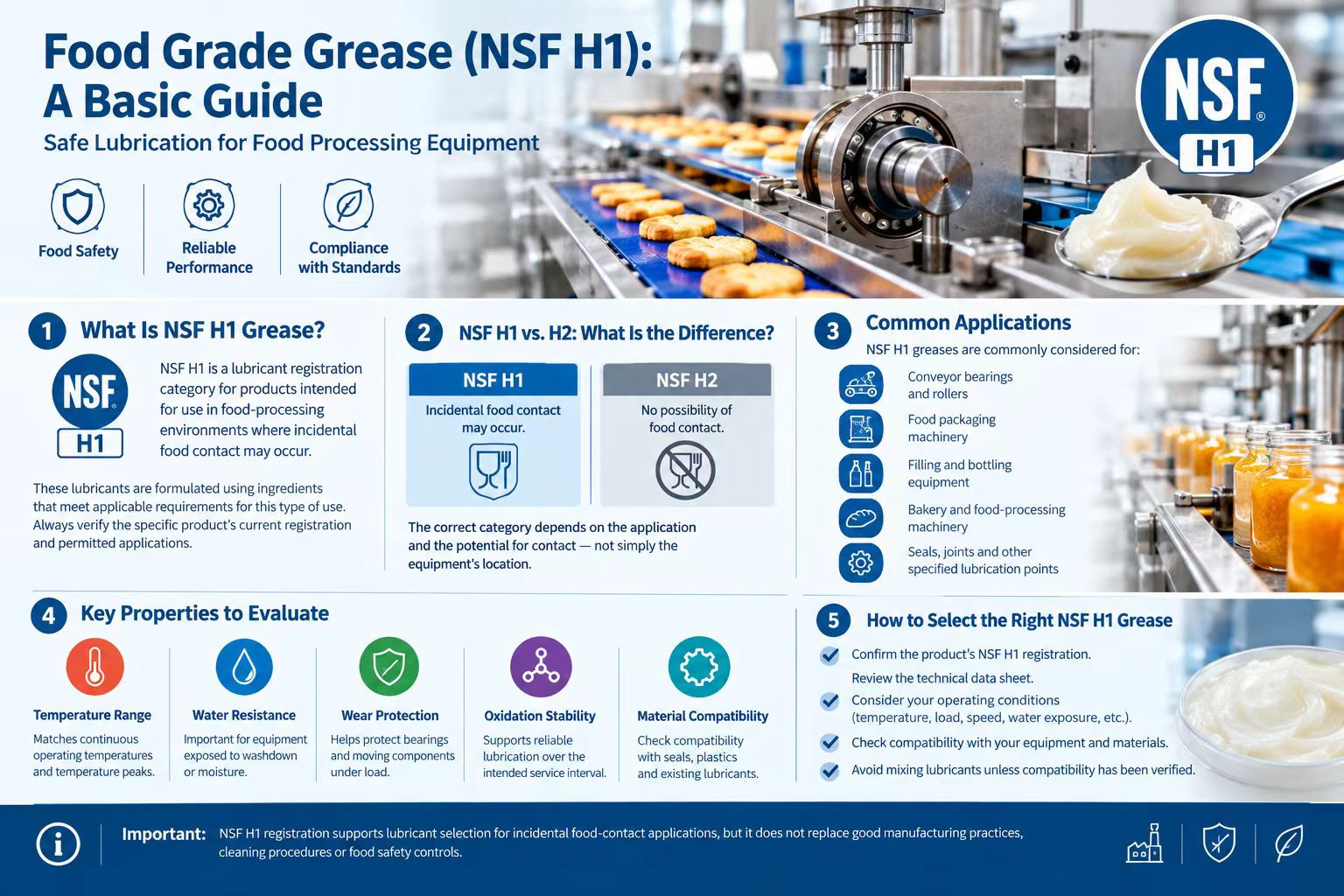
NSF H1 is the most widely adopted certification for food-grade lubricants that may experience incidental food contact (up to 10 ppm).
H1 certification requires:
• All ingredients must appear on approved food-grade lists (FDA, NSF)
• No toxic or migration-risk substances permitted
• Manufacturing processes must prevent contamination
• Labeling and documentation must comply with global food-safety regulations
NSF H1-registered lubricants are accepted for use in food processing, packaging machinery, pharmaceutical equipment, and similar applications.
3. Value of Dual Certification (ISO 21469 + NSF H1)
Products that carry both certifications represent the highest standard of food-grade lubrication. Benefits include:
• Enhanced compliance with HACCP, GFSI, BRC, and FSSC 22000 systems
• Reduced risk of contamination, product recalls, and production downtime
• Stronger brand credibility and easier access to regulated markets
• Reliable lubrication performance with proven safety
• Full alignment with customer and auditor requirements
4. Typical Application Areas
Dual-certified lubricants are commonly used in:
• Food and beverage processing equipment
• Dairy, meat, seafood, and bakery production lines
• Packaging and filling machinery
• Conveyors, bearings, gear systems, mixers, and ovens
• Pharmaceutical and cosmetic manufacturing equipment
How to Select the Right Grease Based on Operating Speed and Load
Grease and Plastic Component Compatibility: Key Factors and Industry Insights
Related Article