High Temperature Grease for Steel Industry Applications
Introduction
The steel industry operates under some of the harshest industrial conditions, including extreme temperatures, heavy loads, moisture, dust, and continuous operation. Selecting the right high temperature grease is essential for ensuring equipment reliability and minimizing downtime.
This article explores common steel industry lubrication challenges and explains how to choose suitable industrial grease high temperature applications in steel mills.
Why Steel Industry Lubrication Is Challenging
Steel production equipment operates in environments exposed to:
- Continuous high temperatures
- Water and steam contamination
- Heavy shock loads
- Metal dust and scale particles
- Slow and high-load bearing movement
These harsh conditions place significant stress on lubricants and require specially formulated grease for steel mills.
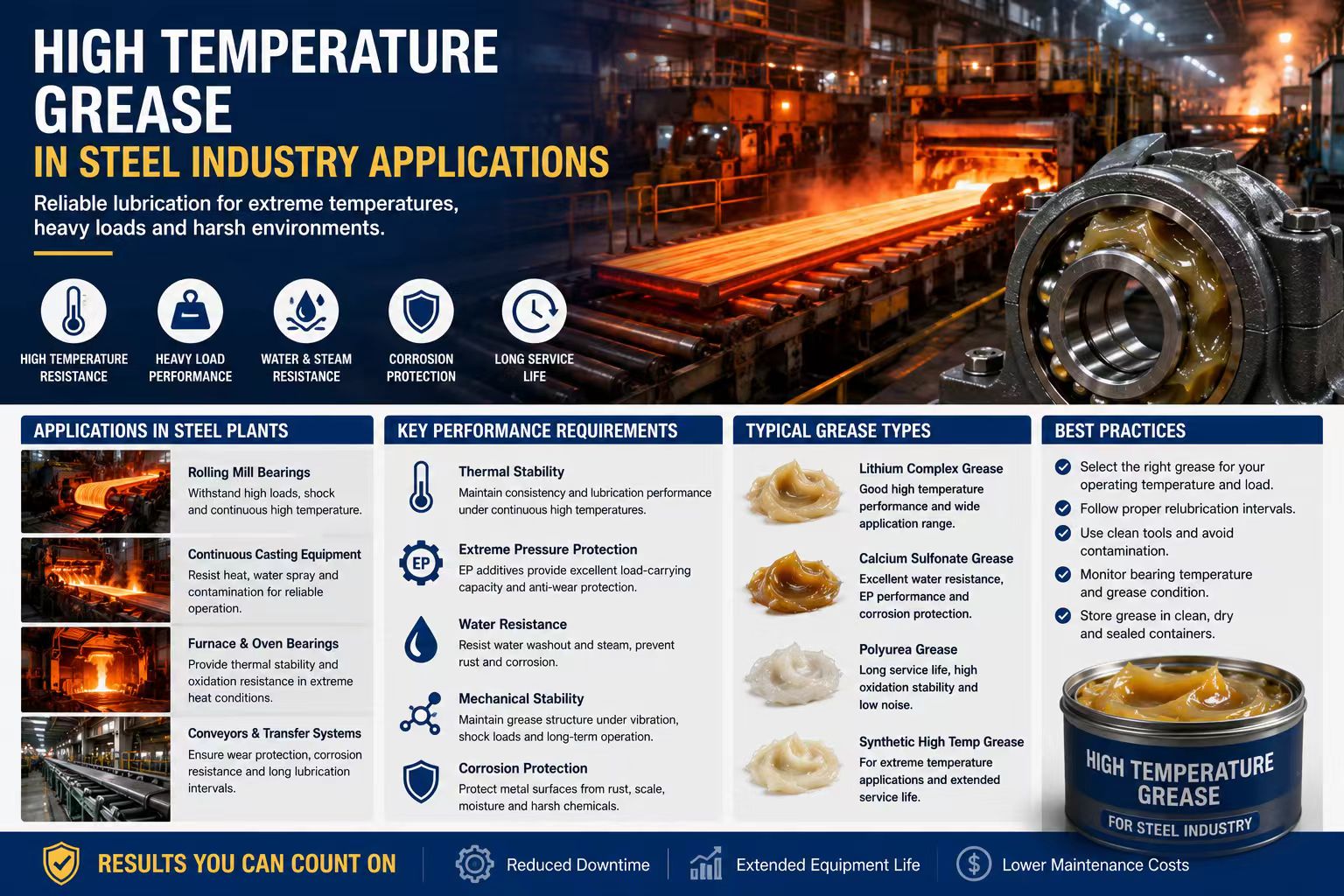
Main Applications of High Temperature Grease in Steel Plants
Rolling Mill Bearings
Require:
- Extreme pressure resistance
- High load-carrying capacity
- Water resistance
Continuous Casting Equipment
Lubricants must withstand:
- Heat exposure
- Water spray contamination
- Long operating cycles
Furnace and Oven Bearings
Need:
- Thermal stability
- Oxidation resistance
- Minimal carbon buildup
Conveyor and Transfer Systems
Require:
- Wear protection
- Corrosion resistance
- Long relubrication intervals
Key Characteristics of High Temperature Grease
1. Thermal Stability
A quality high temperature grease must maintain consistency and lubrication performance under elevated temperatures.
Important properties include:
- High dropping point
- Oxidation resistance
- Low evaporation loss
2. Extreme Pressure (EP) Performance
Steel industry bearings operate under very heavy loads.
Grease should contain:
- EP additives
- Anti-wear protection
- Surface protection technology
3. Water Resistance
In steel mills, water exposure is unavoidable.
Grease must resist:
- Water washout
- Emulsion formation
- Corrosion caused by moisture
4. Mechanical Stability
Lubricants should maintain structure under:
- Heavy vibration
- Shock loads
- Continuous operation
5. Corrosion Protection
Steel mill environments often contain:
- Moisture
- Chemicals
- Metal particles
High-quality grease helps protect bearings and extend equipment life.
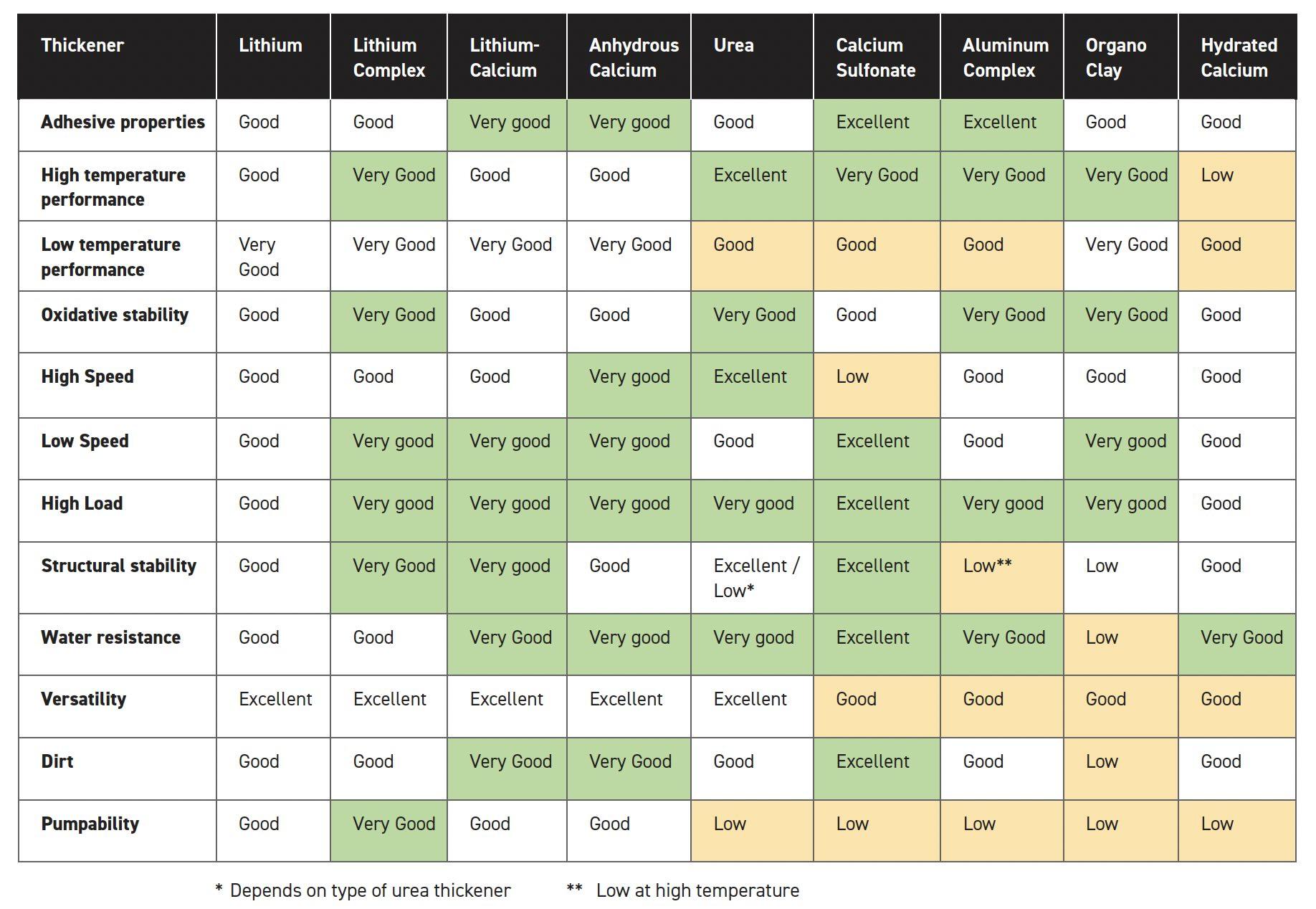
Common Types of High Temperature Grease
Lithium Complex Grease
Widely used due to:
- Good temperature resistance
- Balanced performance
- Cost efficiency
Calcium Sulfonate Grease
Known for:
- Excellent water resistance
- Superior EP performance
- Strong corrosion protection
Polyurea Grease
Suitable for:
- Long-life applications
- Electric motor bearings
- High oxidation resistance
Synthetic High Temperature Grease
Used in:
- Extreme temperature environments
- Critical equipment requiring long service life
Common Lubrication Problems in Steel Mills
Grease Hardening
Caused by:
- Excessive heat
- Oxidation
- Long operating periods
Water Contamination
Leads to:
- Rust formation
- Reduced lubrication performance
Grease Leakage
Often caused by:
- Incorrect viscosity
- Over-greasing
- Seal failure
Bearing Failure
Usually related to:
- Inadequate lubrication
- Wrong grease selection
- Contamination
Best Practices for Steel Industry Lubrication
- Use grease designed for high-temperature industrial environments
- Follow proper relubrication intervals
- Avoid mixing incompatible greases
- Monitor bearing temperature and grease condition
- Store lubricants properly to avoid contamination
Conclusion
Reliable steel industry lubrication depends on selecting the right high temperature grease for demanding operating conditions. By understanding equipment requirements and lubrication challenges, operators can improve equipment reliability, reduce downtime, and extend bearing life in steel mill operations.
Conveyor System Lubrication for Industrial Maintenance
Wind Turbine Bearing Lubrication Solutions Guide
Related Article