Grease Life Calculation and Influencing Factors in High-Speed Bearing Lubrication
In high-speed bearing applications, grease life is one of the most critical parameters affecting reliability, maintenance intervals, and total operating cost. Unlike oil lubrication, grease lubrication relies on a limited amount of lubricant, making degradation mechanisms such as oxidation, oil separation, and mechanical shear especially important.
Understanding how grease life is estimated—and which factors shorten or extend it—is essential for proper lubricant selection and maintenance planning.
1. What Is Grease Life in High-Speed Bearings
Grease life refers to the period during which a grease can provide effective lubrication before its properties degrade to a level that can no longer protect the bearing. In high-speed bearings, grease failure usually occurs due to:
-
Base oil oxidation
-
Oil evaporation or bleed
-
Thickener breakdown
-
Mechanical shear under high DN values
Grease life is typically defined as the time until a critical increase in bearing temperature, noise, or friction is observed.
2. Key Parameters Used in Grease Life Estimation
Although exact grease life depends on application-specific testing, industry models commonly consider the following factors:
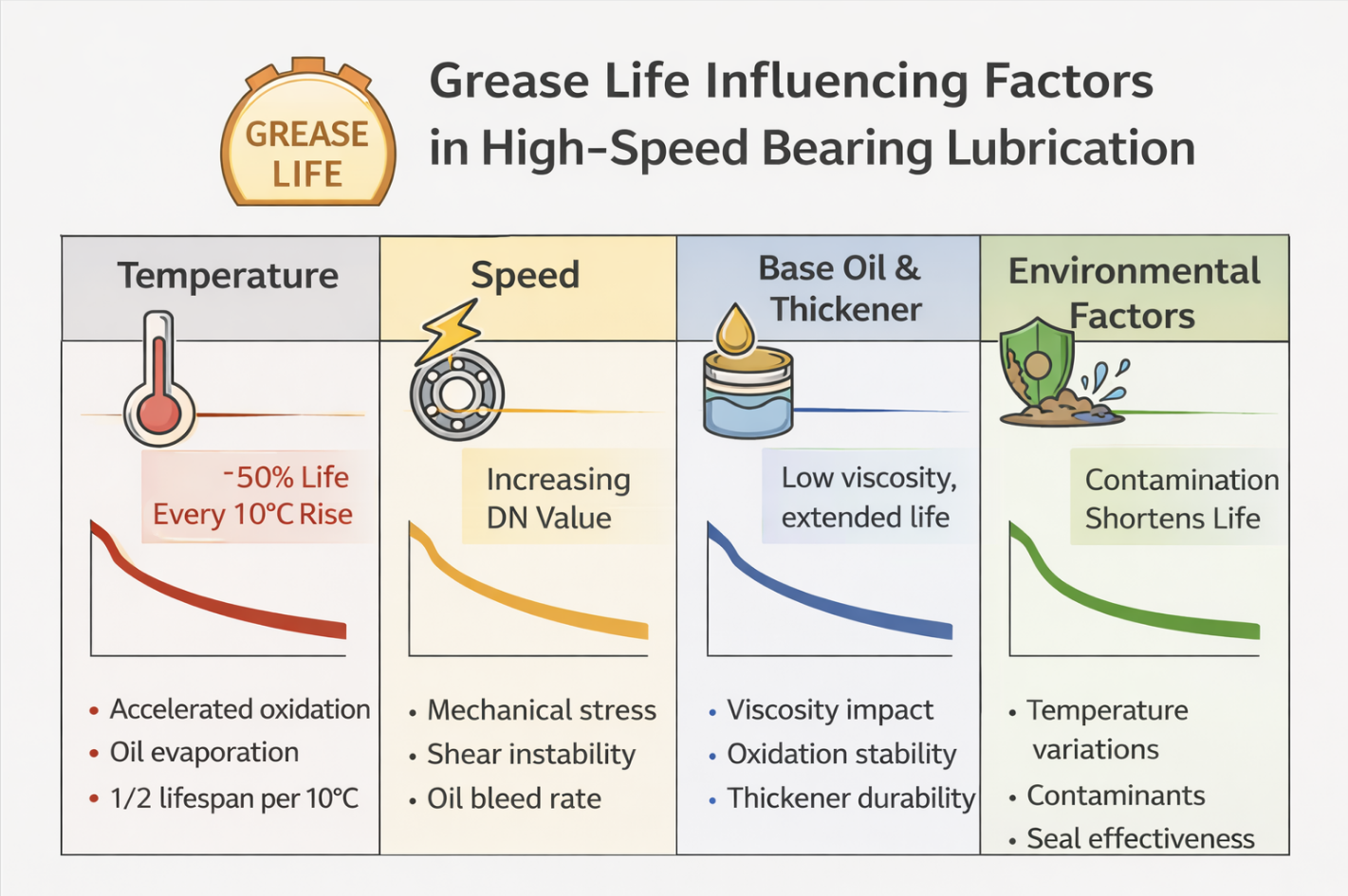
Operating Temperature
Temperature is the dominant factor. As a general rule:
-
Every 10°C increase in operating temperature may reduce grease life by approximately 50%.
Rotational Speed (DN Value)
DN value = bearing bore diameter (mm) × rotational speed (rpm)
High DN values increase:
-
Mechanical shear stress
-
Heat generation
-
Oil separation rate
Greases for high-speed bearings require low internal friction and high shear stability.
Base Oil Type and Viscosity
-
Low-viscosity synthetic oils (PAO, ester) improve high-speed performance
-
Excessively high viscosity increases heat buildup
-
PFPE oils provide superior thermal and oxidative stability for extreme speeds
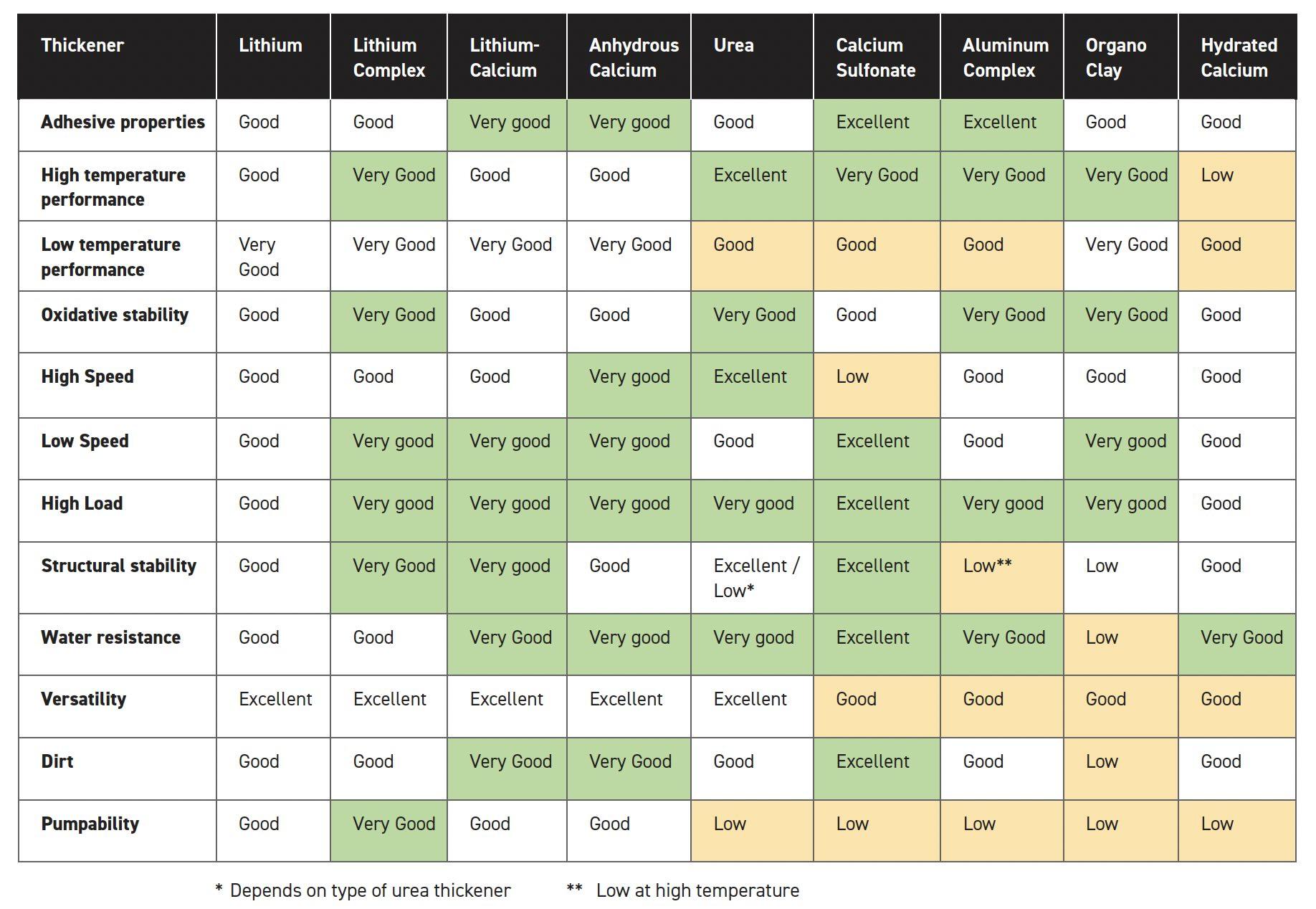
Thickener System
-
Polyurea: excellent oxidation resistance and long life
-
Lithium complex: balanced performance, moderate speed capability
-
Calcium sulfonate: strong load capacity but limited high-speed suitability
Bearing Load
Although speed dominates in high-speed applications, load still affects grease life by influencing oil film thickness and contact stress.
3. Environmental and Application Factors
Additional factors that significantly affect grease life include:
-
Ambient temperature
-
Housing heat dissipation
-
Sealing efficiency
-
Contamination (dust, moisture, chemicals)
-
Re-lubrication method and interval
Poor sealing or contamination can shorten grease life far more than speed alone.
4. Why Grease Life Calculation Is an Estimate
Grease life calculations are guidelines, not guarantees. Real operating conditions often differ from laboratory assumptions. Therefore, manufacturers recommend validating grease life through:
-
Field testing
-
Temperature monitoring
-
Vibration and noise analysis
-
Scheduled inspections
For critical high-speed systems, conservative re-lubrication intervals are preferred.
Conclusion
In high-speed bearing lubrication, grease life is governed primarily by temperature, speed, base oil characteristics, and thickener stability. Accurate estimation requires a holistic evaluation of operating conditions rather than reliance on a single formula. Selecting a grease specifically designed for high-speed applications and controlling thermal and contamination factors are the most effective ways to extend bearing service life.
The Role of Lubricants in Energy Efficiency and Maintenance Cost Control
How to Select the Right Grease Based on Operating Speed and Load
Related Article