How to Select the Right Grease Based on Operating Speed and Load
Selecting the correct grease for industrial equipment requires a clear understanding of operating speed and applied load. These two factors directly determine lubricant film formation, friction behavior, heat generation, and component service life. Improper grease selection often leads to overheating, accelerated wear, noise, or premature bearing failure.
This article explains how speed and load influence grease selection and provides practical guidelines for choosing the appropriate grease type.
1. Understanding Operating Speed
Operating speed is commonly expressed using the DN value, calculated as:
DN = Bearing bore diameter (mm) × Rotational speed (rpm)
High-Speed Applications
Examples:
-
Electric motor bearings
-
SMT machine spindles
-
High-speed fans
Grease requirements:
-
Low base oil viscosity (ISO VG 32–68)
-
Low internal friction
-
High shear stability
-
Minimal heat generation
Recommended grease types:
-
PAO synthetic grease
-
Ester-based grease
-
Polyurea thickened grease
High-viscosity grease at high speed can cause excessive heat and lubricant breakdown.
2. Understanding Load Conditions
Load determines the required oil film strength and pressure resistance.
Light Load
Examples:
-
Precision instruments
-
Small electric motors
Grease selection:
-
Lower viscosity oils
-
Standard anti-wear performance
Medium Load
Examples:
-
Conveyors
-
Linear guides
-
Automation equipment
Grease selection:
-
ISO VG 100–220
-
Balanced EP and anti-wear additives
Heavy Load / Shock Load
Examples:
-
Injection molding machines
-
Mining conveyors
-
Gear couplings
Grease requirements:
-
High base oil viscosity (ISO VG 220–460+)
-
Strong EP additives
-
Excellent mechanical stability
Recommended grease types:
-
Calcium sulfonate complex grease
-
Lithium complex EP grease
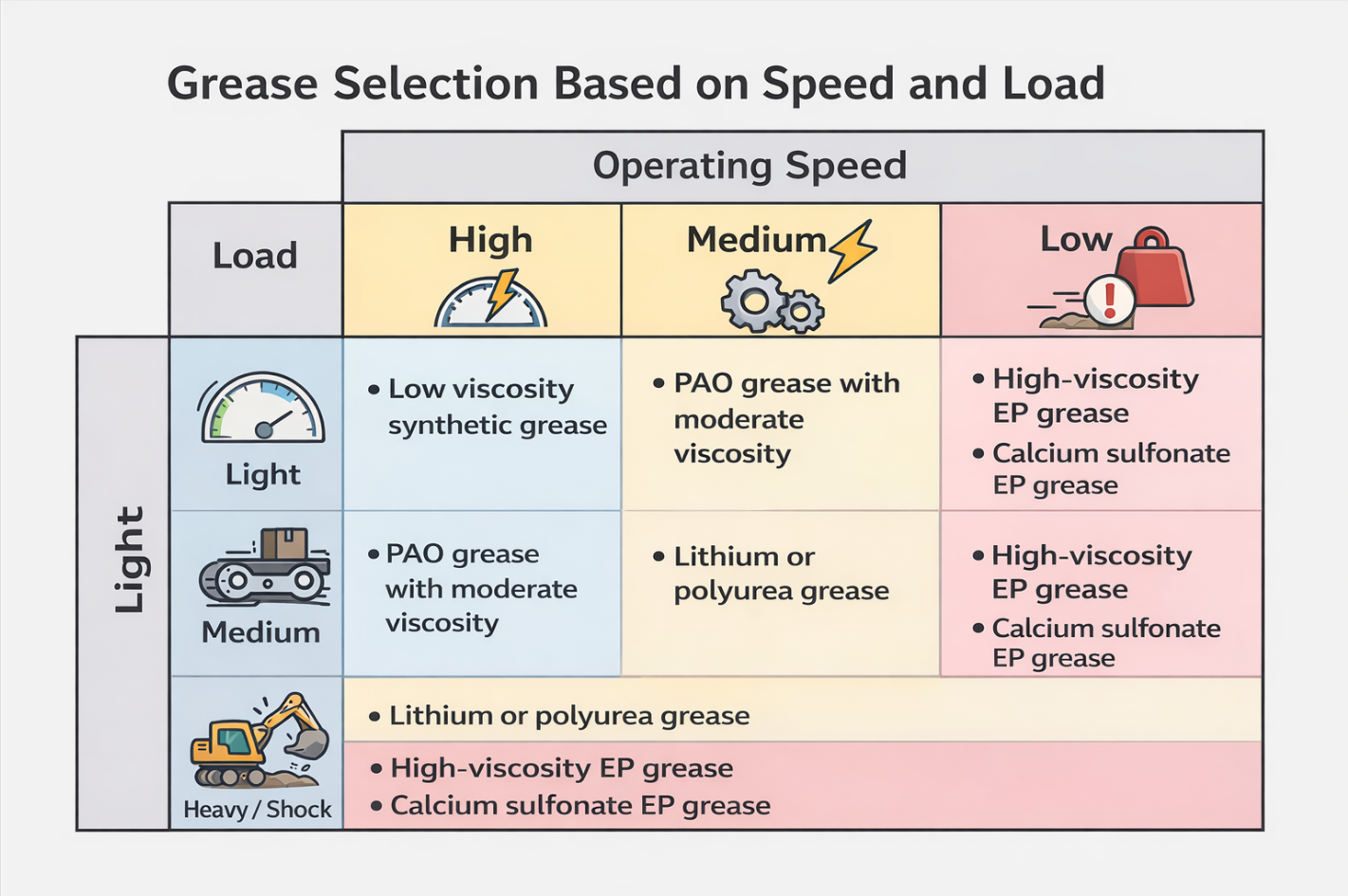
3. Matching Speed and Load Together
| Speed | Load | Recommended Grease Characteristics |
|---|---|---|
| High | Light | Low viscosity synthetic grease |
| High | Medium | PAO grease with moderate viscosity |
| Medium | Medium | Lithium or polyurea grease |
| Low | Heavy | High-viscosity EP grease |
| Low | Shock | Calcium sulfonate EP grease |
Balancing speed and load ensures stable lubrication without excessive friction or film collapse.
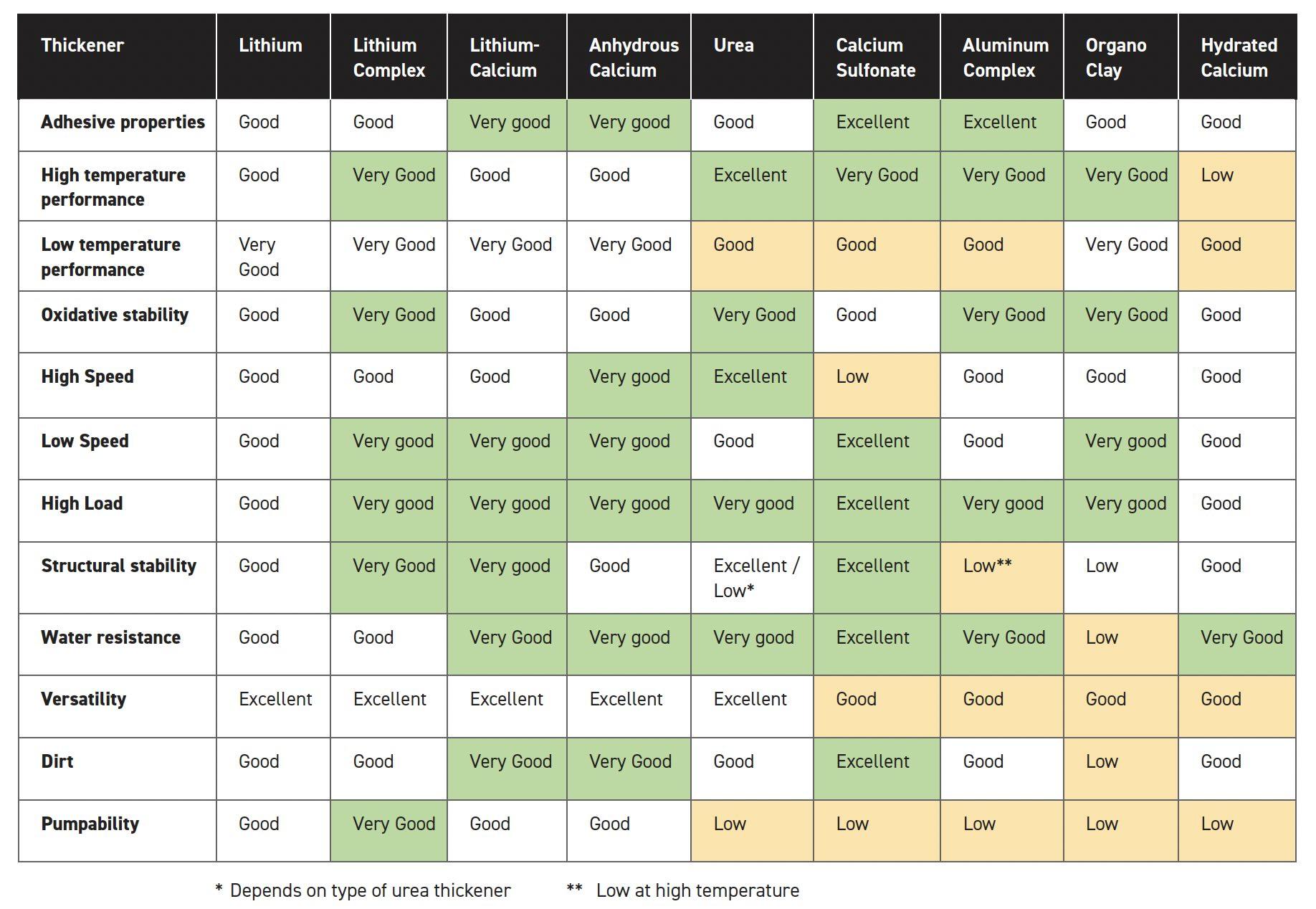
4. Influence of Thickener Type
The thickener system also plays a critical role:
-
Polyurea: Excellent for high-speed, long-life applications
-
Lithium Complex: Versatile, good load capacity
-
Calcium Sulfonate: Outstanding EP performance and water resistance
-
PTFE (PFPE grease): Extreme temperature and chemical environments
5. Common Selection Mistakes
-
Using high-viscosity grease in high-speed bearings
-
Ignoring DN value in precision equipment
-
Over-relying on EP grease for light-load, high-speed systems
-
Mixing incompatible grease types
Correct selection should always consider speed, load, temperature, and environment together.
Conclusion
Selecting grease based on operating speed and load is essential for maintaining reliable equipment performance. By understanding DN values, load intensity, and grease formulation characteristics, operators can significantly reduce wear, heat generation, and maintenance costs while extending component service life.
Grease Life Calculation and Influencing Factors in High-Speed Bearing Lubrication
Significance of ISO 21469 and NSF H1 Certifications for Industrial Lubricants
Related Article