Lubrication Maintenance Cycles and Grease Replacement Standards for Electronic Manufacturing Equipment
In electronic manufacturing environments—such as SMT lines, semiconductor assembly, and precision automation—lubrication directly affects equipment accuracy, stability, and long-term reliability. Roller bearings, linear guides, ball screws, gears, and drive units all require scheduled lubrication to minimize wear and prevent unexpected downtime.
This article outlines standard lubrication cycles and grease replacement guidelines widely applied across modern electronic manufacturing equipment.
1. Standard Lubrication Cycles
Different components require different lubrication intervals depending on speed, load, and operating conditions.
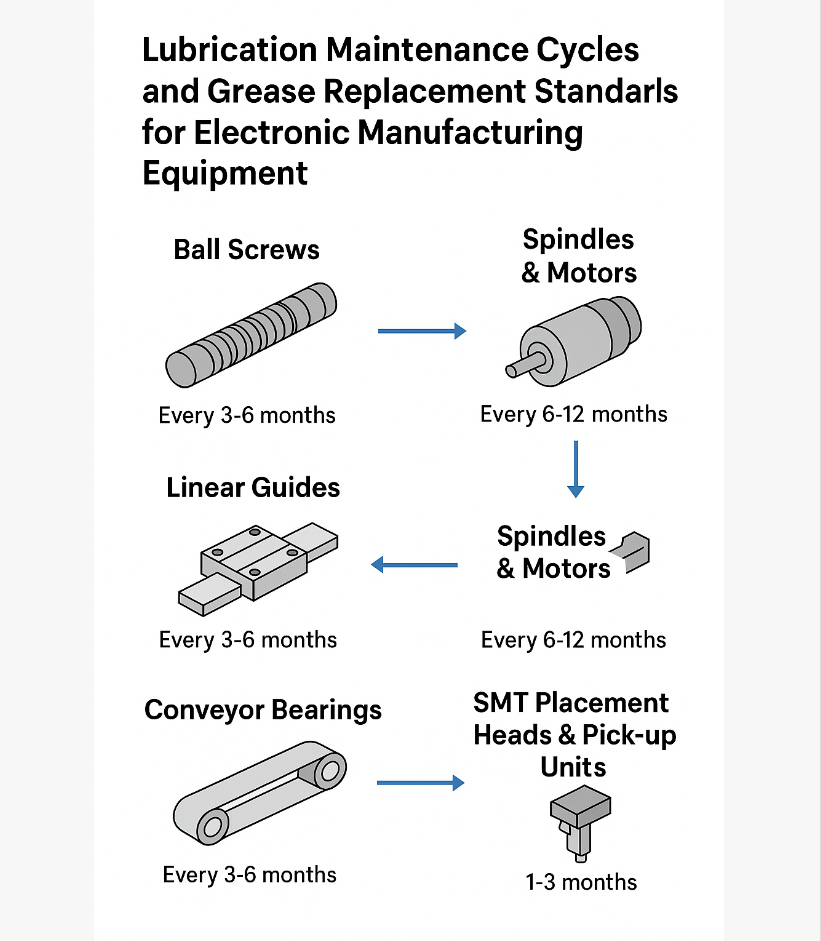
Common Industry Intervals
-
Ball Screws: Every 3–6 months, depending on travel distance and load
-
Linear Guides (LM Guides): Every 1–3 months under continuous operation
-
High-speed Spindles / Motors: Every 6–12 months with high-temperature synthetic grease
-
Conveyor Bearings: Every 3–6 months
-
SMT Placement Heads & Pick-up Units: 1–3 months, light-viscosity grease or oil
-
Robotic Axes & Joints: 6–12 months depending on duty cycle
Actual intervals vary by manufacturer specifications, but preventive lubrication is essential to maintaining precision.
2. Indicators for Grease Replacement
Beyond time intervals, grease should be replaced when the following conditions appear:
-
Increased friction noise or vibration
-
Grease darkening or oxidation
-
Visible contamination (dust, flux fumes, solder powder)
-
Oil separation or bleeding beyond normal levels
-
Drop in positioning accuracy or inconsistent motion
These symptoms indicate lubricant degradation and the need for immediate re-lubrication.
3. Recommended Grease Types
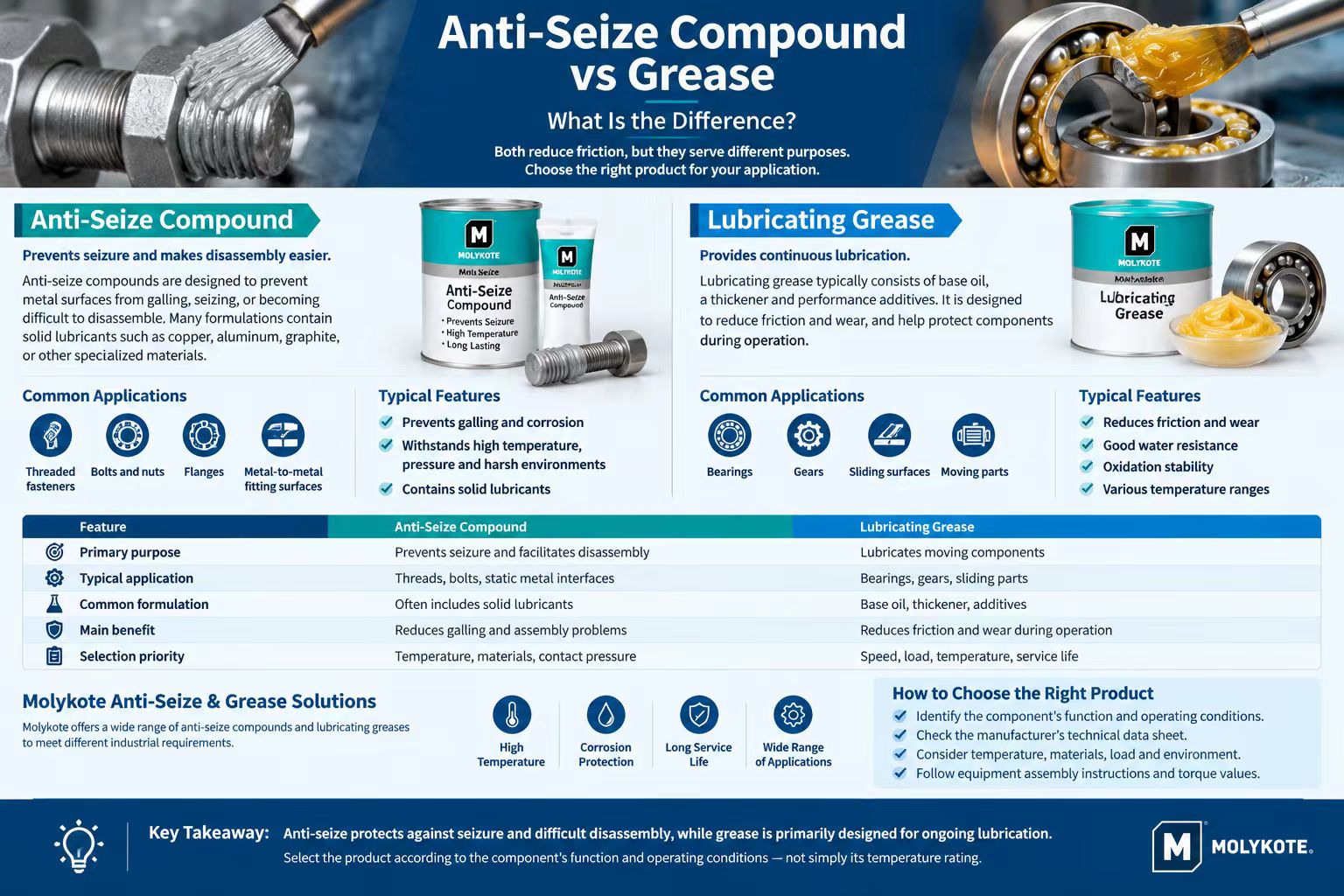
Electronic manufacturing equipment typically uses:
-
Synthetic hydrocarbon (PAO) greases for ball screws and guides
-
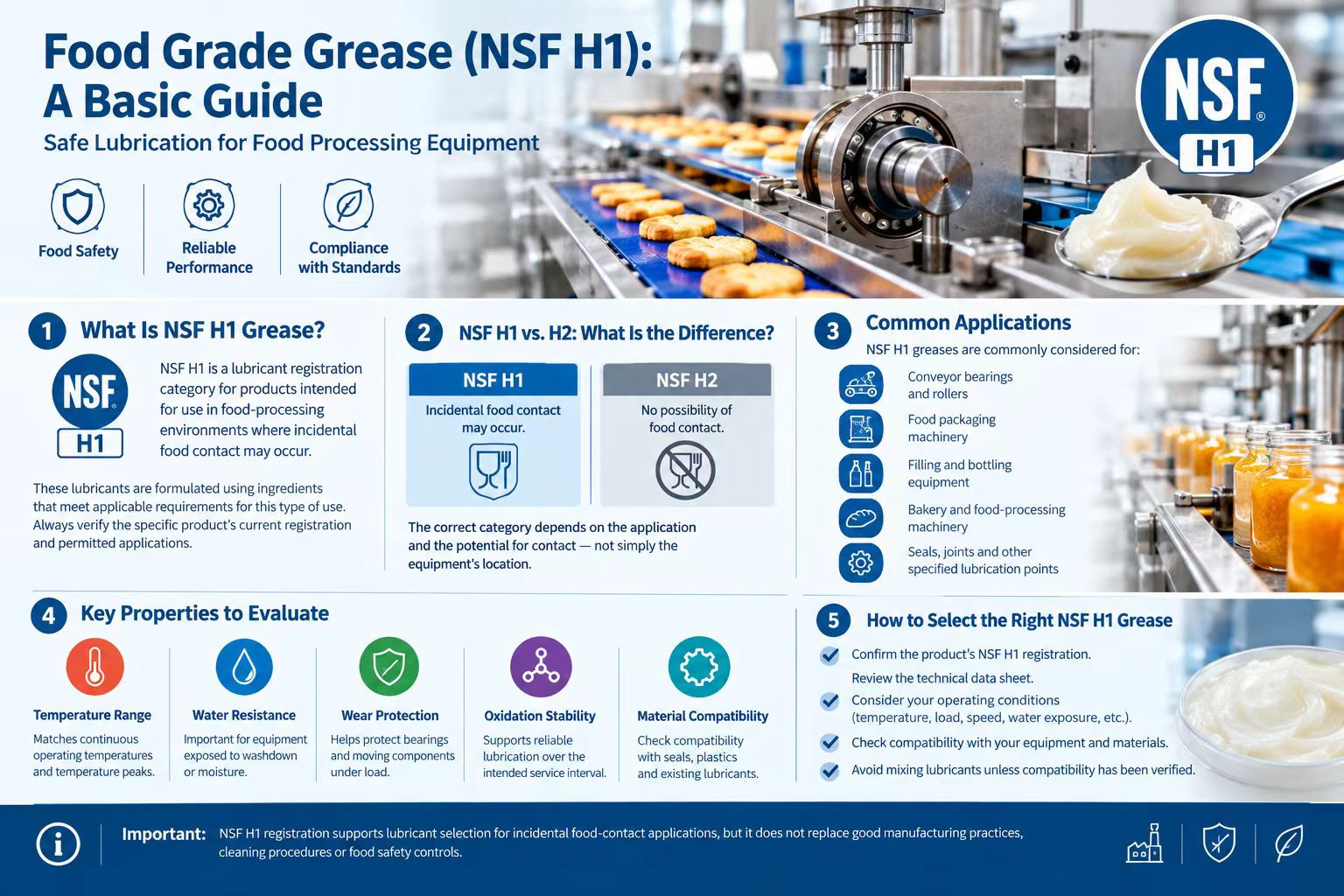
Fluorinated (PFPE) greases for high-temperature or chemical exposure areas
-
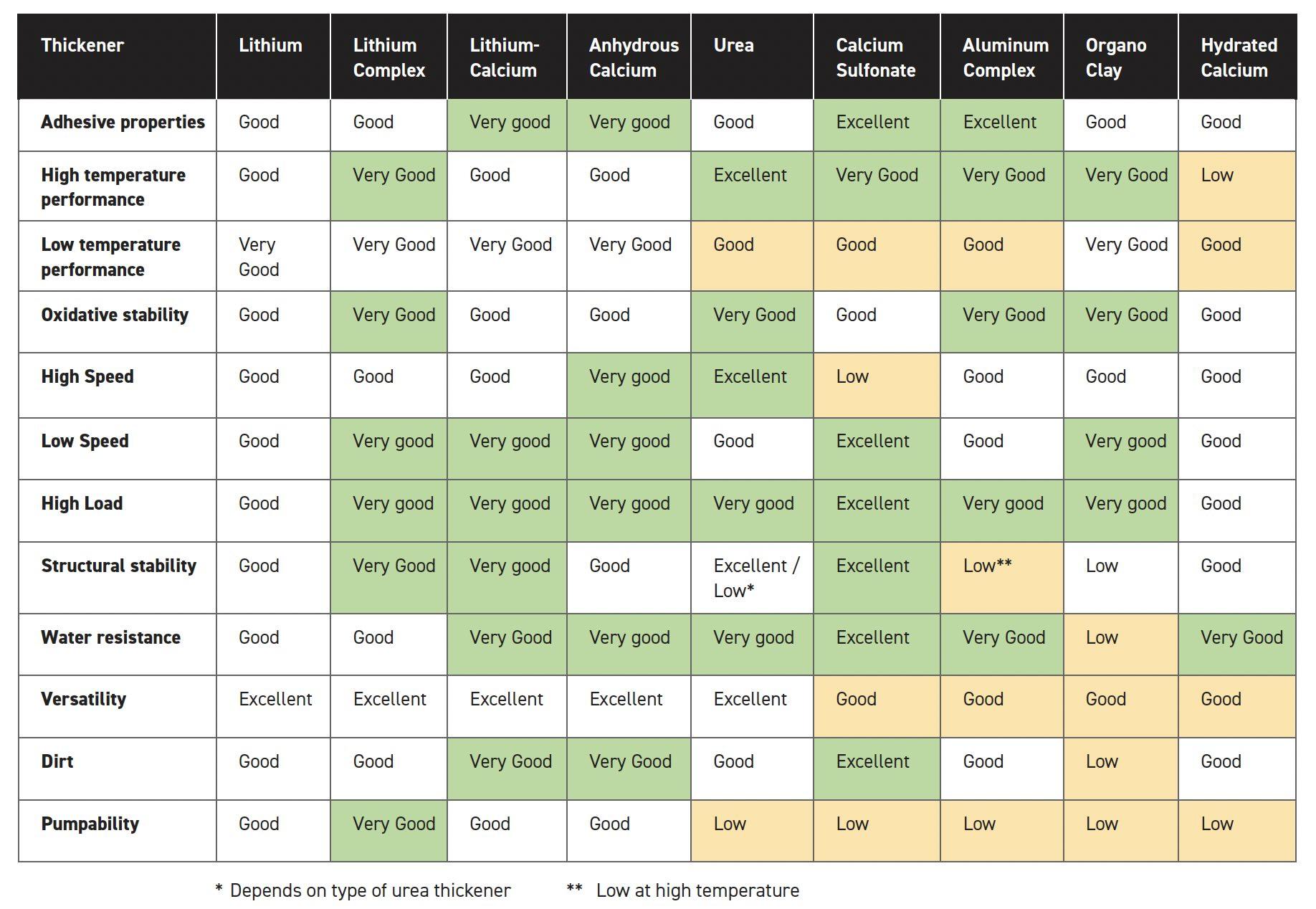
Lithium-complex and urea-based greases for general-purpose bearings
-
Low-particle / cleanroom-grade greases for semiconductor processes
Following OEM recommendations ensures compatibility and prevents performance loss.
4. Grease Replacement Procedures
Proper replacement is critical to equipment reliability:
-
Remove old grease with lint-free wipes or suitable solvent
-
Inspect components for wear, pitting, or discoloration
-
Apply new grease in manufacturer-specified quantities
-
Manually cycle the axis to allow uniform distribution
-
Wipe excess residue to avoid contamination
-
Record maintenance data for future planning
Adhering to these steps supports consistent equipment accuracy and lifetime extension.
5. Benefits of Scheduled Lubrication
-
Reduced bearing and guide wear
-
Lower operating noise
-
Higher machine stability and placement accuracy
-
Fewer unexpected stoppages
-
Extended component lifespan
-
Improved long-term cost efficiency
For high-speed, high-precision electronic manufacturing machines, lubrication is one of the most critical maintenance elements.
Common Signs and Detection Methods for Grease Oxidation, Evaporation, and Aging
Understanding the Mechanism of Molykote High-Temperature Bearing Grease
Related Article