Conveyor System Lubrication for Industrial Maintenance
Introduction
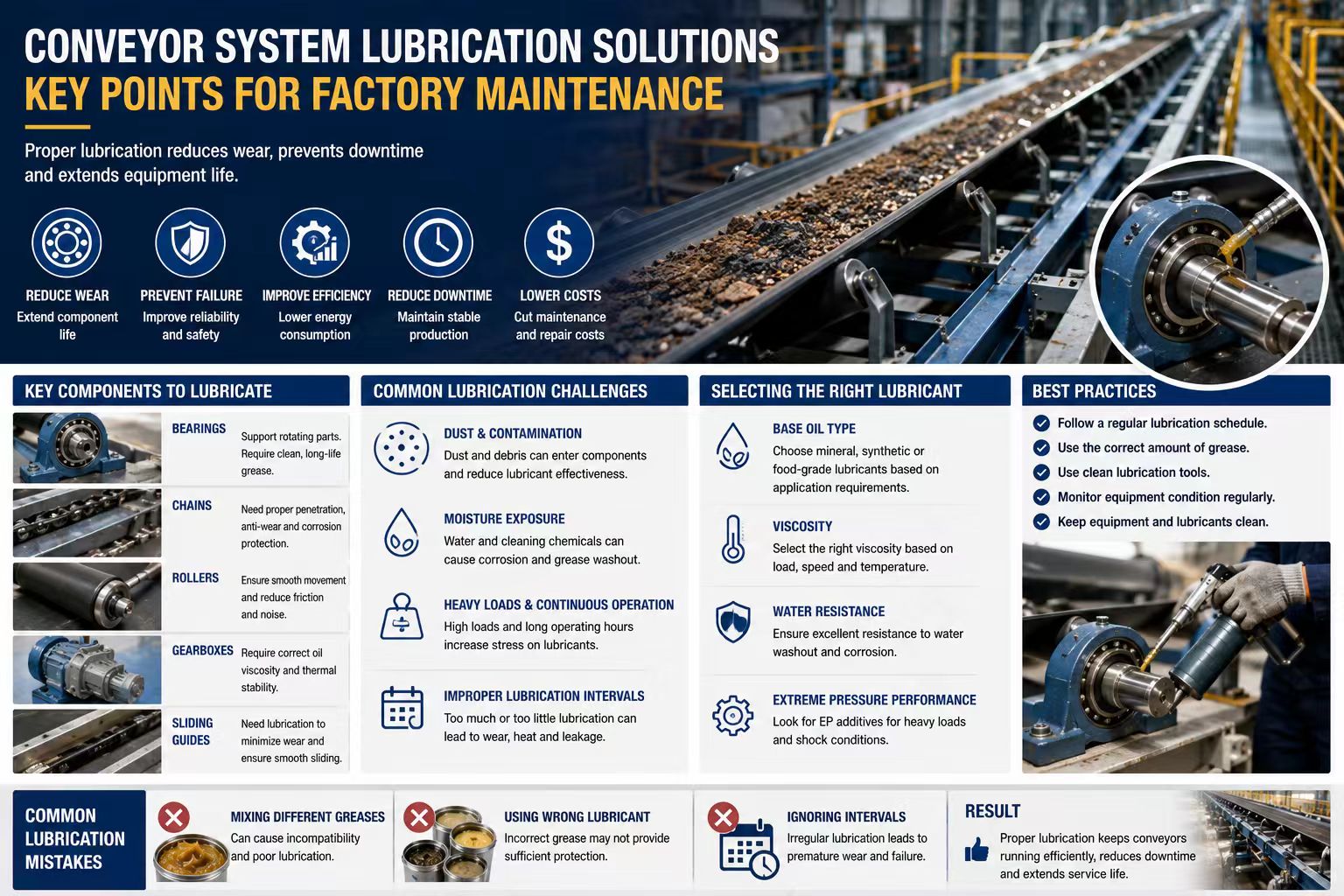
Reliable conveyor system lubrication is essential for maintaining stable production, reducing downtime, and extending equipment life in industrial facilities.
Conveyor systems operate continuously under varying loads, speeds, and environmental conditions. Proper conveyor grease maintenance helps reduce friction, minimize wear, and improve operational efficiency.
This guide explains the key lubrication requirements and maintenance practices for industrial conveyor lubrication systems.
Why Conveyor Lubrication Is Important
Conveyor systems contain multiple moving components that require effective lubrication, including:
- Bearings
- Chains
- Rollers
- Gearboxes
- Sliding guides
Without proper lubrication, these components may experience:
- Excessive wear
- Increased power consumption
- Noise and vibration
- Premature equipment failure
Effective factory lubrication solutions help maintain productivity and reduce maintenance costs.
Common Conveyor Lubrication Challenges
1. Dust and Contamination
Industrial environments often contain:
- Dust
- Metal particles
- Debris
Contaminants can enter bearings and chains, reducing lubricant effectiveness.
2. Moisture and Water Exposure
Conveyor systems in:
- Food plants
- Packaging lines
- Outdoor facilities
may be exposed to water or cleaning chemicals, increasing corrosion risk.
3. Heavy Loads and Continuous Operation
Industrial conveyors frequently operate:
- 24/7
- Under heavy loads
- In high-temperature conditions
This places significant stress on lubricants.
4. Improper Lubrication Intervals
Both under-lubrication and over-lubrication can lead to:
- Increased wear
- Heat buildup
- Grease leakage
Key Components Requiring Lubrication
Conveyor Bearings
Require:
- Low friction
- Wear protection
- Long grease life
Conveyor Chains
Need:
- Penetrating lubrication
- Anti-wear protection
- Corrosion resistance
Rollers and Sliding Parts
Require:
- Smooth movement
- Reduced noise
- Surface protection
Gearboxes
Need:
- Proper oil viscosity
- Thermal stability
- Load-carrying performance
Selecting the Right Conveyor Lubricant
Base Oil Type
Common choices include:
- Mineral oil grease
- Synthetic grease
- Food-grade lubricants (for food processing plants)
Viscosity Selection
Correct viscosity depends on:
- Load
- Speed
- Temperature
Water Resistance
For humid environments, lubricants should resist:
- Water washout
- Corrosion
- Chemical cleaning agents
Extreme Pressure Performance
Heavy-duty conveyors require:
- EP additives
- Shock load protection
- Anti-wear properties
Best Practices for Conveyor Grease Maintenance
Establish a Lubrication Schedule
Maintenance intervals should be based on:
- Operating hours
- Load conditions
- Environmental exposure
Avoid Over-Lubrication
Too much grease can cause:
- Heat generation
- Seal damage
- Product contamination
Use Clean Lubrication Tools
Contaminated grease may introduce:
- Dirt
- Metal particles
- Moisture
Monitor Equipment Condition
Regular inspection helps identify:
- Noise
- Vibration
- Grease leakage
- Bearing temperature changes
Common Lubrication Mistakes
Mixing Different Greases
Can cause:
- Chemical incompatibility
- Grease separation
- Reduced lubrication performance
Using Incorrect Lubricant Type
General-purpose grease may not withstand:
- Heavy loads
- High temperatures
- Water exposure
Ignoring Relubrication Intervals
Leads to:
- Premature wear
- Bearing damage
- Unexpected downtime
Conclusion
Effective conveyor system lubrication is critical for maintaining reliable production and reducing maintenance costs. By implementing proper conveyor grease maintenance practices and selecting the correct lubricant, factories can improve equipment reliability and extend service life.
Textile Machinery Grease Selection and Applications
High Temperature Grease for Steel Industry Applications
Related Article