Automotive Assembly Grease Selection Guide
Introduction
In modern manufacturing, automotive assembly grease plays a critical role in ensuring smooth assembly, reducing wear, and improving long-term component performance.
Choosing the right assembly lubricant automotive applications require careful consideration of materials, operating conditions, and functional requirements. This guide explains how to select the best grease for car assembly processes.
Why Lubrication Is Important in Automotive Assembly
During assembly, lubrication is not just for reducing friction—it also provides:
- Anti-seize protection for threaded components
- Noise and vibration reduction
- Corrosion protection during service life
- Improved assembly efficiency
Improper industrial grease automotive selection can lead to noise issues, premature wear, or assembly defects.
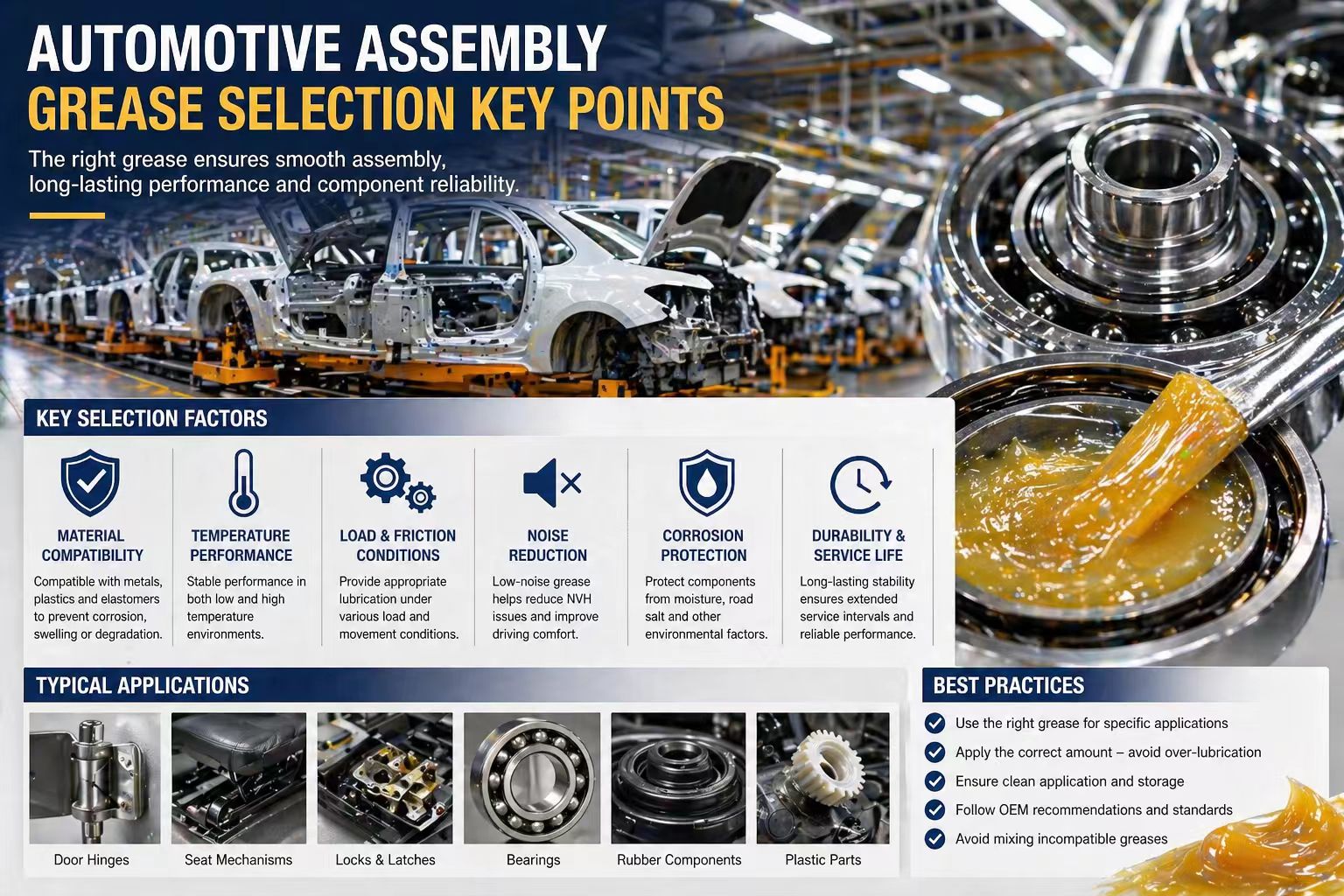
Key Factors in Automotive Assembly Grease Selection
1. Material Compatibility
Grease must be compatible with:
- Metals (steel, aluminum)
- Plastics (PA, POM, ABS)
- Elastomers (rubber seals)
Incompatible grease can cause swelling, cracking, or degradation of materials.
2. Temperature Resistance
Automotive components experience wide temperature ranges:
- Low temperature → cold start conditions
- High temperature → engine or braking systems
Grease must maintain performance across these extremes.
3. Load and Friction Conditions
Different assembly points require different lubrication characteristics:
- Light load → low friction grease
- Heavy load → EP (extreme pressure) grease
4. Noise Reduction Performance
For interior and precision components:
- Low-noise grease is essential
- Helps eliminate squeak and rattle (NVH issues)
5. Corrosion Protection
Grease should protect metal surfaces from:
- Moisture
- Road salt
- Environmental exposure
6. Durability and Service Life
Automotive assembly grease is often expected to last the entire product lifecycle:
- Long-term stability
- Resistance to oxidation
- Minimal evaporation
Common Types of Grease Used in Automotive Assembly
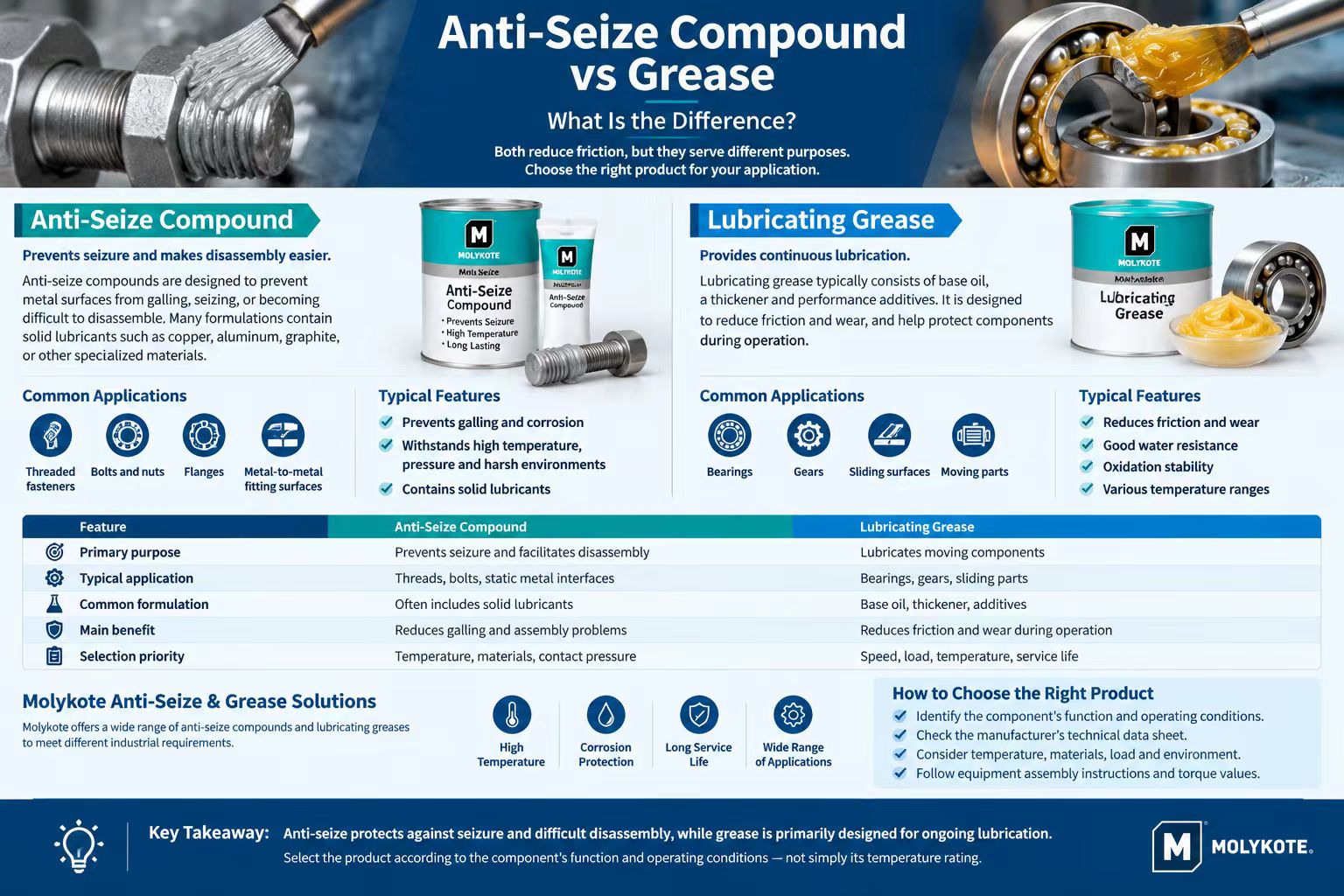
Multi-Purpose Assembly Grease
Used for:
- General components
- Fasteners and fittings
Silicone Grease
Used for:
- Rubber and plastic components
- Electrical insulation
PFPE-Based Grease
Used in:
- Extreme temperature conditions
- Long-life sealed components
Anti-Seize Compounds
Used for:
- Threaded connections
- High-temperature bolts
Typical Automotive Assembly Applications
- Door hinges and locks
- Seat mechanisms
- Brake system components
- Electrical connectors
- Plastic gear systems
Each application requires a specific automotive assembly grease formulation.
Common Mistakes to Avoid
- Using incompatible grease on plastics or rubber
- Over-lubrication causing contamination
- Mixing different grease types
- Using general-purpose grease for precision components
Best Practices for Assembly Lubrication
- Apply the correct amount of grease
- Use clean and controlled application methods
- Follow OEM specifications
- Store grease properly
Conclusion
Selecting the right automotive assembly grease ensures reliable performance, reduced noise, and long service life. By understanding material compatibility, operating conditions, and application requirements, manufacturers can optimize assembly lubricant automotive processes.
Wind Turbine Bearing Lubrication Solutions Guide
Motor Bearing Lubrication: Reduce Noise and Extend Bearing Life
Related Article