Understanding Grease Consistency, Base Oil Viscosity, and Operating Temperature Range
Selecting the correct grease for industrial machinery requires understanding three key parameters: consistency (NLGI grade), base oil viscosity (ISO VG), and operating temperature range. These properties determine how grease behaves under load, speed, and temperature—directly influencing bearing performance, equipment reliability, and maintenance intervals.
1. Grease Consistency (NLGI Grade)
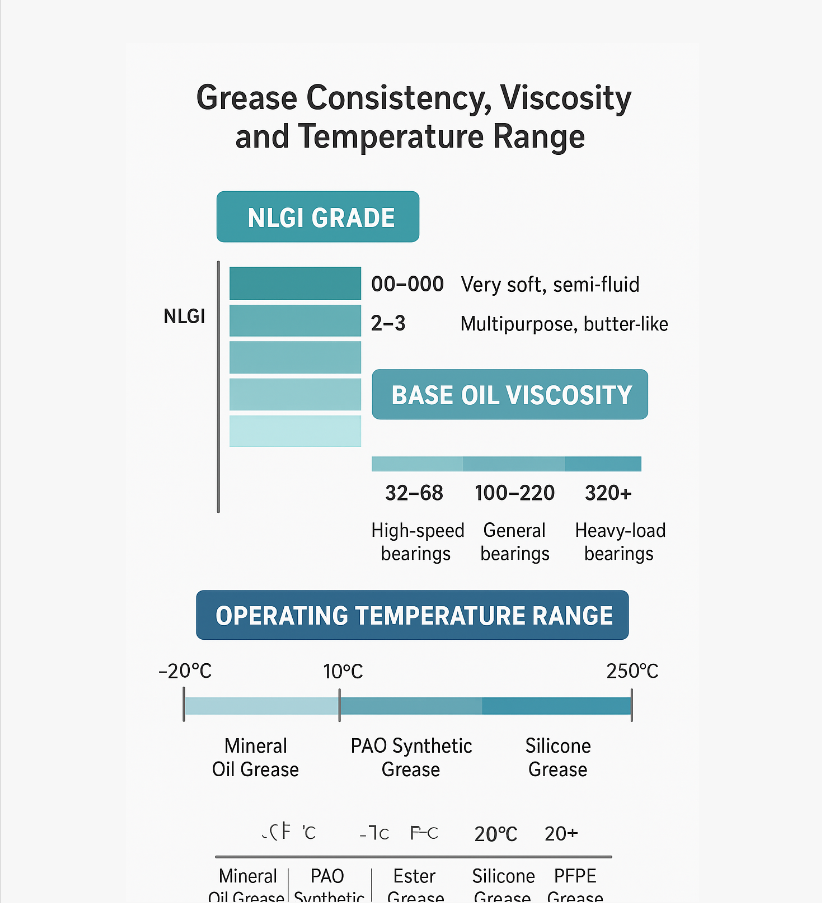
Grease consistency is categorized by the NLGI (National Lubricating Grease Institute) scale, ranging from 000 (fluid-like) to 6 (solid-like).
Common Industrial Grades
| NLGI Grade | Characteristics | Typical Applications |
|---|---|---|
| 000–00 | Very soft, semi-fluid | Gearboxes, enclosed systems |
| 0–1 | Soft | Centralized lubrication systems, low-temperature equipment |
| 2 | Multipurpose, butter-like | Electric motors, bearings, conveyors (most common) |
| 3 | Firm | High-temperature or high-load bearings |
NLGI 2 is the standard for many industrial bearings, SMT machinery, robotics, and general mechanical systems.
2. Base Oil Viscosity (ISO VG)
Base oil viscosity determines the lubricating film strength and is classified using the ISO VG (International Standards Organization Viscosity Grade) scale.
Typical Viscosity Ranges
-
ISO VG 32 – 68:
Suitable for high-speed bearings, spindle motors, precision electronics (e.g., SMT pick-and-place equipment). -
ISO VG 100 – 220:
Used for general industrial bearings, conveyors, motors. -
ISO VG 320+:
Suitable for slow-speed, heavy-load, or shock-load bearings (e.g., injection molding equipment).
Low-viscosity oils reduce heat at high speeds; high-viscosity oils protect under heavy load.
3. Operating Temperature Range
The usable temperature range depends on the base oil type and thickener system.
Typical Temperature Capabilities
| Grease Type | Base Oil | Typical Range |
|---|---|---|
| Mineral Oil Grease | Mineral base | –20°C to 120°C |
| PAO Synthetic Grease | Polyalphaolefin | –40°C to 150°C |
| Ester Grease | Synthetic ester | –20°C to 180°C |
| Silicone Grease | Silicone oil | –50°C to 200°C |
| PFPE Grease | Perfluoropolyether | –70°C to 250°C+ |
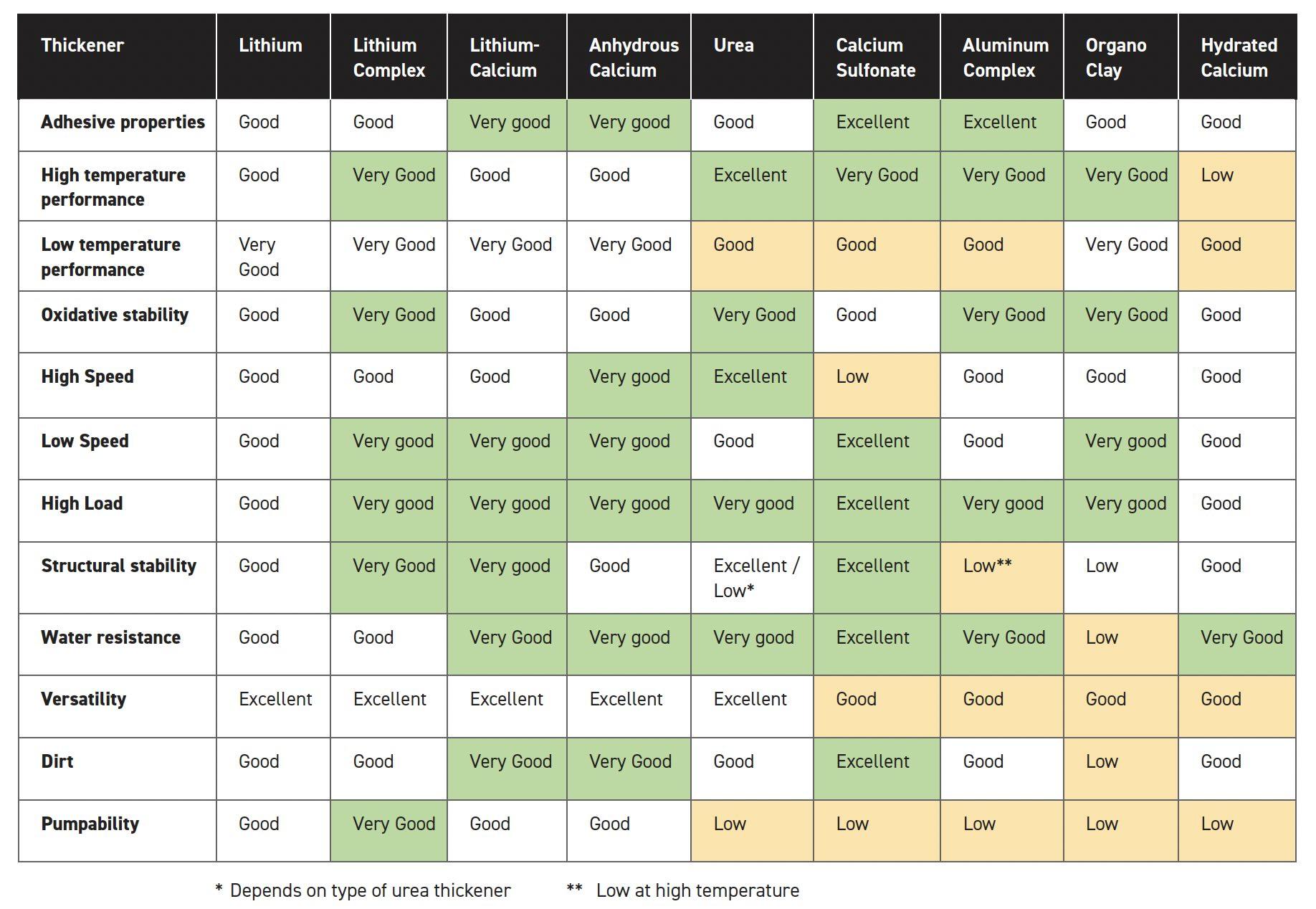
High-temperature greases often feature oxidation-resistant synthetic oils and stable thickeners (e.g., PTFE, polyurea).
4. How These Parameters Work Together
To select the correct grease, balance the following:
-
Speed (DN value) → low viscosity
-
Load → high viscosity
-
Temperature → synthetic oils and stable thickeners
-
Application method → soft (NLGI 0/1) or firm (NLGI 2/3) consistency
Example:
High-speed SMT spindle bearings require low-viscosity PAO oil + NLGI 1–2 consistency + wide temperature stability.
Conclusion
Understanding the relationship between grease consistency, viscosity, and temperature capability is essential for proper lubricant selection. Matching these properties to real operating conditions improves equipment life, reduces friction and noise, and minimizes lubrication-related failures.
Food-Grade (H1) Grease Applications in Electronics and Industrial Machinery
Performance Differences Between Synthetic Grease and Mineral Grease
Related Article