Motor Bearing Lubrication: Reduce Noise and Extend Bearing Life
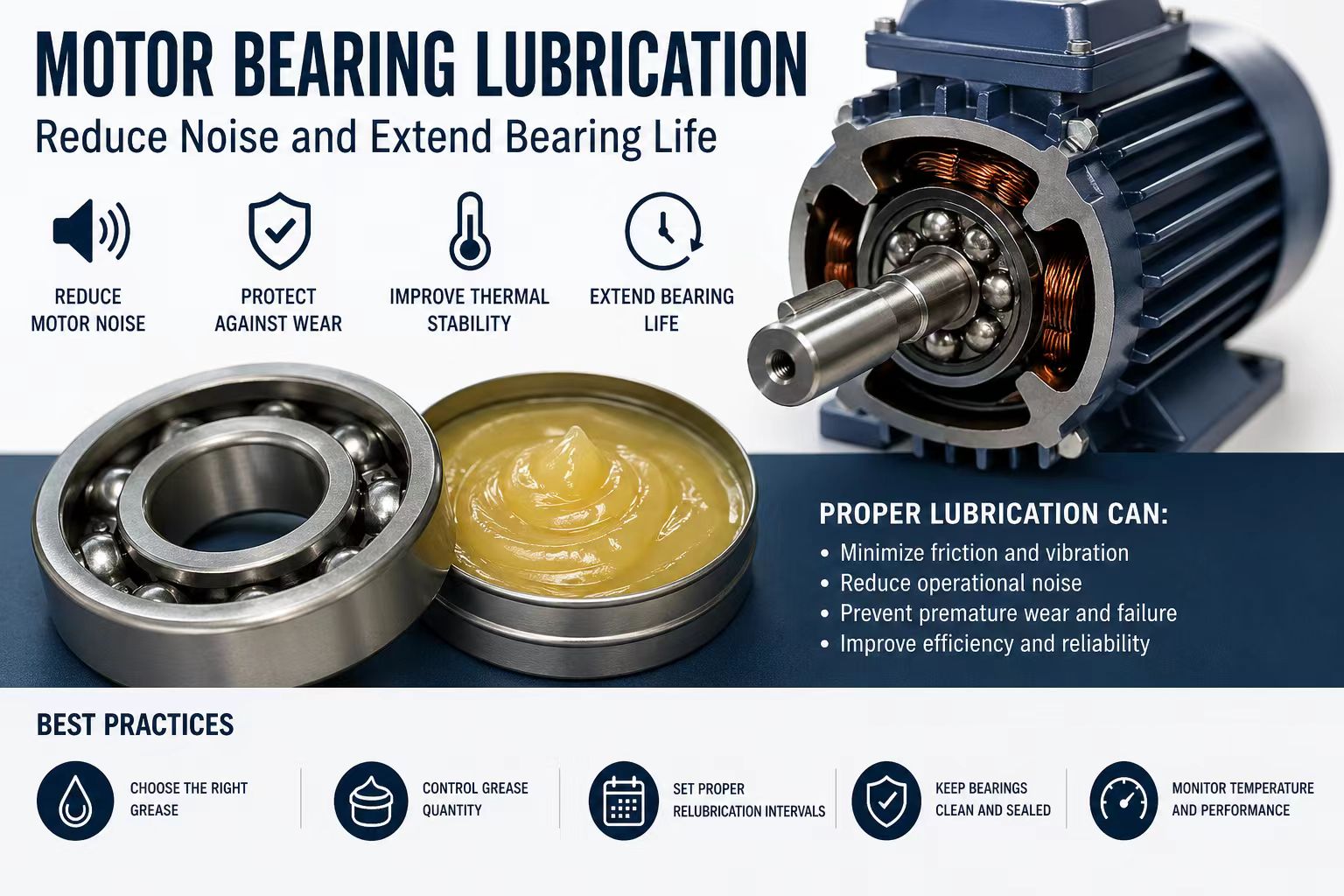
Motor bearing lubrication plays a critical role in ensuring stable operation, low noise performance, and long service life of industrial motors. Proper lubrication is essential not only for reducing friction but also for improving overall equipment efficiency and reliability.
In modern industrial applications, selecting the right grease and applying correct maintenance methods can significantly reduce motor noise and extend bearing life, especially in high-speed and precision machinery environments.
Why Motor Bearing Lubrication Is Important
Bearings operate under continuous load and high-speed rotation. Without effective lubrication, direct metal contact leads to:
- Increased friction and heat generation
- Higher vibration and operational noise
- Accelerated wear and surface damage
- Premature bearing failure
Proper motor bearing lubrication forms a protective film between rolling elements and raceways, ensuring smooth operation and stable performance.
How Lubrication Helps Reduce Motor Noise
One of the main goals of lubrication is to reduce motor noise, especially in precision equipment and automated production systems.
Key mechanisms include:
- Damping vibration between moving components
- Reducing metal-to-metal contact noise
- Stabilizing rotational movement at high speeds
- Preventing dry friction noise during startup
Using low-noise industrial grease significantly improves acoustic performance in sensitive applications such as CNC machines, SMT equipment, and high-speed motors.
How Proper Lubrication Extends Bearing Life
Effective lubrication is essential to extend bearing life by minimizing wear and maintaining stable operating conditions.
Key benefits include:
- Formation of a durable lubricating film
- Reduced mechanical stress and surface fatigue
- Protection against corrosion and contamination
- Improved thermal stability under continuous operation
When the correct grease is selected and properly applied, bearing lifespan can be significantly increased, reducing downtime and maintenance costs.
Best Practices for Motor Bearing Lubrication
To achieve optimal performance, follow these lubrication best practices:
1. Choose the Right Grease
Select grease based on operating conditions:
- High-speed motors → low viscosity synthetic grease
- High-temperature motors → heat-resistant grease
- Precision motors → low-noise high-purity grease
2. Control Grease Quantity
Avoid over-lubrication. Recommended fill level is 30%–50% of bearing internal space.
3. Set Proper Relubrication Intervals
Regular maintenance ensures stable lubrication film and prevents grease degradation.
4. Prevent Contamination
Keep bearings sealed and protected from dust, moisture, and particles.
Applications
Proper motor bearing lubrication is widely used in:
- CNC machining equipment
- SMT production lines
- Industrial electric motors
- Automation systems
- High-speed rotating machinery
Conclusion
High-quality motor bearing lubrication is essential for industrial performance optimization. By using the correct grease and maintenance strategy, industries can effectively:
- Reduce motor noise
- Extend bearing life
- Improve operational stability
- Lower maintenance costs
In today’s precision manufacturing environment, lubrication is a key factor in achieving long-term equipment reliability.
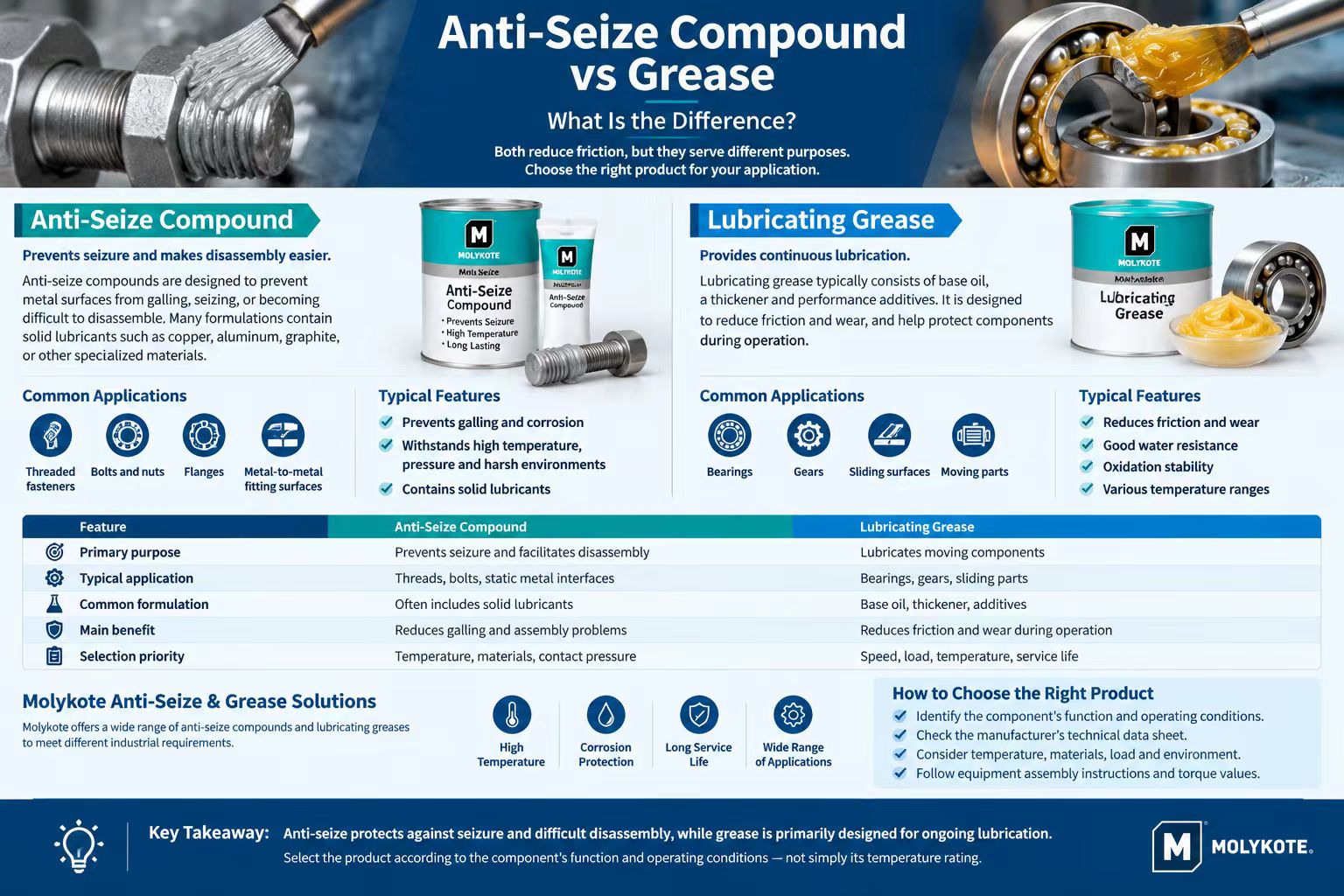
Automotive Assembly Grease Selection Guide
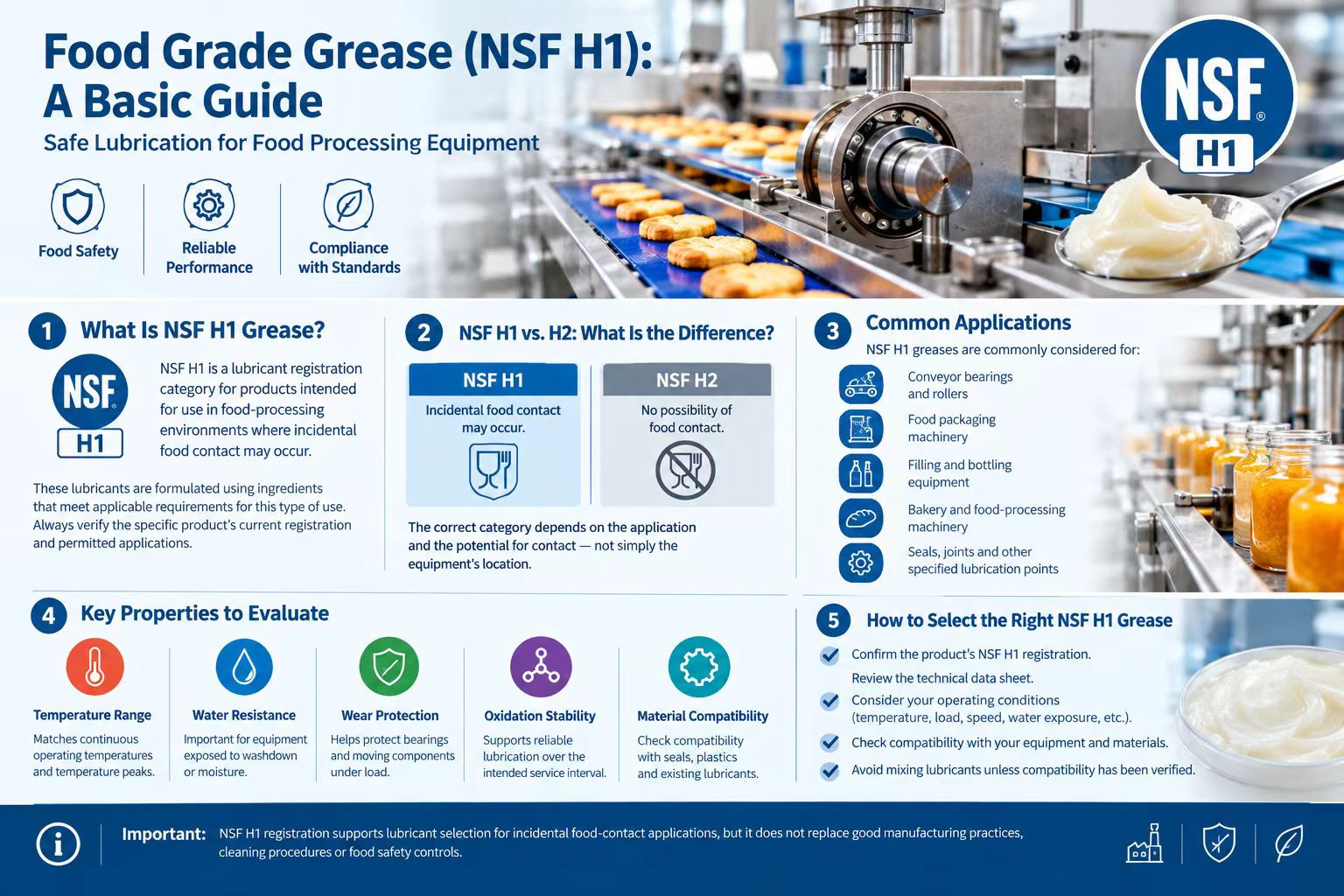
NSF H1 Food Grade Grease for Food Processing Equipment
Related Article