Troubleshooting Lubrication Issues Causing Noise in SMT Conveyor Rails
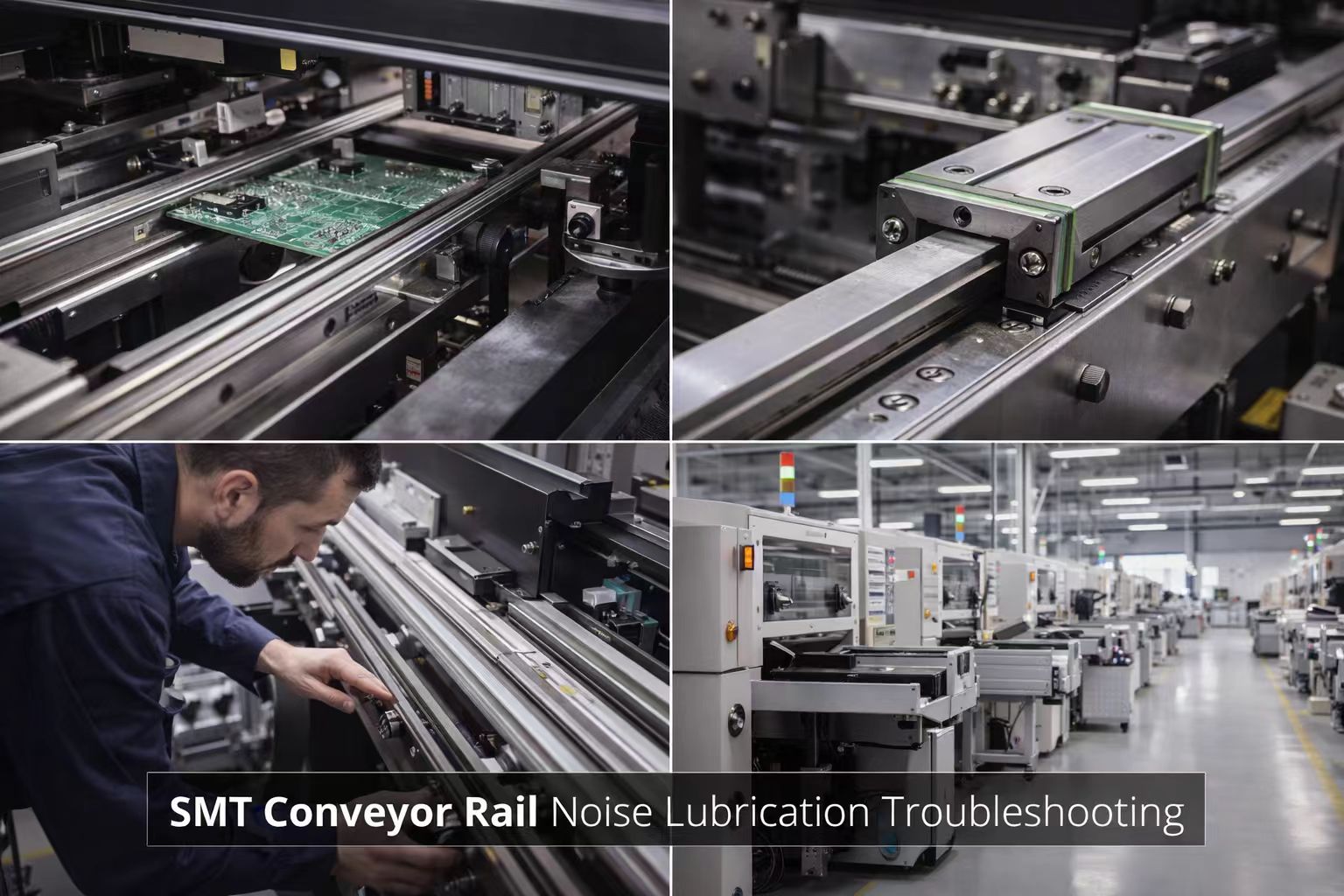
In SMT (Surface Mount Technology) production lines, conveyor rails are critical components responsible for stable PCB transport. Abnormal noise during operation is a common issue that can indicate lubrication problems, mechanical wear, or contamination.
A systematic lubrication troubleshooting approach is essential to identify root causes and restore smooth operation.
1. Common Types of Abnormal Noise
Before addressing lubrication, it is important to identify the type of noise:
-
High-pitched noise → often related to insufficient lubrication
-
Intermittent clicking → possible contamination or debris
-
Grinding noise → severe wear or lubrication failure
-
Squeaking → boundary lubrication or dry contact
Different noise patterns often correspond to different lubrication issues.
2. Insufficient Lubrication
One of the most common causes of rail noise is lack of lubrication.
Typical causes include:
-
Inadequate grease quantity
-
Lubricant drying or degradation
-
Long maintenance intervals
Solution:
-
Reapply appropriate grease
-
Ensure correct lubrication intervals
-
Use lubricants with good retention and long service life
3. Incorrect Lubricant Selection
Using the wrong lubricant can lead to increased friction and noise.
Common issues:
-
Excessively high viscosity → increased resistance
-
Poor compatibility with materials → uneven lubrication
-
Lack of anti-wear additives
Recommended approach:
-
Select grease suitable for linear motion systems
-
Use low to medium viscosity grease for SMT rails
-
Ensure compatibility with plastics and seals
4. Contamination and Foreign Particles
Dust, solder residues, or debris can enter rail systems and affect lubrication performance.
Effects include:
-
Increased friction
-
Surface damage
-
Noise during movement
Solution:
-
Clean rails before relubrication
-
Improve sealing and protection
-
Use clean, low-residue lubricants
5. Over-Lubrication Issues
Excess grease can also cause problems:
-
Increased drag resistance
-
Attraction of dust and particles
-
Uneven movement
Proper lubrication requires controlled quantity, not excess application.
6. Mechanical Wear and Surface Damage
If lubrication has been insufficient for a long time, permanent damage may occur:
-
Rail surface wear
-
Ball or roller damage
-
Loss of precision
In such cases:
-
Lubrication alone cannot solve the problem
-
Components may need replacement
7. Preventive Lubrication Strategy
To avoid recurring noise issues, implement a preventive maintenance plan:
-
Regular lubrication schedule
-
Use of high-quality, stable grease
-
Periodic inspection of rail condition
-
Clean working environment
A stable lubrication strategy significantly reduces SMT equipment downtime.
Conclusion
Abnormal noise in SMT conveyor rails is often closely related to lubrication issues. By systematically analyzing lubrication conditions, contamination, and mechanical wear, engineers can quickly identify root causes and implement effective solutions.
Proper lubrication management not only eliminates noise but also extends equipment life and ensures stable SMT production.
Lubrication Factors Causing Ejector Pin Sticking in Injection Molds
Industrial Grease Storage and Safe Handling Guidelines
Related Article