Synthetic Grease vs Mineral Grease: Key Differences
What Is the Difference?
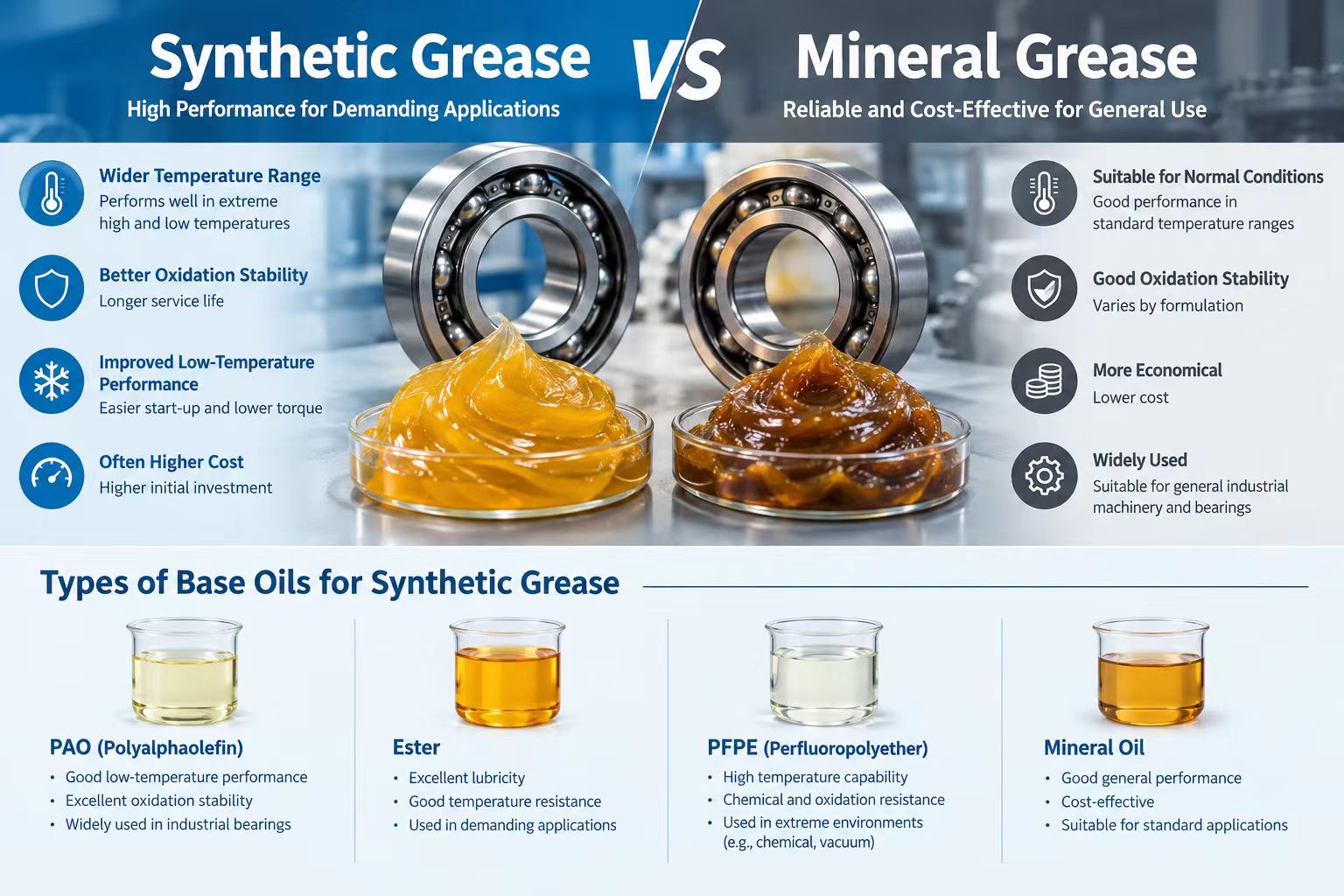
The main difference between synthetic grease and mineral oil grease is the base oil used in the formulation.
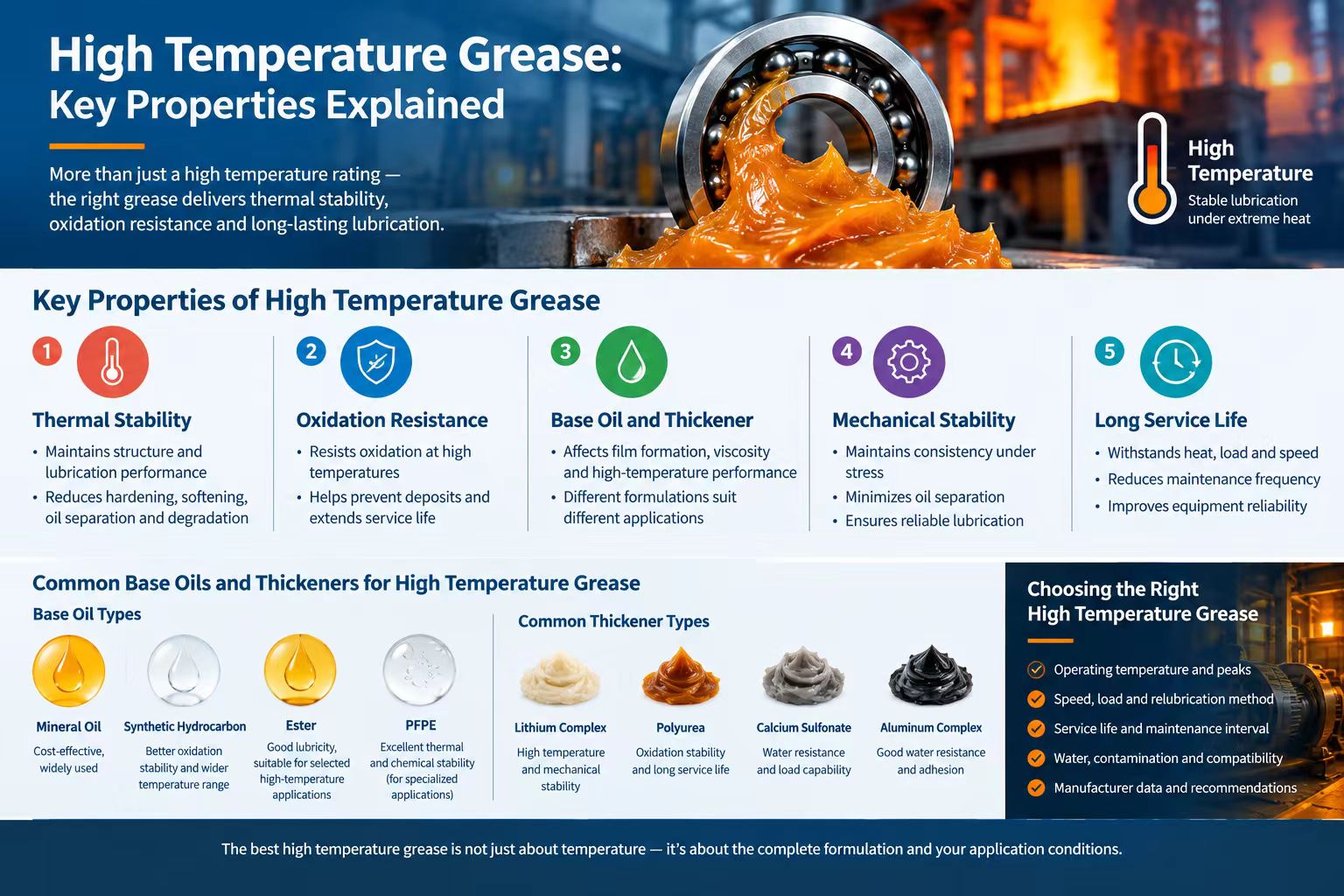
Mineral oil grease uses refined petroleum-based mineral oil, while synthetic grease uses engineered base oils such as PAO, ester or PFPE. The base oil affects lubrication performance, temperature capability and service life.
Synthetic Grease vs Mineral Grease
| Property | Synthetic Grease | Mineral Oil Grease |
|---|---|---|
| Temperature range | Often wider | Usually suitable for general operating conditions |
| Low-temperature performance | Often better, depending on base oil | Depends on formulation and viscosity |
| Oxidation stability | Often better with suitable formulations | Varies by base oil and additives |
| Service life | Can be longer under demanding conditions | Suitable for many routine applications |
| Cost | Generally higher | Generally more economical |
| Typical applications | Precision equipment, extreme temperatures, demanding bearings | General industrial machinery and standard bearings |
When Should You Choose Synthetic Grease?
Synthetic grease is worth considering when equipment operates under extreme temperatures, frequent temperature changes, high speeds or extended relubrication intervals.
Different synthetic base oils serve different purposes:
-
PAO grease: commonly used for industrial bearings and applications requiring good low-temperature and oxidation performance.
-
Ester-based grease: used in selected applications requiring specific lubricity and temperature characteristics.
-
PFPE grease: designed for demanding environments involving chemical exposure, high temperatures or vacuum conditions, depending on the formulation.
For example, Mobil SHC synthetic greases are used in demanding industrial applications. PFPE products, including selected Fomblin-based lubricants, serve more specialized requirements.
When Is Mineral Oil Grease Enough?
Mineral oil grease remains a practical choice for general-purpose bearings, machinery and routine lubrication when operating temperatures, loads and relubrication intervals fall within the product's specifications.
If the equipment operates under normal conditions, a suitable mineral oil grease may deliver reliable performance without the additional cost of a synthetic product.
How to Choose the Right Grease
Do not choose grease based on the word “synthetic” alone. Compare:
-
Operating temperature
-
Bearing speed and load
-
Base oil viscosity
-
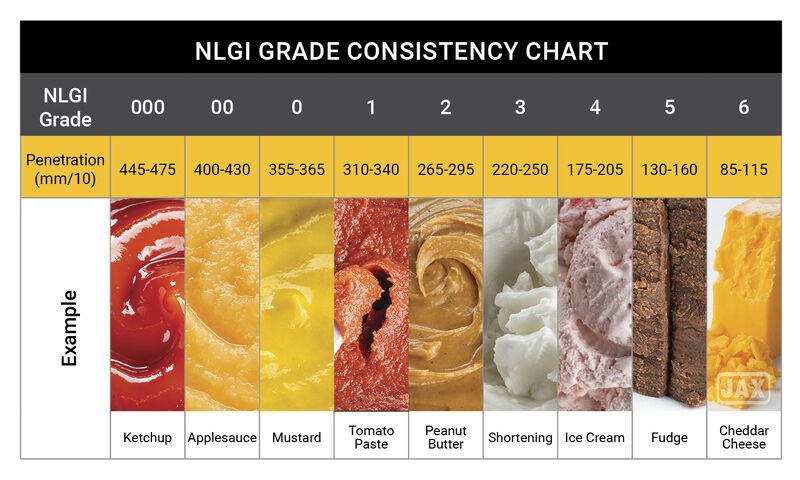
Thickener type and NLGI grade
-
Water and chemical exposure
-
Required service life
-
Equipment manufacturer specifications
Important: Synthetic grease is not automatically superior for every application. Compatibility with the existing grease and equipment materials must also be checked before changing products.
Conclusion
Synthetic grease is often preferred for demanding operating conditions, while mineral oil grease remains cost-effective for many standard applications. The right choice depends on the complete grease formulation, operating conditions and total lubrication cost, not simply the base oil category.
High Temperature Grease: Key Properties Explained
NLGI Grease Grades: How to Choose the Right Consistency
Related Article