Impact of Insufficient Lubrication on Yield in SMT Conveyor Systems
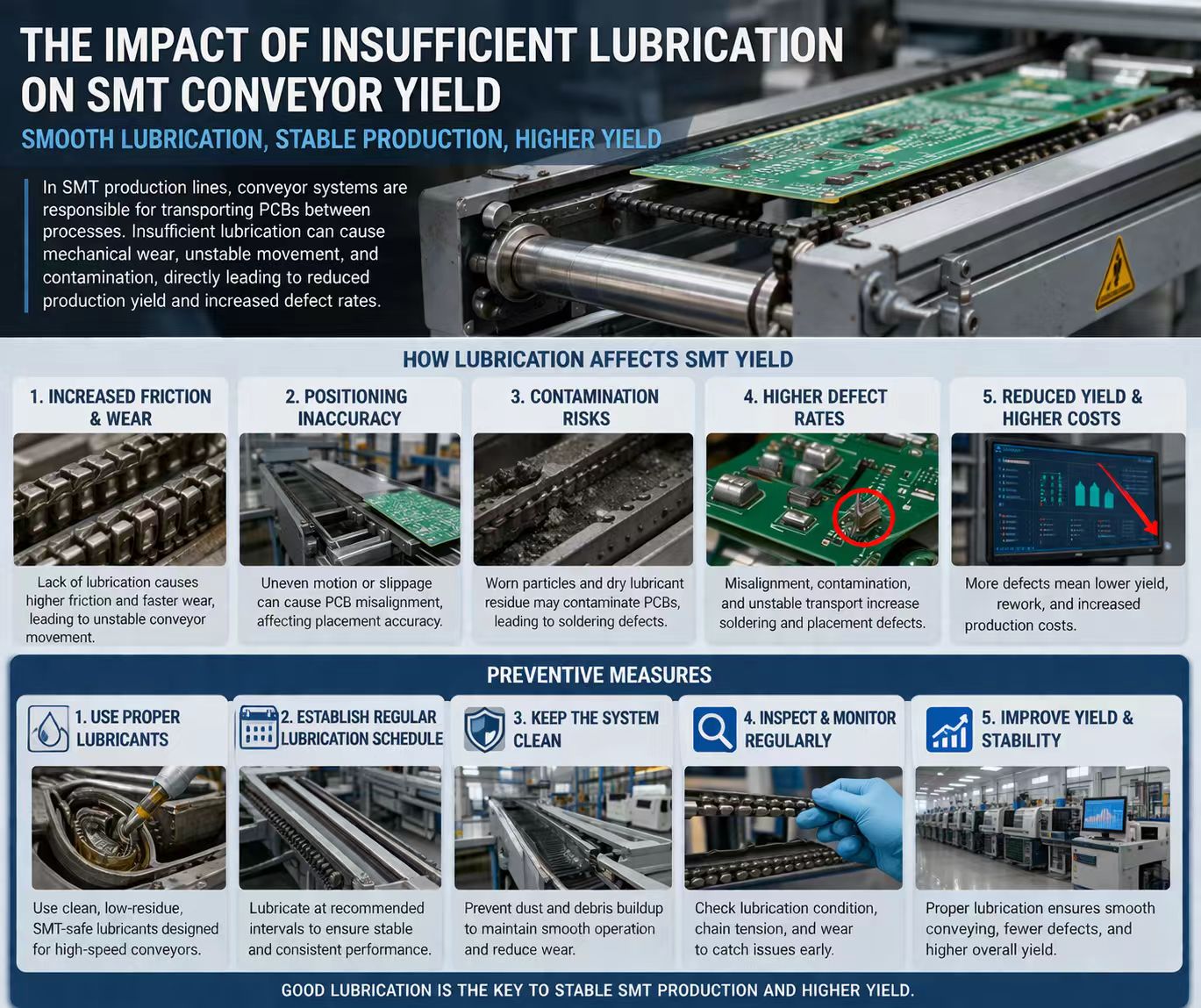
In Surface Mount Technology (SMT) production lines, conveyor systems play a critical role in transporting PCBs (printed circuit boards) through various assembly stages. The performance of these conveyor systems is heavily influenced by the lubrication condition of key components such as rails, belts, and guide systems.
Insufficient lubrication in SMT conveyor systems can lead to a range of problems, including increased friction, wear, and even conveyor failure. These issues directly impact the yield of the production line, leading to defects, delays, and higher maintenance costs.
This article examines the impact of insufficient lubrication on SMT conveyor systems and offers solutions for preventing such issues.
1. Key Functions of Lubrication in SMT Conveyor Systems
Lubrication is essential in ensuring smooth movement, reducing friction, and preventing wear in conveyor components. The main functions of lubrication include:
- Reducing friction between moving parts
- Preventing corrosion on metallic surfaces
- Ensuring smooth operation of rollers, belts, and bearings
- Minimizing energy consumption and heat generation
In SMT systems, these functions are crucial for maintaining the speed and accuracy of the process. Any failure in lubrication can disrupt the movement of the conveyor, causing positioning errors, delays, and mechanical failure.
2. Effects of Insufficient Lubrication on Conveyor Systems
2.1 Increased Friction
When lubrication is insufficient, friction between moving parts increases. This leads to:
- Higher resistance to movement
- Increased wear on guide rails, rollers, and belts
- Greater energy consumption
As friction increases, the efficiency of the conveyor system decreases, potentially affecting the throughput of the SMT line.
2.2 Increased Wear and Tear
Without adequate lubrication, key components such as bearings and rollers experience accelerated wear. This can lead to:
- Misalignment of the conveyor belt
- Inaccurate positioning of PCBs
- Increased downtime for maintenance and repairs
These issues affect the quality of assembly, leading to higher defect rates in the final products.
2.3 Conveyor System Failures
In severe cases, insufficient lubrication can result in complete failure of the conveyor system. Common failures include:
- Seized bearings or rollers
- Belt slippage or snapping
- Motor overload
Such failures halt production and can significantly reduce the overall yield of the SMT process.
3. Impact on SMT Yield
The yield of an SMT production line is defined as the percentage of good quality boards produced relative to the total number of boards processed. When lubrication is inadequate:
- The conveyor may run less smoothly, causing delays and part misalignment
- Increased friction can lead to defects such as misprinted solder paste or improperly positioned components
- Wear on mechanical components leads to frequent breakdowns, causing unplanned downtime
As a result, yield loss is inevitable, and production efficiency decreases. This also leads to higher operational costs, including repair costs and the costs associated with scrapped defective boards.
4. Preventive Measures and Solutions
To maintain high yield and minimize production disruptions, proper lubrication strategies must be in place. Here are some key solutions:
4.1 Regular Lubrication Maintenance
- Lubrication Schedules: Establish a regular lubrication schedule based on manufacturer recommendations and operational conditions.
- Automatic Lubrication Systems: Consider installing automated lubrication systems to ensure consistent and precise lubrication application.
4.2 Lubricant Selection
- Choose the Right Grease or Oil: Select lubricants specifically designed for high-speed conveyor systems. These should have appropriate viscosity, thermal stability, and anti-wear properties.
- Ensure Compatibility: Ensure the lubricant is compatible with conveyor materials (e.g., plastics, metals) and does not lead to contamination.
4.3 Cleanliness and Contamination Control
- Prevent Contamination: Dust, dirt, and debris can degrade lubricant performance and cause wear. Implement dust control and regular cleaning to maintain optimal lubrication conditions.
4.4 Monitoring and Inspections
- Track Lubrication Performance: Monitor lubrication effectiveness and regularly inspect critical components like rollers and belts for wear.
- Use Condition Monitoring Systems: Use sensors to detect temperature increases or friction anomalies, signaling insufficient lubrication or component failure.
5. Conclusion
Insufficient lubrication in SMT conveyor systems can cause significant damage to machinery and affect the quality of the production line. By ensuring proper lubrication, maintaining equipment, and using the right lubricants, manufacturers can prevent unnecessary downtime, improve yield, and enhance production efficiency.
Implementing effective lubrication strategies is crucial for maintaining smooth operation and maximizing the output of SMT production lines.
Surface Wear of Injection Molding Slides and Lubrication Optimization Strategies
Common Causes of Gearbox Lubrication Failure and Preventive Measures
Related Article