Semiconductor Equipment Lubrication: Grease Selection Guide
Introduction
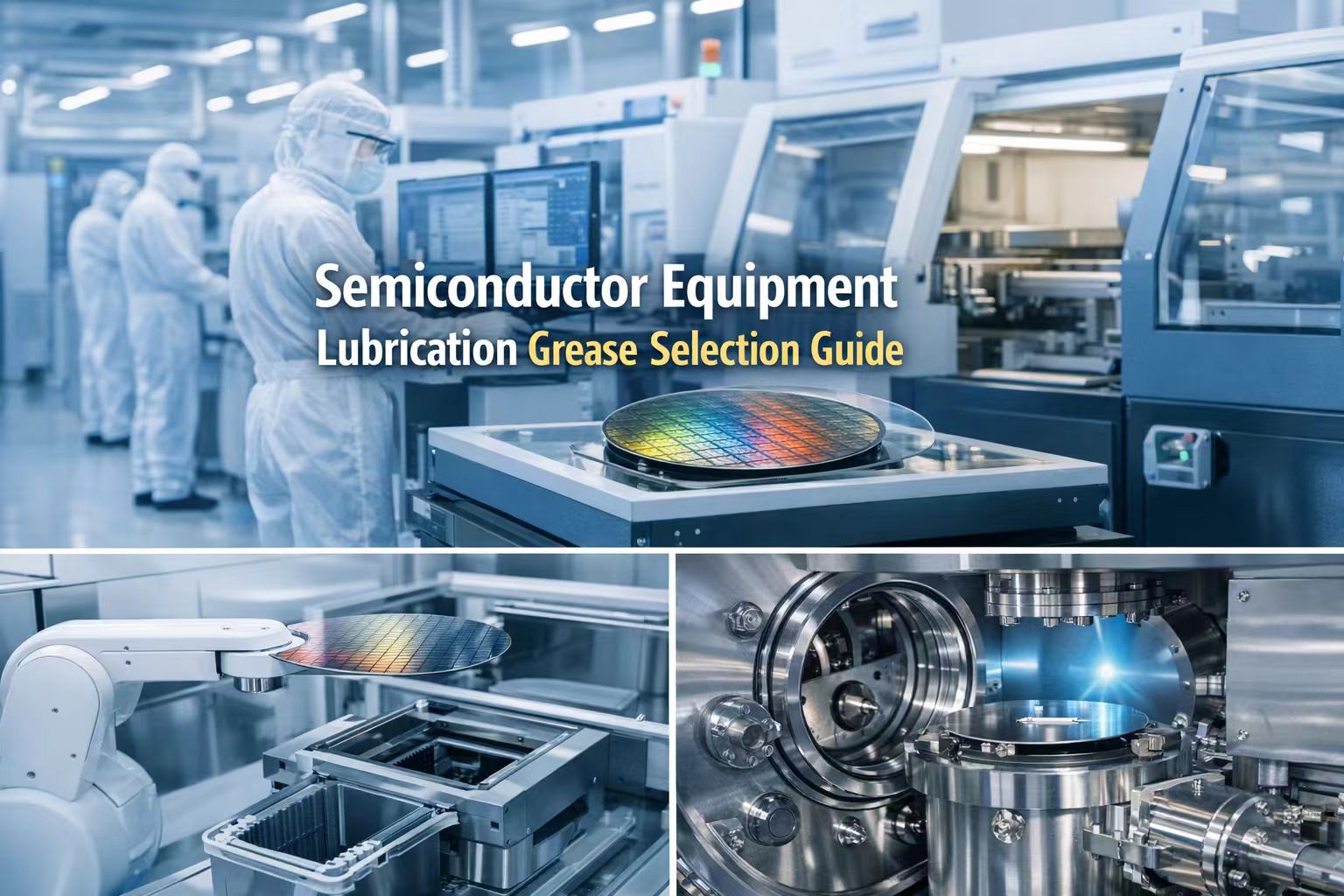
In modern manufacturing, semiconductor equipment lubrication plays a critical role in ensuring precision, reliability, and long service life. Selecting the right lubricant is not simply a maintenance task—it directly affects equipment performance, contamination control, and operational stability.
This grease selection guide explains how to choose the right industrial grease for semiconductor applications based on real operating conditions and technical requirements.
Lubrication Challenges in Semiconductor Equipment
Semiconductor manufacturing environments are highly demanding. Equipment such as wafer handling systems, vacuum pumps, and precision stages require lubricants that meet strict conditions:
- Cleanroom compatibility (low particle generation)
- Wide temperature stability
- Low outgassing in vacuum environments
- Chemical resistance
- Long service life with minimal relubrication
Because of these requirements, semiconductor equipment lubrication must rely on high-performance synthetic greases rather than conventional products.
Key Factors in Grease Selection
When selecting the right lubricant, several technical parameters must be evaluated carefully.
1. Operating Temperature Range
Grease must maintain stability across both low and high temperatures without hardening or excessive softening.
2. Base Oil Type
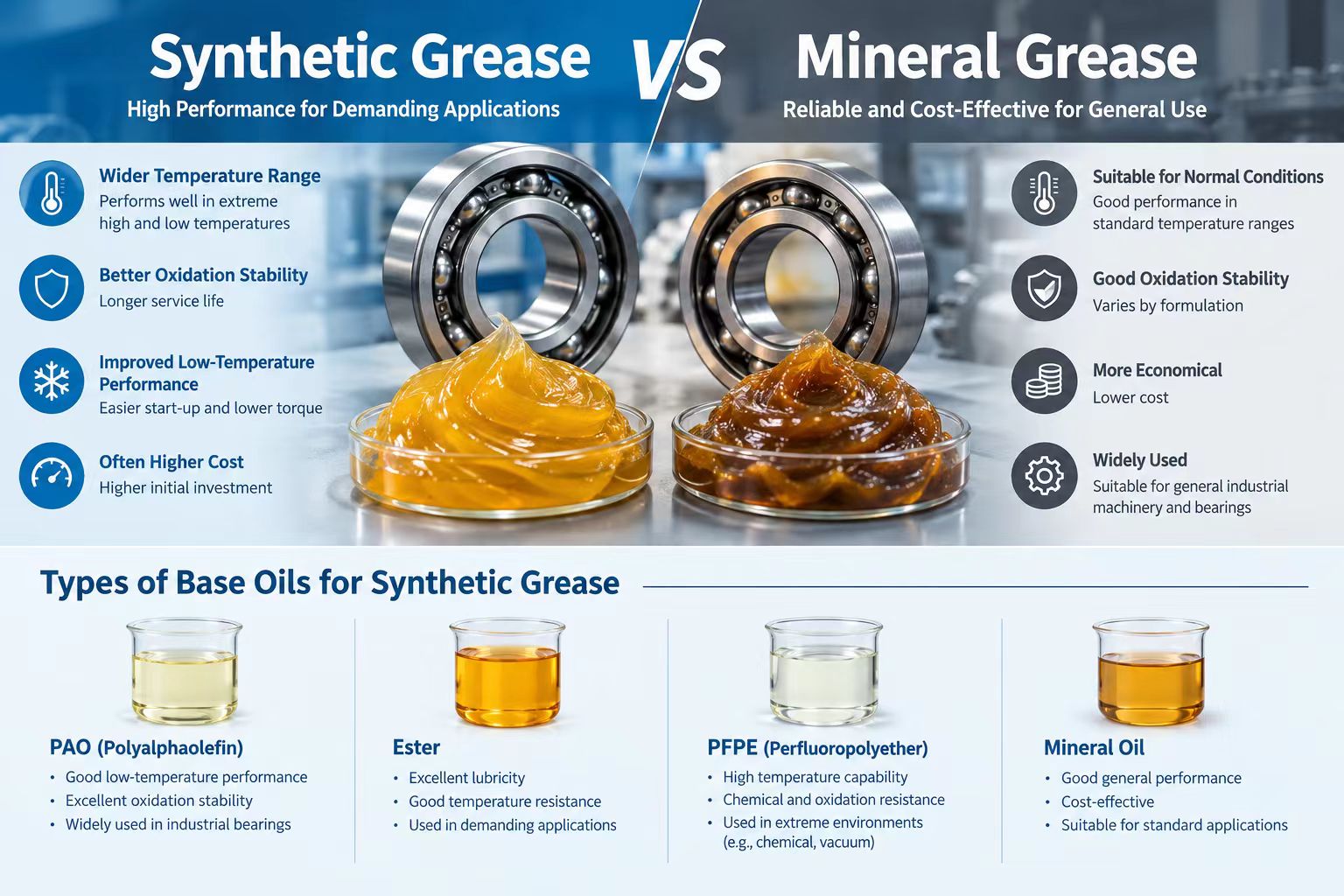
Common base oils used in industrial grease for semiconductor applications include:
- PFPE (perfluoropolyether) for vacuum and extreme conditions
- PAO (polyalphaolefin) for general high-performance applications
- Silicone oil for electrical and thermal stability
3. Thickener System
Typical thickener types include:
- PTFE (used in PFPE grease)
- Polyurea (for low noise and long life)
- Lithium complex (general industrial use, but limited in cleanroom environments)
4. Low Outgassing Performance
Vacuum environments require lubricants with minimal evaporation to avoid contamination of sensitive components.
5. Chemical Compatibility
Grease must be compatible with plastics, elastomers, and metals used in semiconductor equipment.
Common Types of Grease Used in Semiconductor Applications
Different applications require different lubrication solutions. Below are common grease categories:
PFPE-Based Grease
Widely used in vacuum and cleanroom environments due to:
- Excellent chemical inertness
- Ultra-low volatility
- High temperature resistance
Typical example: Fomblin
Synthetic Hydrocarbon (PAO) Grease
Used in:
- Bearings
- Linear guides
- General precision components
Offers:
- Good oxidation resistance
- Long service life
Silicone-Based Grease
Common in:
- Electrical contacts
- Sealing applications
Typical example: Shinetsu
High-Performance Specialty Grease
For ultra-precision systems:
- Low noise applications
- Cleanroom robotics
- High-speed bearings
Typical example: Kluber
Application-Based Grease Selection
Different semiconductor equipment components require specific lubrication strategies:
Vacuum Systems
- Use PFPE grease
- Ensure ultra-low vapor pressure
Precision Bearings
- Require low-noise, long-life grease
- Prefer polyurea or synthetic base oil
Linear Motion Systems
- Need smooth motion and low friction
- Require stable viscosity and clean performance
Seals and O-Rings
- Require compatibility with elastomers
- Silicone or PFPE grease is often preferred
Common Lubrication Mistakes to Avoid
Even with high-quality products, improper usage can lead to failure:
- Mixing incompatible greases
- Over-greasing bearings
- Using general-purpose grease in cleanroom environments
- Ignoring relubrication intervals
- Selecting grease without considering vacuum conditions
Following a structured grease selection guide helps avoid these issues and ensures optimal performance.
Best Practices for Semiconductor Equipment Lubrication
To achieve reliable operation:
- Always refer to equipment manufacturer recommendations
- Use clean application tools to avoid contamination
- Store grease properly to maintain performance
- Monitor lubrication condition regularly
- Choose proven industrial grease for semiconductor applications
Conclusion
Effective semiconductor equipment lubrication requires careful evaluation of operating conditions, material compatibility, and performance requirements. By following a structured grease selection guide, engineers can select the most suitable industrial grease for semiconductor applications, ensuring long-term reliability and reduced maintenance costs.
NSF H1 Food Grade Grease for Food Processing Equipment
Surface Wear of Injection Molding Slides and Lubrication Optimization Strategies
Related Article