Lubrication Causes of Premature Bearing Wear in Industrial Machinery and Improvement Strategies
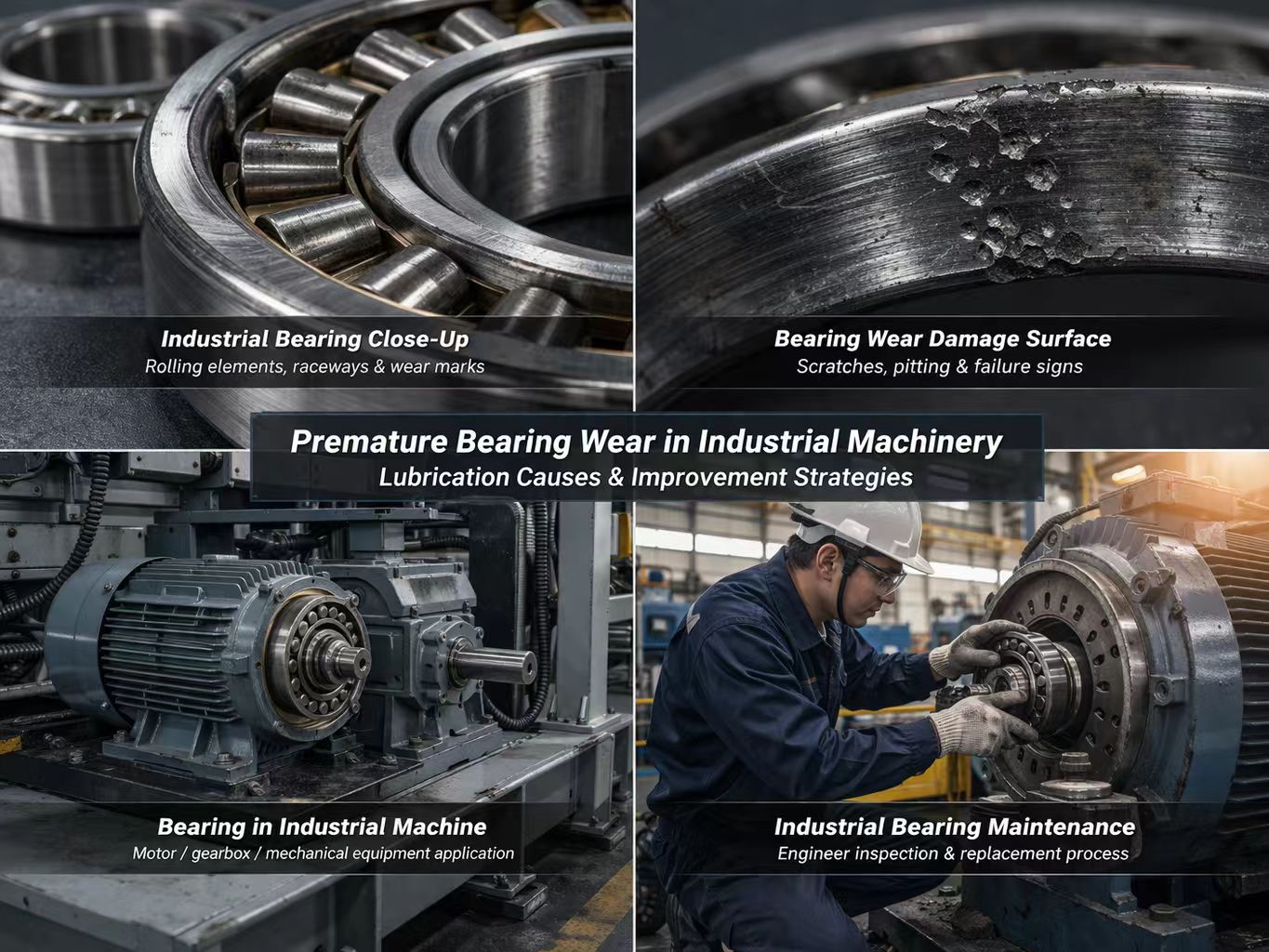
In industrial machinery, bearings are critical components that directly affect equipment reliability and service life. Premature bearing wear is a common issue that can lead to unexpected downtime, increased maintenance costs, and reduced operational efficiency.
Among various contributing factors, lubrication-related issues are one of the most significant causes of early bearing failure.
This article analyzes the key lubrication causes of premature bearing wear and provides practical improvement strategies.
1. Insufficient Lubrication
Lack of adequate lubrication is one of the primary causes of premature bearing wear.
Typical issues include:
- Inadequate grease quantity
- Extended relubrication intervals
- Lubricant starvation in high-speed applications
Consequences:
- Increased metal-to-metal contact
- Rapid temperature rise
- Accelerated surface fatigue
Improvement:
- Establish proper lubrication intervals
- Ensure sufficient grease supply
- Use automatic lubrication systems where necessary
2. Incorrect Lubricant Selection
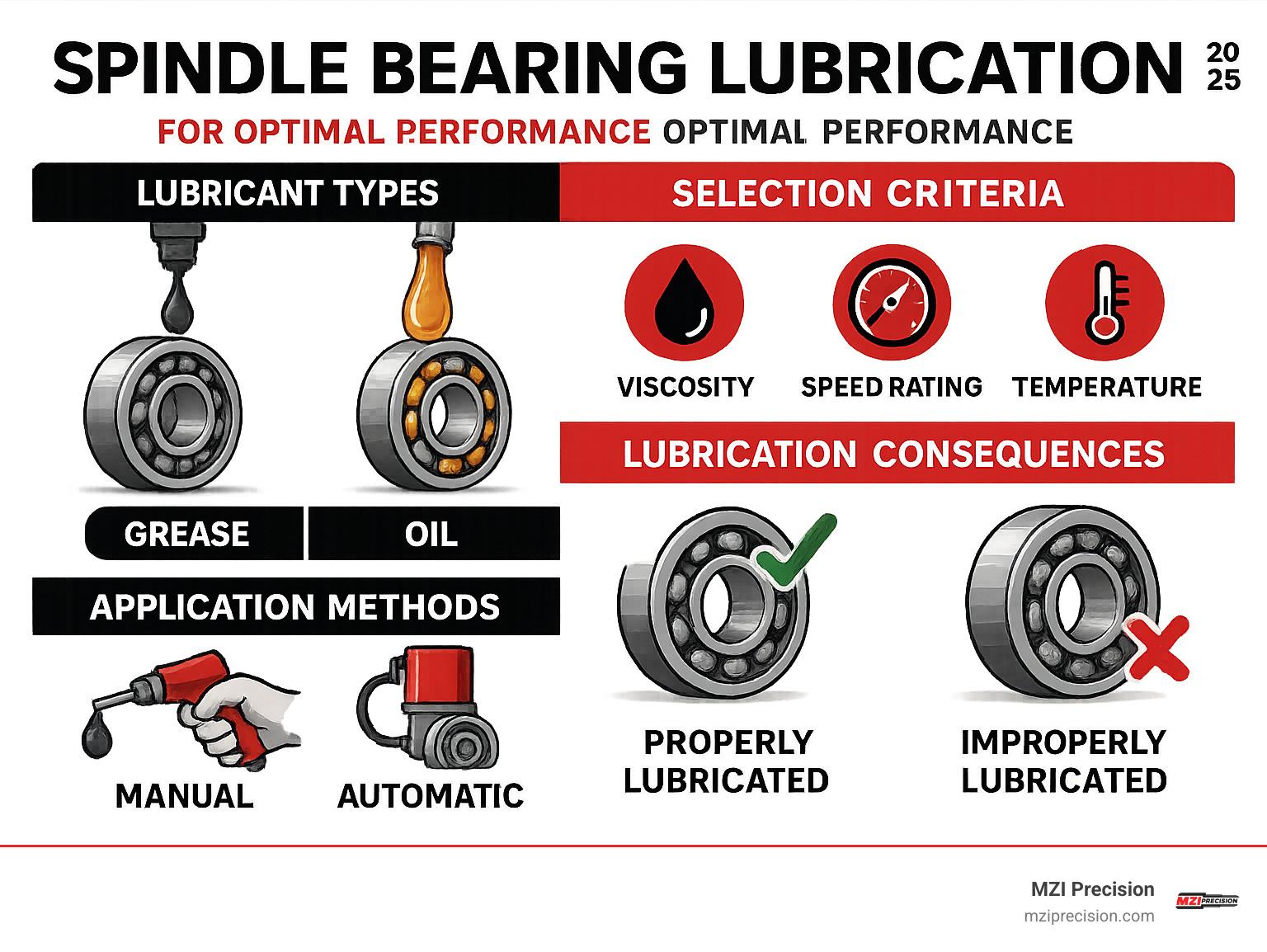
Choosing the wrong lubricant can significantly impact bearing performance.
Common problems:
- Incorrect viscosity → insufficient film formation
- Poor load-carrying capacity
- Lack of anti-wear or EP additives
Different applications require different lubrication properties depending on:
- Speed
- Load
- Temperature
Improvement:
- Select lubricants based on operating conditions
- Use high-performance grease with appropriate viscosity
- Ensure compatibility with bearing materials
3. Contamination
Contaminants are a major cause of bearing wear.
Typical contaminants:
- Dust and dirt
- Metal particles
- Water or moisture
Effects:
- Abrasive wear
- Lubricant degradation
- Corrosion
Improvement:
- Improve sealing systems
- Maintain clean operating environments
- Use lubricants with good anti-corrosion properties
4. Over-Lubrication
Excess lubrication can also lead to bearing problems.
Common issues:
- Increased internal pressure
- Heat generation
- Grease churning
This may result in:
- Oxidation of lubricant
- Reduced bearing efficiency
Improvement:
- Apply correct lubrication quantity
- Follow manufacturer recommendations
- Avoid excessive grease filling
5. Lubricant Degradation
Over time, lubricants lose their effectiveness due to:
- Oxidation
- Thermal breakdown
- Additive depletion
Consequences:
- Reduced lubrication film strength
- Increased friction and wear
Improvement:
- Use high-quality, long-life lubricants
- Monitor lubricant condition
- Replace grease at appropriate intervals
6. Improper Lubrication Method
Incorrect lubrication methods can reduce effectiveness.
Examples:
- Uneven grease distribution
- Incorrect lubrication points
- Manual errors
Improvement:
- Standardize lubrication procedures
- Use centralized or automatic lubrication systems
- Train maintenance personnel
Conclusion
Premature bearing wear in industrial machinery is often closely linked to lubrication issues. By addressing key factors such as lubricant selection, contamination control, lubrication quantity, and maintenance practices, companies can significantly improve bearing performance and extend service life.
Effective lubrication management is essential for ensuring equipment reliability and reducing total operating costs.
Case Study: Positioning Errors Caused by Insufficient Lubrication in Precision Linear Guides
Lubrication Factors Causing Ejector Pin Sticking in Injection Molds
Related Article