NSF H1 Food Grade Grease for Food Processing Equipment
Introduction
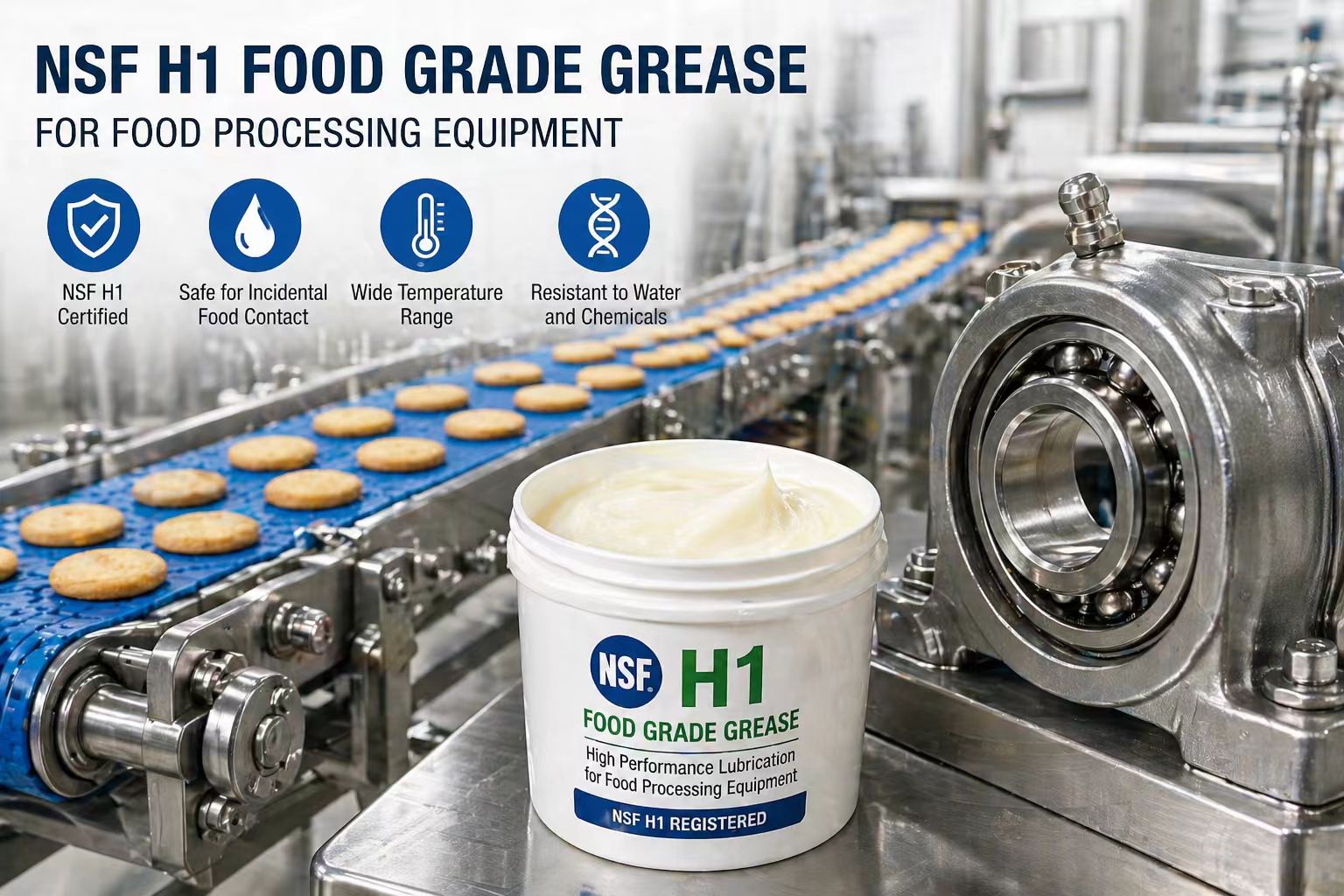
In the food industry, lubrication must meet both performance and safety requirements. NSF H1 food grade grease is specifically designed for food processing equipment lubrication where incidental food contact may occur.
This guide explains food grade grease applications, compliance basics, and how to select the right H1 lubricant for reliable operation.
What Is NSF H1 Food Grade Grease?
NSF H1 lubricants are registered for use in food processing environments where incidental contact with food is possible. They are formulated with ingredients that meet relevant safety criteria (e.g., per FDA 21 CFR 178.3570).
Key characteristics:
- Suitable for incidental contact (not direct food additive)
- Odorless/tasteless formulations (application-dependent)
- Resistant to water washout and cleaning chemicals
- Designed for hygiene-focused environments
Why Food Processing Equipment Requires H1 Lubrication
Food manufacturing environments involve:
- Frequent washdowns (water/steam/chemicals)
- Wide temperature ranges (cold storage to ovens)
- Strict hygiene and compliance audits (HACCP, GMP)
Using non-compliant lubricants risks contamination, recalls, and regulatory issues. Therefore, food processing equipment lubrication must prioritize both safety and performance.
Common Applications of NSF H1 Grease
Bearings and Motors
- Conveyor bearings
- Electric motor bearings
- Fans and ventilation systems
Chains and Conveyor Systems
- Food packaging lines
- Bottling and filling machines
Seals and O-Rings
- Valve assemblies
- Pumps and mixers
Gear and Sliding Components
- Gearboxes in processing lines
- Sliding rails in automated equipment
Key Selection Factors for H1 Food Grade Grease
1. Operating Temperature
- Low temperature (freezers): ensure pumpability
- High temperature (ovens): ensure thermal stability
2. Base Oil Type
Common options:
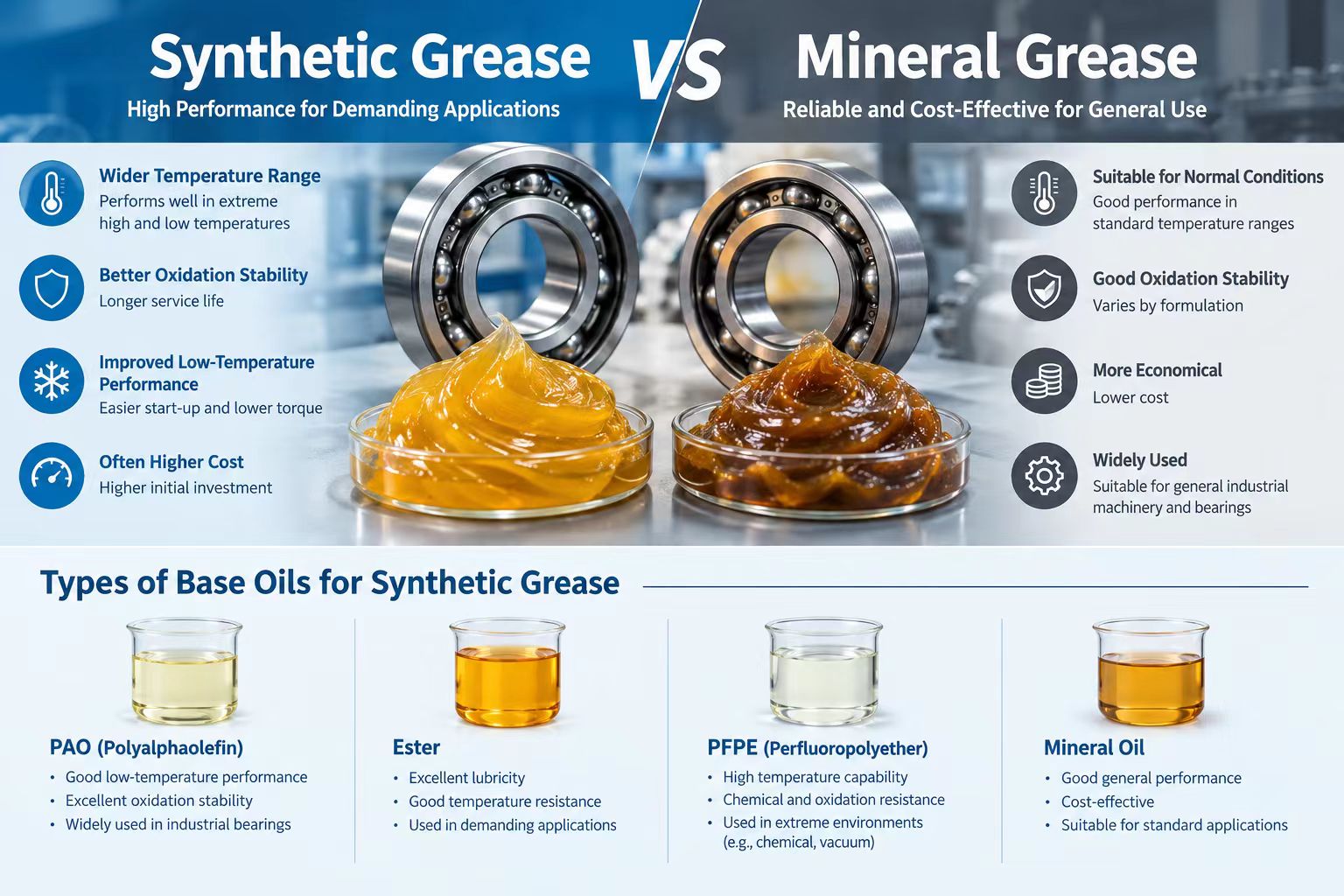
- White mineral oil (cost-effective, widely used)
- Synthetic PAO (better oxidation stability)
- Specialty synthetic fluids for extreme conditions
3. Thickener System
Typical choices:
- Aluminum complex → good water resistance
- Calcium sulfonate → excellent corrosion protection
- Polyurea → long life, low noise
4. Water Resistance
Essential for washdown environments:
- Resistance to water washout
- Stability under steam cleaning
5. Corrosion Protection
Important in humid or wet conditions:
- Prevents rust on metal surfaces
- Extends equipment life
Compliance and Safety Considerations
When selecting NSF H1 food grade grease, ensure:
- NSF H1 registration (verify listing)
- Compliance with FDA regulations
- Alignment with HACCP programs
- Proper labeling and storage
👉 Important: H1 lubricants are for incidental contact only, not direct food ingredients.
Best Practices for Food Grade Lubrication
- Use dedicated tools to avoid cross-contamination
- Clearly label H1 lubricants
- Train maintenance staff on correct usage
- Follow proper relubrication intervals
- Avoid mixing with non-food-grade lubricants
Common Mistakes to Avoid
- Using non-H1 grease in food zones
- Over-lubrication causing leakage
- Mixing incompatible greases
- Ignoring washdown impact on lubricant life
Conclusion
NSF H1 food grade grease is essential for safe and efficient food processing equipment lubrication. By understanding food grade grease applications and selecting the right formulation, manufacturers can ensure compliance, reduce downtime, and maintain product safety.
Cleanroom Equipment Lubrication Solutions Guide
Semiconductor Equipment Lubrication: Grease Selection Guide
Related Article