Industrial Grease Storage and Safe Handling Guidelines
Industrial greases play a critical role in reducing friction, protecting mechanical components, and extending equipment service life. However, improper storage or handling can lead to grease contamination, performance degradation, and potential safety risks.
Establishing proper industrial grease storage and safety practices is essential for maintaining lubricant quality and ensuring safe use in manufacturing environments.
1. Importance of Proper Grease Storage
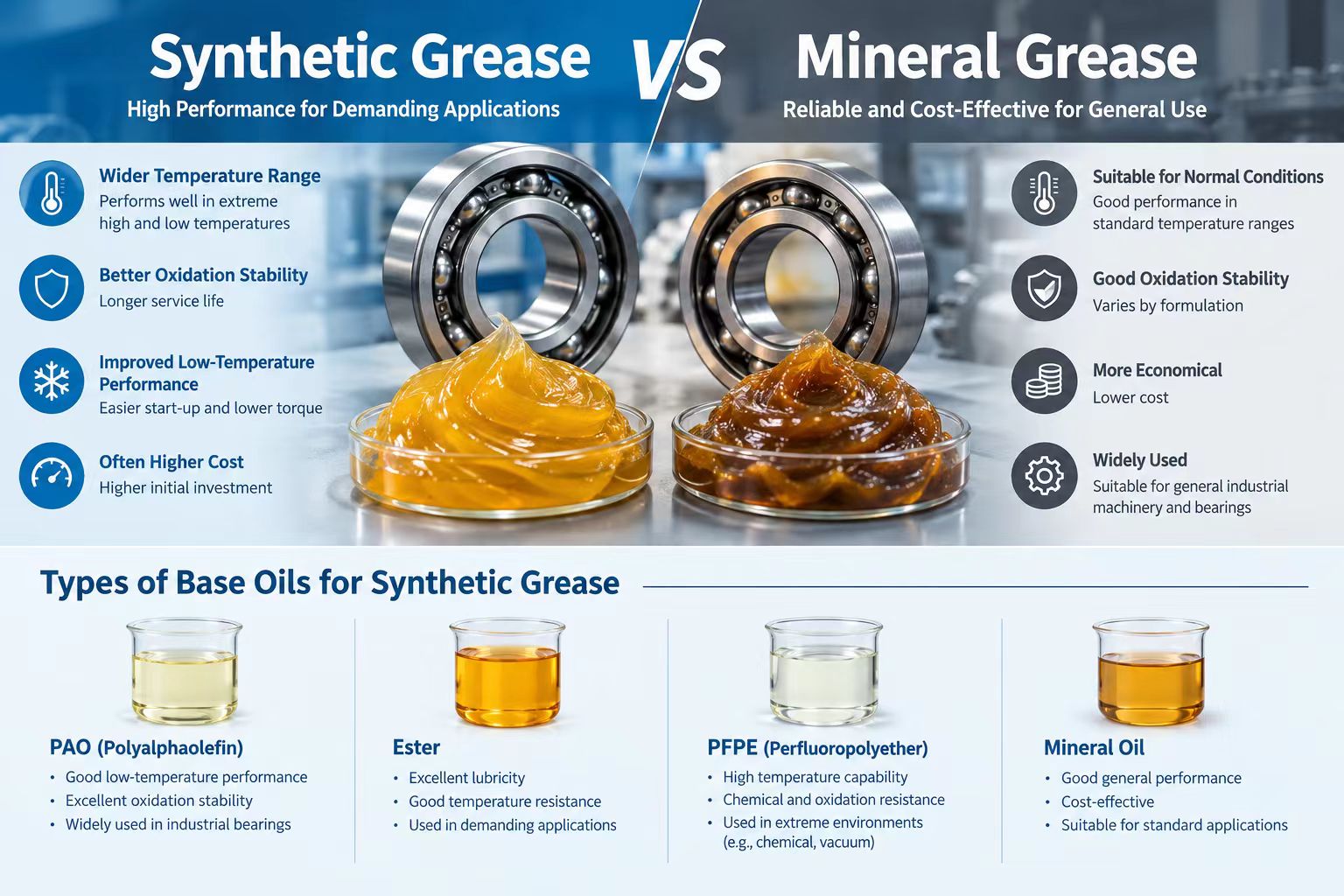
Lubricating greases are carefully formulated mixtures of base oil, thickeners, and additives. Exposure to environmental factors such as dust, moisture, and extreme temperatures can affect grease properties.
Improper storage may cause:
-
Contamination by dust or metal particles
-
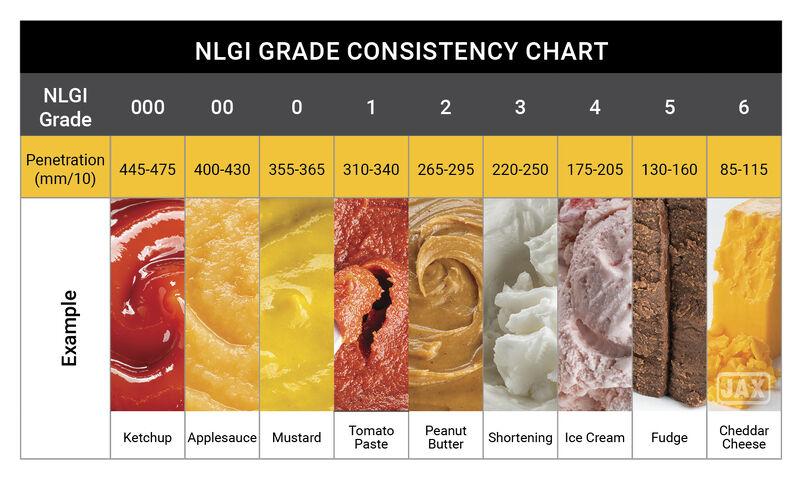
Oil separation and consistency changes
-
Oxidation of base oil
-
Reduced lubrication performance
Maintaining controlled storage conditions helps preserve grease quality and ensures reliable lubrication performance during equipment operation.
2. Recommended Storage Conditions
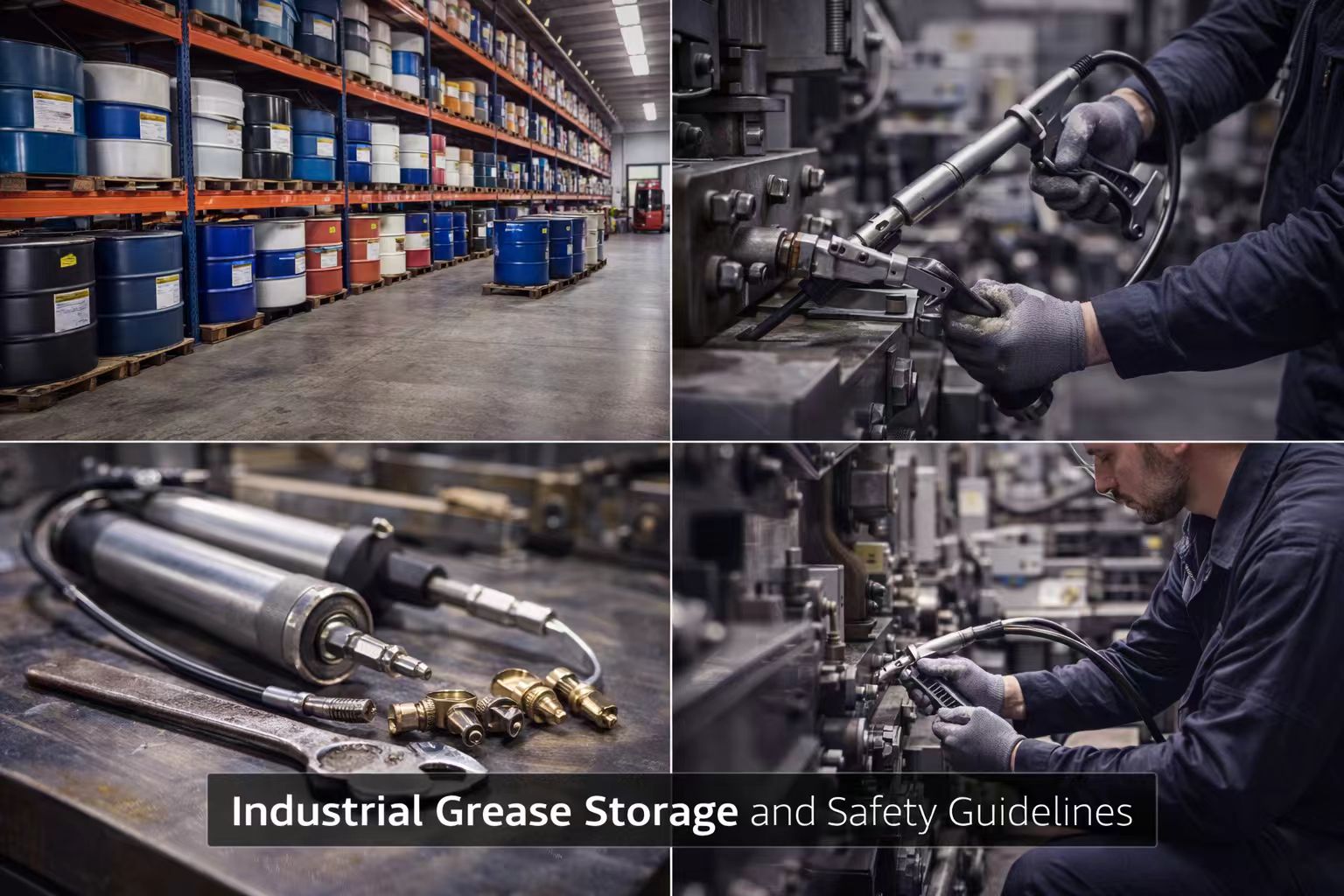
Industrial lubricants should be stored in environments that minimize contamination and chemical degradation.
Key storage recommendations include:
-
Temperature control: Store grease between 0°C and 40°C
-
Avoid direct sunlight: UV exposure may accelerate degradation
-
Dry environment: Prevent water contamination
-
Sealed containers: Keep original packaging tightly closed
Proper warehouse organization also helps prevent accidental mixing of different grease types.
3. Grease Handling and Contamination Prevention
Contamination is one of the most common causes of lubrication failure. During grease handling and application, it is important to maintain cleanliness.
Best practices include:
-
Use dedicated grease guns for each grease type
-
Clean lubrication fittings before application
-
Avoid mixing incompatible grease formulations
-
Use clean tools and dispensing equipment
These measures help ensure that grease maintains its intended performance characteristics.
4. Safe Use of Industrial Grease
Although most industrial greases are safe when used correctly, proper handling procedures should still be followed to reduce risks.
Safety recommendations include:
-
Wear protective gloves during application
-
Avoid prolonged skin contact
-
Follow manufacturer safety data sheet (SDS) guidelines
-
Store away from ignition sources when required
Proper training for maintenance personnel ensures safe lubricant handling in industrial facilities.
5. Shelf Life and Inventory Management
Industrial greases have a recommended shelf life, typically ranging from 2 to 5 years depending on the formulation and storage conditions.
Effective inventory management practices include:
-
Using first-in, first-out (FIFO) rotation
-
Clearly labeling storage dates
-
Inspecting grease containers before use
-
Avoiding long-term exposure to air after opening
Maintaining proper inventory control ensures that lubricants are used within their optimal performance period.
Conclusion
Proper storage and safe handling of industrial grease are essential for maintaining lubricant performance and preventing equipment failures.
By implementing standardized storage procedures, contamination control practices, and safety guidelines, industrial facilities can ensure reliable lubrication and extend the life of critical machinery.
Effective lubricant management ultimately contributes to improved operational reliability and reduced maintenance costs.
Troubleshooting Lubrication Issues Causing Noise in SMT Conveyor Rails
The Importance of Clean Lubrication in Electronic Manufacturing
Related Article