Grease Oxidation in High Temperature Applications: Causes, Effects and Solutions
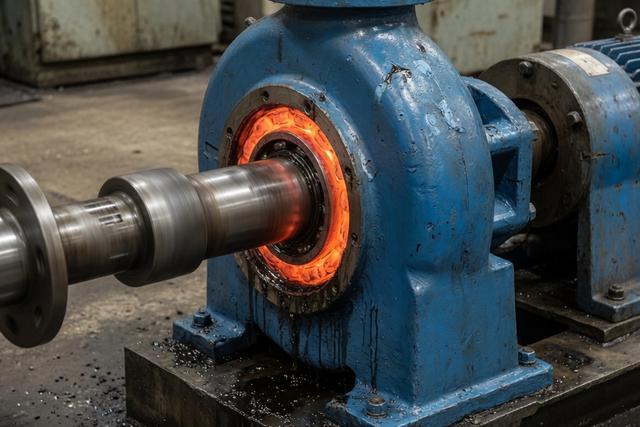
Industrial equipment operating under high temperatures places significant demands on lubricating grease. Bearings, electric motors, conveyors, steel processing equipment, ovens, dryers, and fans are often exposed to continuous heat that accelerates lubricant degradation.
One of the most common lubrication failures is grease oxidation. As oxidation progresses, grease gradually loses its lubricating properties, leading to increased friction, bearing wear, and unexpected equipment failures.
Understanding how oxidation occurs and selecting the proper high temperature grease can significantly improve equipment reliability and reduce maintenance costs.
What Is Grease Oxidation?
Grease oxidation is a chemical reaction between the lubricant and oxygen, accelerated by elevated temperatures. During oxidation:
- The base oil thickens.
- Oxidation by-products such as varnish and sludge are formed.
- Antioxidant additives are gradually depleted.
- Lubrication performance declines.
As oxidation progresses, the grease can no longer maintain an effective lubricating film between moving surfaces.
Why High Temperature Accelerates Oxidation
Temperature is one of the most important factors affecting grease life.
As operating temperature increases:
- Chemical reactions occur more rapidly.
- Base oil evaporates faster.
- Oxidation additives are consumed more quickly.
- Grease consistency changes.
- Lubrication intervals become shorter.
For many lubricants, a sustained increase in operating temperature can significantly reduce grease service life. The exact effect depends on the grease formulation and operating conditions.
Common Symptoms of Grease Oxidation
Early detection helps prevent bearing failure.
Typical signs include:
- Grease changing from its original color to dark brown or black
- Hard or dry grease texture
- Oil separation
- Increased bearing temperature
- Rising vibration levels
- Abnormal bearing noise
- Shortened relubrication intervals
If these symptoms appear, the grease should be inspected and, if necessary, replaced.
Common Causes of High Temperature Grease Failure
1. Continuous High Operating Temperature
Equipment such as:
- Steel mill rollers
- Drying ovens
- Industrial furnaces
- Electric motors
- High-speed fans
may operate continuously under elevated temperatures, accelerating oxidation.
2. Improper Grease Selection
Using general-purpose grease in high-temperature applications may lead to:
- Rapid oxidation
- Oil evaporation
- Grease hardening
- Bearing overheating
Selecting grease designed for elevated temperatures is essential.
3. Excessive Relubrication Intervals
Even high-quality grease has a finite service life.
If relubrication is delayed:
- Oxidation products accumulate.
- Lubrication performance decreases.
- Bearing temperatures increase.
A preventive maintenance schedule helps minimize these risks.
4. Contamination
Water, dust, and metal particles can accelerate grease degradation and oxidation.
Good sealing and clean lubrication practices are important for extending grease life.
How to Reduce Grease Oxidation
Choose Oxidation-Resistant Grease
Synthetic lubricants generally offer better oxidation stability than conventional mineral oil greases.
Benefits include:
- Longer service life
- Improved thermal stability
- Lower evaporation
- Better performance at elevated temperatures
Select the Correct Thickener System
High-temperature greases commonly use thickener systems designed to maintain mechanical stability under heat.
Selection should consider:
- Operating temperature
- Rotational speed
- Bearing type
- Relubrication interval
Monitor Bearing Temperature
Regular condition monitoring helps identify:
- Abnormal temperature increases
- Lubrication degradation
- Potential equipment failures
Infrared thermography and vibration monitoring are commonly used predictive maintenance tools.
Avoid Mixing Different Greases
Mixing incompatible grease formulations may reduce oxidation resistance and mechanical stability.
Whenever practical:
- Remove old grease before changing products.
- Confirm grease compatibility.
- Follow manufacturer recommendations.
Recommended Grease for High Temperature Applications
High Temperature Bearings
Recommended Products:
- Klüber PETAMO GHY 133N
- Kyodo Yushi Multemp PS No.2
Suitable for:
- Electric motors
- Dryers
- High-temperature bearings
- Industrial fans
Heavy Load and High Temperature
Recommended Products:
- Molykote BR2 Plus
- SKF LGEM 2
Suitable for:
- Heavy industrial bearings
- Mining equipment
- Construction machinery
High-Speed and Elevated Temperature
Recommended Products:
- Klüber ISOFLEX TOPAS NB 52
- NSK LR3
Suitable for:
- High-speed motors
- CNC machine tool spindles
- Precision bearings
Extreme Temperature and Chemically Aggressive Environments
Recommended Products:
- PFPE-based greases, such as those used in semiconductor, aerospace, and vacuum equipment, where excellent thermal stability, low volatility, and chemical inertness are required.
Best Practices for High Temperature Lubrication
- Select grease according to the equipment manufacturer's recommendations.
- Avoid over-lubrication, which can increase operating temperatures.
- Replace oxidized grease before severe degradation occurs.
- Monitor bearing temperature and vibration regularly.
- Store grease in clean, dry conditions to preserve its performance.
- Verify compatibility before switching to a different grease.
Conclusion
Grease oxidation is one of the primary causes of lubrication failure in high-temperature environments. Proper grease selection, routine condition monitoring, and preventive maintenance can significantly extend bearing life and improve equipment reliability.
Choosing an oxidation-resistant high temperature grease that matches the operating conditions is an effective way to reduce downtime and lower maintenance costs.
Frequently Asked Questions
How can I tell if grease has oxidized?
Common signs include darkened color, hardened texture, increased bearing temperature, unusual noise, shorter grease life, and the formation of varnish or sludge.
Can oxidation be completely prevented?
No. Oxidation is a natural aging process. However, selecting a grease with good oxidation stability, controlling operating temperatures, and following appropriate maintenance intervals can greatly slow its progression.
Is synthetic grease always better for high temperatures?
Synthetic greases generally provide better oxidation resistance and thermal stability than mineral oil greases, but the best choice depends on the application's temperature, load, speed, environment, and equipment requirements.
Grease Oil Separation: Causes, Effects and Prevention
Bearing Overheating: Is It Related to Grease?
Related Article