Grease Starvation in Bearings: Causes, Effects and Solutions
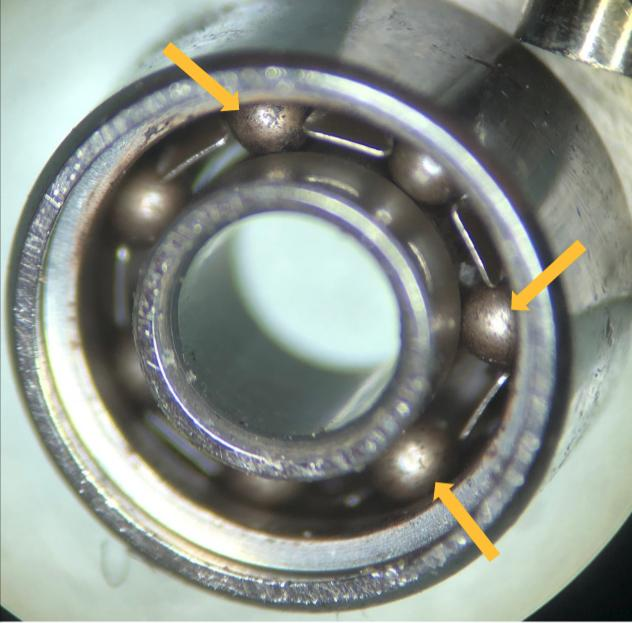
Proper grease supply is essential for maintaining a stable lubricating film between bearing rolling elements and raceways. However, many industrial bearing failures are not caused by poor-quality grease, but by insufficient grease supply, commonly known as grease starvation.
Grease starvation occurs when the amount of available lubricant is not enough to maintain effective lubrication during operation. This condition can lead to increased friction, overheating, accelerated wear, and premature bearing failure.
Understanding the causes of bearing lubrication failure caused by grease starvation helps improve equipment reliability and reduce unexpected downtime.
What Is Grease Starvation?
Grease starvation refers to a condition where the bearing does not receive enough lubricant to maintain proper lubrication.
Unlike oil lubrication systems that continuously supply lubricant, grease-lubricated bearings depend on:
- Initial grease filling
- Oil release from grease structure
- Grease migration inside the bearing
When lubricant availability becomes insufficient, the protective oil film between metal surfaces becomes unstable.
1. Insufficient Initial Grease Filling
One of the most common causes of grease starvation is insufficient grease quantity during initial installation.
Possible reasons include:
- Incorrect calculation of grease filling amount
- Incomplete bearing lubrication during assembly
- Loss of grease during transportation or installation
Effects
- Increased friction
- Higher bearing temperature
- Abnormal noise
- Accelerated wear
Solution
Follow the bearing manufacturer's recommended grease quantity based on:
- Bearing size
- Speed
- Operating temperature
- Application requirements
2. Excessive Grease Leakage
Grease starvation can occur when grease escapes from the bearing housing.
Common causes:
- Damaged seals
- Incorrect sealing design
- High operating temperature
- Excessive centrifugal force
Typical applications:
- High-speed motors
- Fans
- Pumps
- Machine tool spindles
Solution
Check:
- Seal condition
- Housing design
- Grease compatibility
3. Incorrect Relubrication Interval
Maintenance intervals that are too long can result in grease depletion.
Over time:
- Base oil is consumed.
- Grease dries out.
- Lubricating film becomes insufficient.
Signs include:
- Increased vibration
- Rising temperature
- Bearing noise
Solution
Establish relubrication schedules based on:
- Operating speed
- Load
- Temperature
- Working environment
4. High-Speed Operation
High-speed bearings are more sensitive to grease starvation.
At high rotational speeds:
- Oil is consumed faster.
- Centrifugal forces affect grease distribution.
- Friction heat increases.
Applications:
- CNC spindle bearings
- Precision motors
- High-speed fans
Recommended Grease
- Klüber ISOFLEX TOPAS NB 52
- NSK LR3
Features:
- Low friction
- Excellent oil release characteristics
- High-speed stability
5. High Operating Temperature
High temperature accelerates grease degradation.
Effects include:
- Faster base oil evaporation
- Oxidation
- Grease hardening
- Reduced oil release
Typical applications:
- Steel equipment
- Drying ovens
- High-temperature motors
Recommended Grease
- Klüber PETAMO GHY 133N
- Kyodo Yushi Multemp PS No.2
6. Incorrect Grease Selection
Some grease formulations cannot provide sufficient oil release under specific conditions.
Examples:
- Low oil separation grease used in applications requiring continuous oil release
- Incorrect base oil viscosity
- Unsuitable thickener system
Selection should consider:
- Bearing speed
- Load
- Temperature
- Service life requirements
7. Grease Hardening
Aged or unsuitable grease may become hard and unable to flow into the contact area.
Causes:
- Oxidation
- High temperature exposure
- Long service intervals
- Contamination
Results:
- Poor grease distribution
- Reduced lubrication film
- Bearing overheating
8. Contamination Blocking Grease Flow
Dust, metal particles, and degraded grease can prevent proper lubricant movement.
Contamination may cause:
- Grease channel formation
- Uneven lubrication
- Local dry running
Prevention
- Keep lubrication points clean.
- Use sealed grease containers.
- Replace contaminated grease.
Effects of Grease Starvation on Bearings
Insufficient grease supply may cause:
Increased Friction
Less lubricant film results in more direct contact between surfaces.
Higher Temperature
Friction heat increases rapidly.
Wear and Surface Damage
Possible damage includes:
- Raceway wear
- Rolling element damage
- Surface fatigue
Shortened Bearing Life
Long-term grease starvation may lead to premature bearing failure.
How to Prevent Grease Starvation
1. Use the Correct Grease Quantity
Avoid:
- Under-greasing
- Over-greasing
The correct amount depends on bearing design and operating conditions.
2. Select Suitable Grease
Consider:
- Speed
- Temperature
- Load
- Environment
3. Establish Proper Maintenance Intervals
Regular inspection should include:
- Bearing temperature
- Noise
- Vibration
- Grease condition
4. Check Sealing Performance
Good seals prevent:
- Grease leakage
- Contaminant entry
5. Use Automatic Lubrication Systems When Necessary
For equipment with:
- Continuous operation
- Difficult access
- High maintenance requirements
Automatic grease lubrication can provide a more stable grease supply.
Recommended Grease Selection Guide
| Application | Recommended Grease | Features |
|---|---|---|
| CNC spindle/high speed bearing | Klüber ISOFLEX TOPAS NB 52 | Low friction, high-speed stability |
| Electric motor bearing | NSK LR3, Kyodo Yushi Multemp SRL | Low noise, long life |
| Heavy load equipment | SKF LGEM 2, Molykote BR2 Plus | Wear protection, EP performance |
| High temperature equipment | Klüber PETAMO GHY 133N | Oxidation resistance |
| Wet environment | SKF LGWM 2 | Water resistance |
Frequently Asked Questions
Is grease starvation the same as using low-quality grease?
No. Grease starvation means the bearing does not receive enough effective lubricant. Even high-quality grease can fail if the quantity, distribution, or maintenance interval is incorrect.
Can adding more grease solve grease starvation?
Not always. Excessive grease may increase friction and temperature. The correct solution depends on the actual cause of insufficient lubrication.
How can I identify grease starvation?
Common signs include:
- Increased bearing temperature
- Abnormal noise
- Increased vibration
- Dry or hardened grease
- Accelerated wear
Conclusion
Grease starvation is a common but preventable cause of bearing lubrication failure. Correct grease selection, proper filling quantity, regular maintenance, and suitable sealing protection are essential for maintaining reliable lubrication.
For high-performance industrial equipment, selecting the right bearing grease according to operating conditions can significantly extend bearing life and reduce unexpected downtime.
How to Extend Grease Relubrication Intervals: Practical Guide
Water Washout Effects on Bearing Lubrication and Solutions
Related Article