Grease and Seal Compatibility: A Practical Guide
The right grease can still cause problems if it is incompatible with the seal.
In bearings, motors, pumps, gearboxes and industrial machinery, grease comes into direct or indirect contact with sealing materials. An unsuitable lubricant may cause the seal to swell, soften, harden or shrink, eventually resulting in grease leakage or contamination.
Understanding grease seal compatibility is therefore an important part of reliable lubrication system design.
Why Does Grease Affect Seals?
A grease is not simply oil. It normally contains:
- Base oil
- Thickener
- Additives
Different formulations can interact differently with elastomer materials used in seals.
The compatibility of a lubrication system depends on both the grease formulation and the seal material.
1. Seal Swelling
Some lubricant components may cause certain elastomers to absorb oil and increase in volume.
An excessively swollen seal may:
- Lose its designed geometry
- Increase friction
- Lose sealing effectiveness
- Become damaged during operation
This can eventually cause grease leakage.
2. Seal Hardening
High temperature, oxidation products or incompatible lubricant components may contribute to seal hardening.
A hardened seal can lose its elasticity and sealing ability.
Typical symptoms include:
- Cracks
- Reduced flexibility
- Grease leakage
- Dust or water ingress
3. Seal Shrinkage
In some cases, interaction with a lubricant may cause an elastomer to lose certain components and shrink.
A reduced seal size can create a gap between the seal and mating surface.
This increases the risk of:
- Grease leakage
- Water ingress
- Dust contamination
- Bearing damage
4. Temperature Makes Compatibility More Critical
Seal compatibility should not be evaluated only at room temperature.
As operating temperature increases, interactions between grease and elastomer materials may become more significant.
Consider:
- Continuous operating temperature
- Peak temperature
- Exposure time
- Grease type
- Seal material
For high-temperature equipment, both the lubricant and seal manufacturer's technical data should be checked.
5. Common Seal Materials
Industrial sealing systems may use materials such as:
- NBR
- FKM
- EPDM
- PTFE
- Silicone
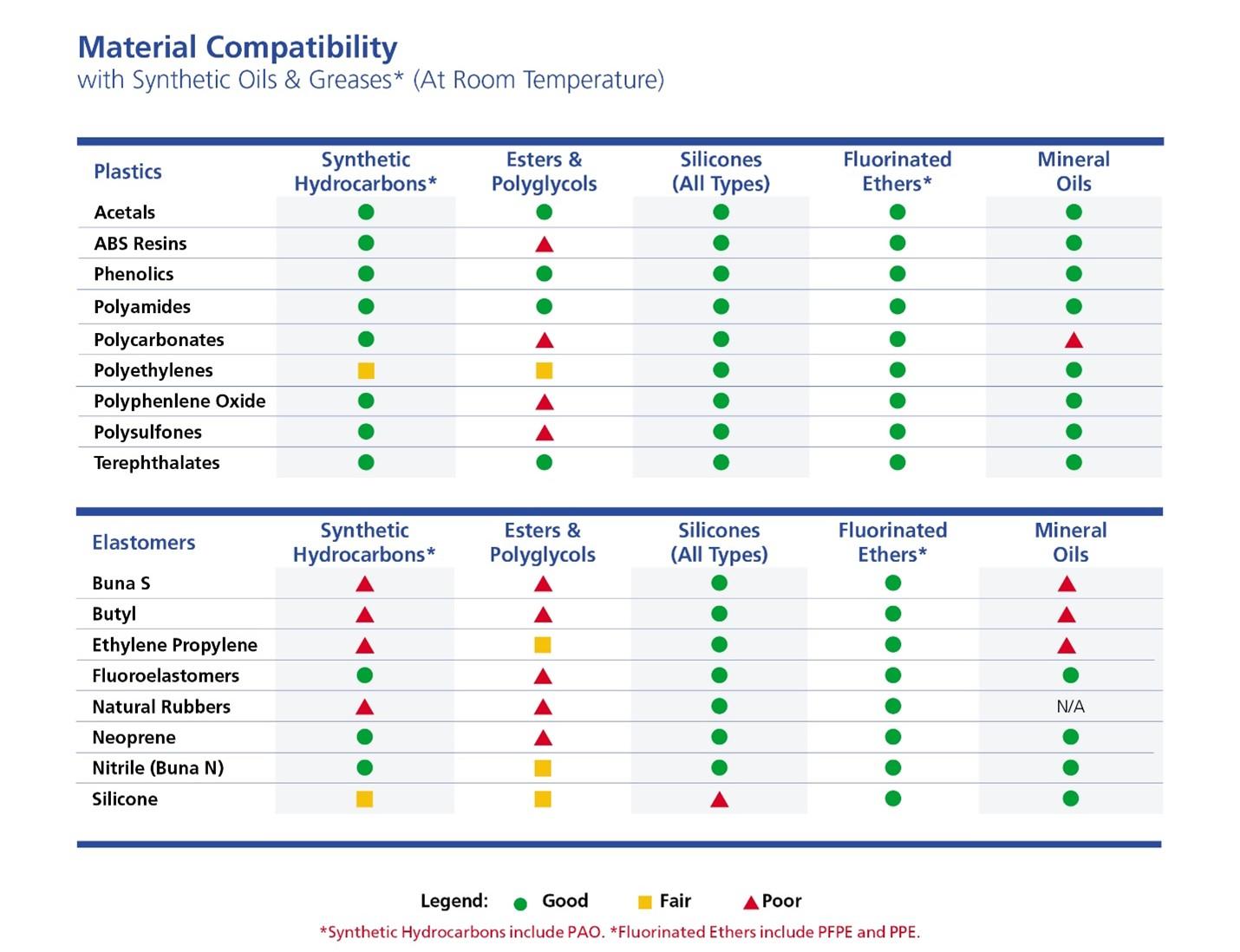
However, the same grease cannot be assumed to be compatible with every material.
For example, a lubricant suitable for an FKM seal should not automatically be considered suitable for EPDM.
Actual compatibility should be verified for the specific formulation and operating conditions.
6. PFPE Grease and Seal Compatibility
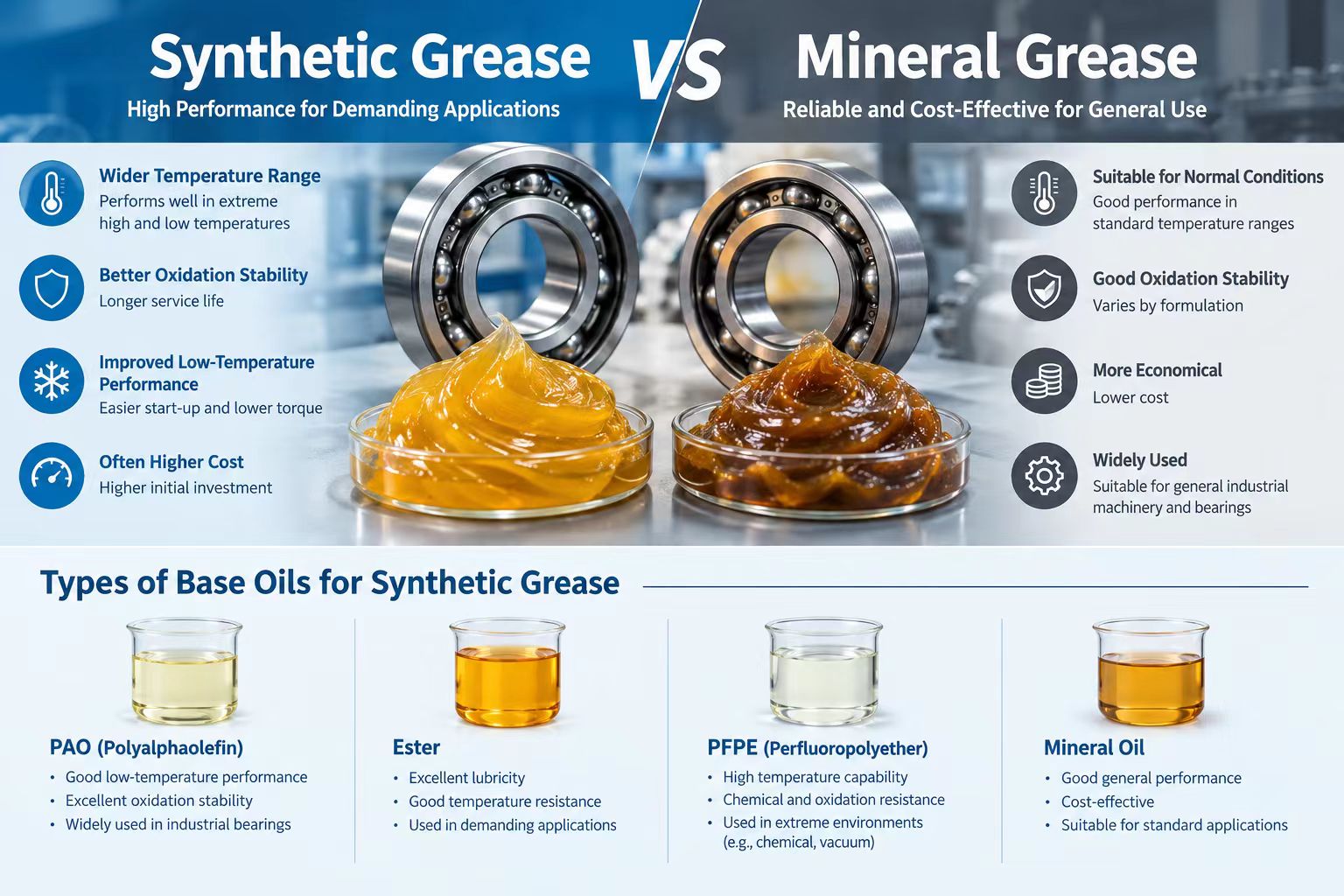
PFPE-based lubricants are often selected for demanding environments because of their chemical stability and wide temperature capability.
Products from brands such as Fomblin, Klüber and other specialty lubricant manufacturers are used in specific high-temperature, vacuum or chemically aggressive applications.
However, PFPE compatibility should still be evaluated against the actual seal material and application.
Example
PFPE-based grease may be considered for:
- High-temperature equipment
- Vacuum applications
- Chemically aggressive environments
- Specialty industrial equipment
Do not assume that “PFPE” automatically means compatible with every elastomer.
How to Check Grease and Seal Compatibility
Before selecting a grease, check these four factors:
1. Grease Formulation
Consider:
- Base oil
- Thickener
- Additives
2. Seal Material
Confirm whether the seal is:
- NBR
- FKM
- EPDM
- PTFE
- Silicone
3. Operating Temperature
Check both:
- Normal operating temperature
- Maximum temperature
4. Manufacturer Compatibility Data
The most reliable approach is to consult the grease and seal manufacturers' technical documentation or conduct a compatibility test when necessary.
Typical Problems Caused by Poor Compatibility
| Problem | Possible Result |
|---|---|
| Seal swelling | Increased friction, deformation |
| Seal hardening | Leakage, cracking |
| Seal shrinkage | Loss of sealing |
| Grease leakage | Insufficient lubrication |
| Water ingress | Corrosion |
| Dust ingress | Abrasive wear |
Recommended Grease Selection Approach
Instead of asking only:
“Which grease is suitable for this bearing?”
also ask:
“Is this grease compatible with the seal material?”
For applications using products from Klüber, SKF, NSK, Molykote, Kyodo Yushi, Shin-Etsu, Daikin, Fomblin and other manufacturers, selection should be based on the exact product formulation and application conditions.
For critical applications, verify:
Grease + Seal Material + Temperature + Speed + Load + Environment
before changing lubricant.
How to Prevent Compatibility Problems
✔ Identify the seal material
Do not select grease without knowing the elastomer or sealing material when compatibility is critical.
✔ Check the lubricant manufacturer's data
Look for seal compatibility or elastomer compatibility information.
✔ Avoid unnecessary grease changes
Changing from one grease formulation to another without compatibility verification can create unexpected problems.
✔ Test critical applications
For high-value or safety-critical equipment, compatibility testing is preferable to relying only on general material charts.
Frequently Asked Questions
Can any bearing grease be used with NBR seals?
No. NBR has good compatibility with many lubricant systems, but compatibility still depends on the specific grease formulation, temperature and operating conditions.
Is PFPE grease compatible with all seals?
No. PFPE lubricants have excellent chemical stability, but compatibility must still be evaluated for the specific seal material and application.
What happens if grease is incompatible with a seal?
The seal may swell, harden, shrink or lose elasticity, potentially causing lubricant leakage and contamination.
Should the seal be replaced when changing grease?
Not necessarily. If the new grease is confirmed compatible with the existing seal material, replacement may not be required. If compatibility is uncertain, testing or seal replacement may be appropriate.
Conclusion
Grease seal compatibility is an often-overlooked part of lubrication selection.
An unsuitable grease can damage the sealing system even when the lubricant itself performs well on the bearing.
Before selecting or changing grease, evaluate the complete system:
Grease formulation + Seal material + Temperature + Operating conditions
For critical industrial applications, checking manufacturer compatibility data or conducting a material compatibility test is the safest approach.
Why Cheap Grease Can Cost More in the Long Run
How to Extend Grease Relubrication Intervals: Practical Guide
Related Article