Global Lubricating Grease Market Trends Analysis
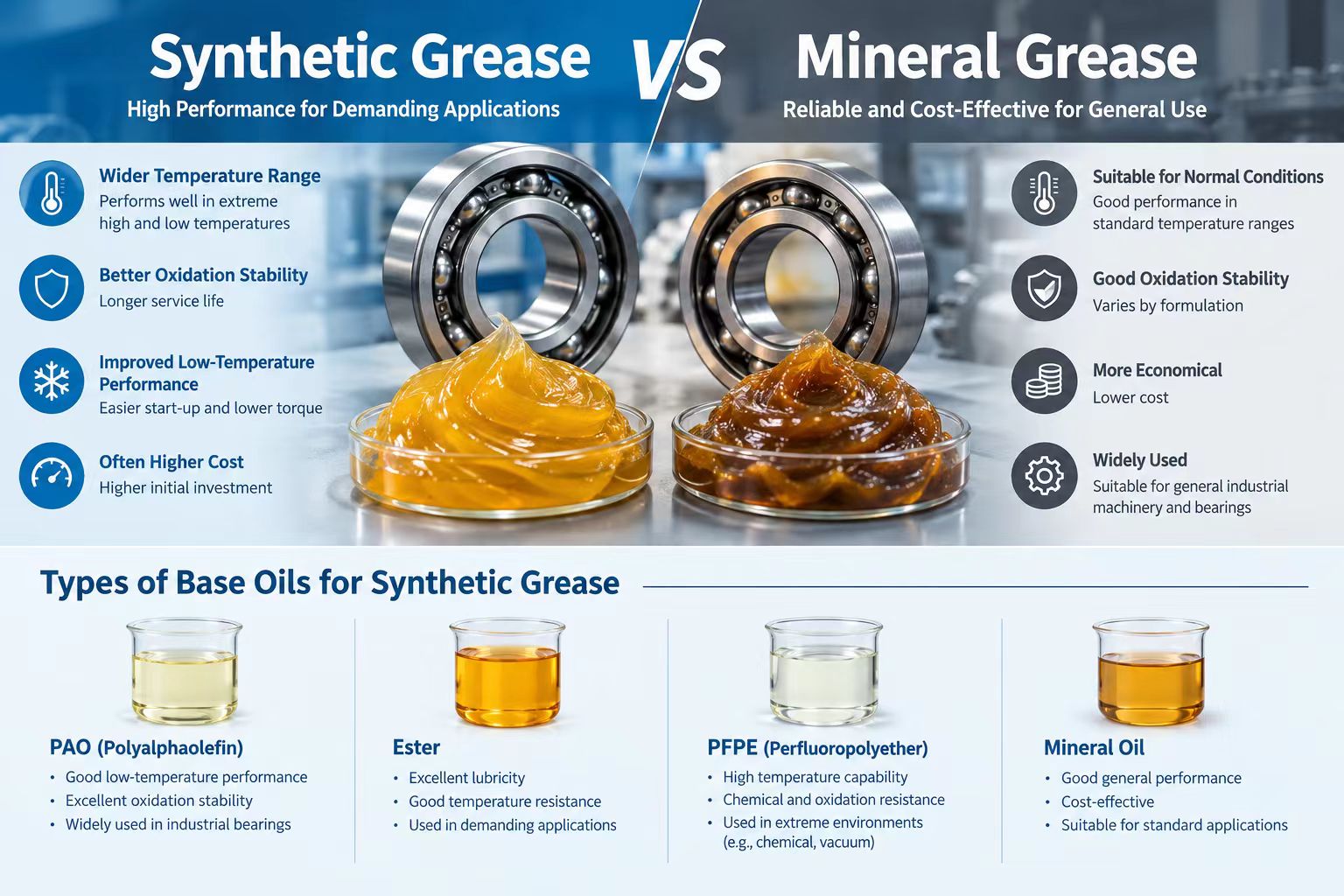
In recent years, the global lubricating grease market has been evolving due to technological innovations, environmental regulations, and changing industrial demands. This article analyzes the latest trends from market size, demand shifts, environmental policies, and new technological applications.
1. Market Size and Growth Trends
According to market research reports, the global lubricating grease market is expected to continue growing in the coming years. In 2023, the global lubricant market was valued at approximately $160 billion, and it is projected to exceed $200 billion by 2030, with a compound annual growth rate (CAGR) of 3%-4%.
Key drivers of market growth include:
- Rise of Industrial Automation: Increased demand for high-performance lubricants in manufacturing, machine tools, automotive, and aerospace industries.
- Growth of the New Energy Sector: Expanding demand for specialty lubricants in electric vehicles (EVs), wind energy, and other renewable energy applications.
- Industrial Expansion in Asia-Pacific: Rapid industrialization in China, India, and other developing countries makes this region a crucial growth area for the lubricants market.
2. Shifting Demand: High-Performance & Customization Trends
(1) Increasing Demand for High-Temperature, High-Speed, and Heavy-Load Lubricants
As industrial environments become more demanding, there is a growing need for lubricating greases with high-temperature resistance, corrosion protection, and ultra-low friction. For example:
- Semiconductor and Precision Manufacturing Industries: Require ultra-low volatility, high-purity lubricants such as KRYTOX and KLUBER.
- Wind Energy, Mining, and Steel Industries: Demand lubricants capable of withstanding extreme environments, such as NSK and LUBE high-load lubricating greases.
(2) Rising Demand for Lubricants in Electric Vehicles (EVs)
Electric vehicle powertrains differ from traditional internal combustion engines, requiring new lubrication solutions:
- Low-Noise, Low-Friction Greases: Used in EV gearboxes and bearings, provided by brands like DUPONT and KLUBER.
- High-Voltage Insulating Greases: Designed for electric motor bearings and electronic systems, such as XIAOYICHONG’s specialized lubricants.
(3) Sustainability and Environmental Compliance
Companies are increasingly selecting biodegradable, low-VOC emission lubricants to comply with global environmental regulations:
- Europe and North America’s strict environmental policies are driving the growth of biodegradable synthetic lubricants (e.g., plant-based greases).
- PFOA-free (Perfluorooctanoic Acid-Free) lubricants are gaining traction, with DUPONT and KLUBER leading innovations in this space.
3. Impact of Environmental Regulations
Several countries are tightening environmental regulations, directly affecting the production and use of lubricating greases:
- EU REACH Regulations: Restricting the use of certain chemicals, pushing the industry toward eco-friendly alternatives.
- China’s "Dual Carbon" Policy (Carbon Peak & Carbon Neutrality): Accelerating the adoption of energy-efficient lubricants, such as low-friction, energy-saving greases.
- US Environmental Protection Agency (EPA) Regulations: Encouraging the use of low-emission, biodegradable lubricants.
These policies are pushing the lubricating grease industry toward low-pollution, high-performance, and environmentally friendly solutions.
4. Technological Innovations & Future Developments
(1) Nano Lubricating Greases
Nano-material-based lubricants (such as graphene and molybdenum disulfide) can significantly reduce friction and extend equipment lifespan, making them ideal for aerospace, aviation, and high-precision manufacturing.
(2) AI and Smart Lubrication
The integration of AI and IoT (Internet of Things) in lubrication management is improving efficiency and reducing maintenance costs:
- Smart Lubrication Sensors: Real-time monitoring of lubricant conditions to optimize replacement schedules.
- Predictive Maintenance: AI-driven analysis of grease degradation to prevent equipment failures in advance.
(3) 3D Printing & New Lubricant Materials
The growing adoption of 3D-printed components is increasing the demand for specialized lubricants, such as ultra-low viscosity, high-wear-resistant lubricants.
5. Conclusion
The global lubricating grease market is undergoing technological advancements and evolving demand patterns. Future growth will be driven by:
✅ High-performance lubricants (high-temperature, high-speed, low-friction solutions)
✅ Expanding demand from EVs and the new energy sector
✅ Stronger environmental policies driving sustainable lubricant adoption
✅ Emerging smart lubrication technologies and AI monitoring
For businesses in the lubricants industry, capturing the high-end grease market and expanding into eco-friendly and new energy applications will be key strategies moving forward.
Some information comes from the internet, if there is infringement, please contact us at 13580828702.
Changes in the Automotive Industry's Demand for Grease
KLUBER Lubricating Grease: Ensuring Wind Turbine Reliability and Supporting Sustainable Development in the Wind Power Industry
Related Article