Selection of Anti-Stick and Anti-Wear Lubrication Materials in Electronic Component Assembly
In electronic component assembly processes, precision, cleanliness, and reliability are critical. Moving parts such as feeders, positioning mechanisms, sliders, guides, and micro-actuators are subject to repeated motion, light loads, and high cycle frequencies. Under these conditions, improper lubrication can lead to sticking, increased wear, contamination, and assembly defects.
Selecting suitable anti-stick and anti-wear lubrication materials is essential to ensure stable operation and consistent product quality.
1. Common Lubrication Challenges in Electronic Assembly
Electronic assembly environments present unique lubrication challenges, including:
-
Small contact areas and low operating loads
-
Frequent start-stop motion and micro-sliding
-
Sensitivity to contamination and residue
-
Requirement for cleanroom or low-outgassing conditions
Without appropriate lubrication, components may experience stick-slip behavior, surface wear, increased positioning errors, and shortened service life.
2. Role of Anti-Stick Lubricants
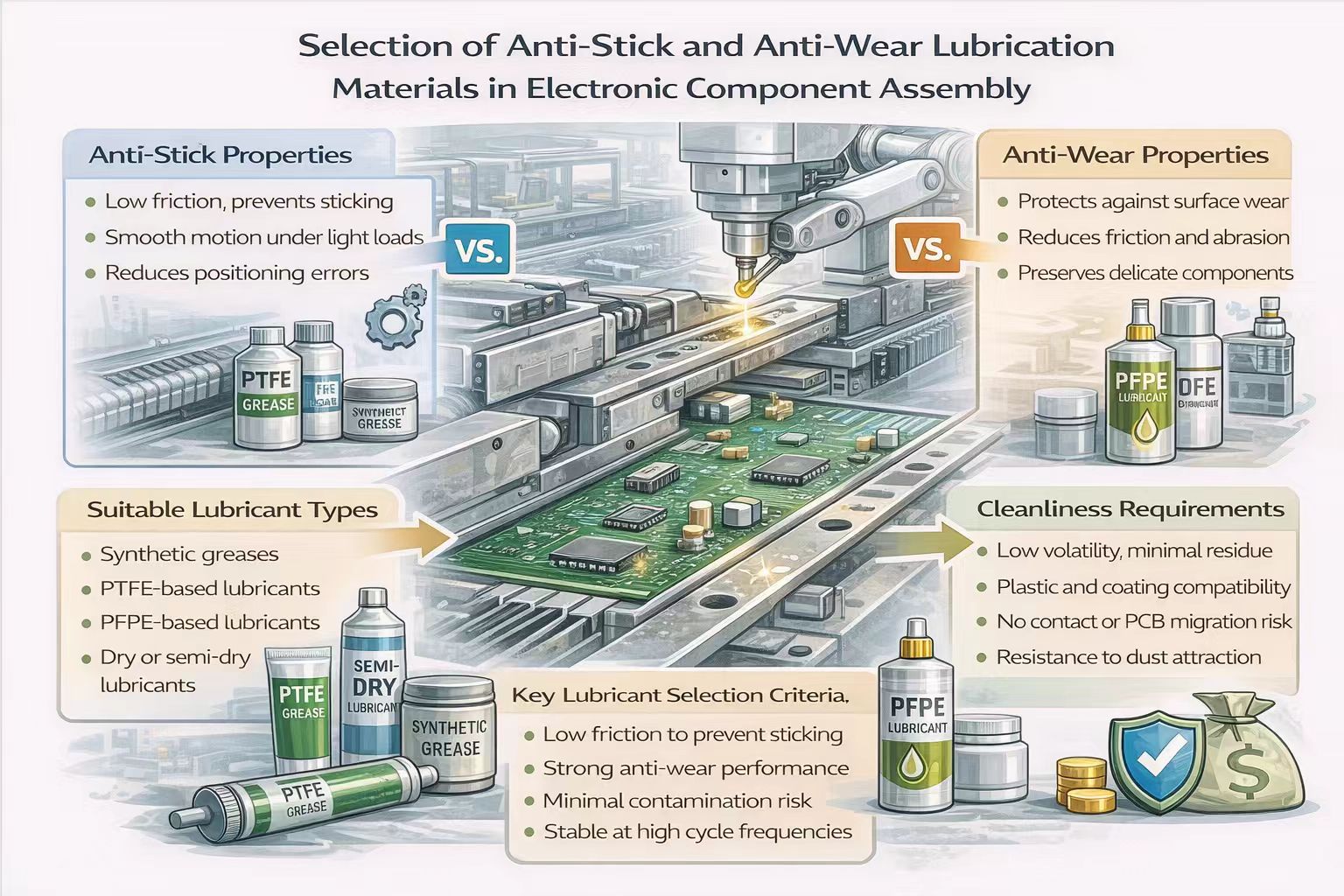
Anti-stick lubricants are designed to reduce surface adhesion and friction, particularly under boundary lubrication conditions. In electronic assembly equipment, they help:
-
Prevent sticking during low-speed or intermittent motion
-
Ensure smooth and repeatable positioning
-
Reduce vibration and noise in precision mechanisms
Lubricants with low friction coefficients and stable film formation are especially effective in minimizing stick-slip effects.
3. Anti-Wear Performance and Surface Protection
Even under light loads, repeated motion can cause gradual surface wear. Anti-wear lubrication materials protect contact surfaces by:
-
Forming a protective lubricating film
-
Reducing direct metal-to-metal contact
-
Minimizing surface fatigue and abrasion
Lubricants containing suitable anti-wear additives or solid lubricants such as PTFE are commonly used to enhance wear resistance without increasing contamination risk.
4. Lubricant Types Suitable for Electronic Assembly
Common lubrication materials used in electronic component assembly include:
-
Synthetic greases with controlled viscosity and low oil separation
-
PTFE-based lubricants for low friction and clean operation
-
PFPE-based lubricants for high temperature stability and low outgassing
-
Dry or semi-dry lubricants where minimal residue is required
These materials are selected based on compatibility with plastics, elastomers, and sensitive electronic components.
5. Cleanliness and Compatibility Considerations
Lubricants used in electronic assembly must meet strict cleanliness requirements:
-
Low volatility and minimal evaporation
-
No migration onto electronic contacts or PCB surfaces
-
Compatibility with plastics and coatings
-
Resistance to dust attraction
In cleanroom or high-precision environments, lubricants certified for low outgassing or clean manufacturing processes are often preferred.
Conclusion
In electronic component assembly, the selection of anti-stick and anti-wear lubrication materials directly affects equipment precision, reliability, and product quality. By choosing lubricants with low friction, strong anti-wear performance, and excellent cleanliness characteristics, manufacturers can reduce defects, extend equipment life, and maintain stable assembly processes.
Linear Guide Lubrication Selection and Maintenance Practices for SMT Equipment
Impact of Ball Screw and Guideway Lubrication on CNC Machining Accuracy
Related Article