Bearing Grease Hardening Causes and Solutions
Bearing grease hardening is a common lubrication failure that can lead to increased friction, overheating, noise, and premature bearing failure. Understanding the causes of grease hardening is essential for improving equipment reliability and extending service life.
This article explains the main bearing lubrication problems, reasons for grease degradation, and practical grease failure solutions.
What Does Grease Hardening Mean?
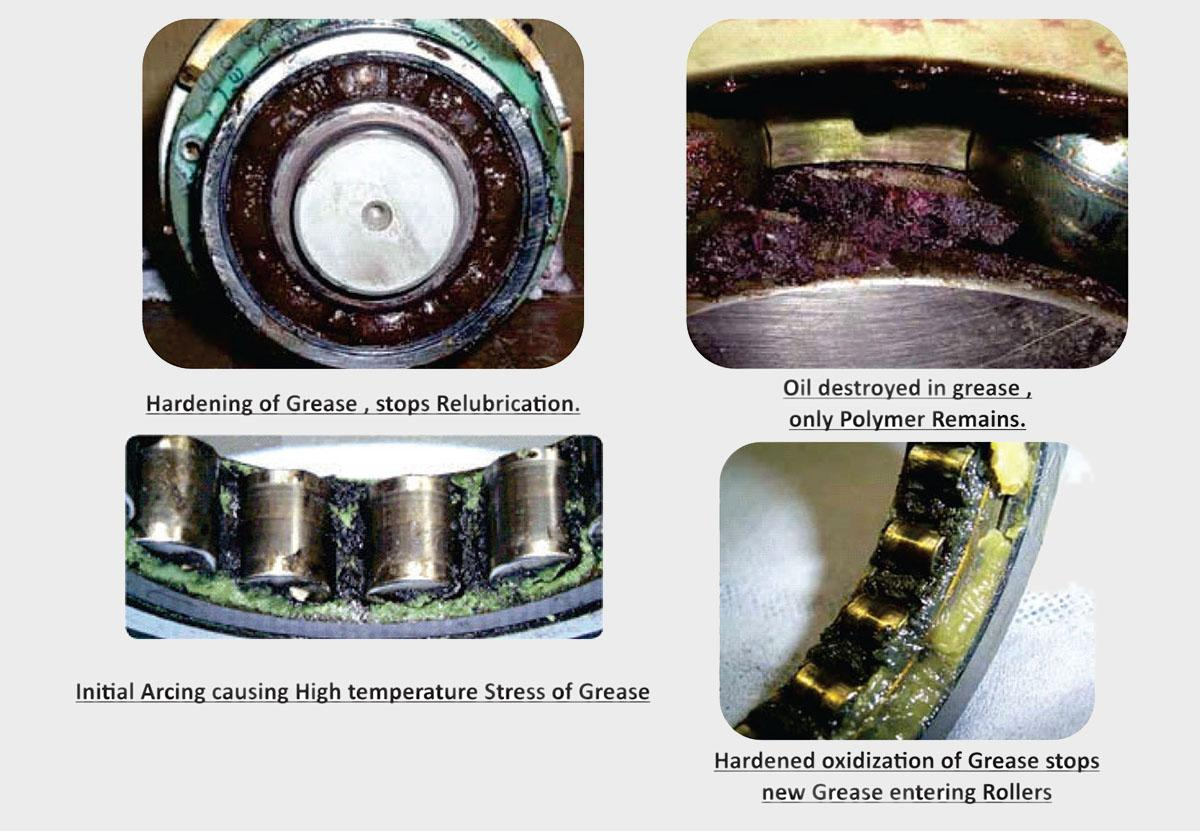
Grease hardening refers to the phenomenon where lubricating grease loses its original softness and becomes stiff, dry, or even solid-like. This reduces its ability to form an effective lubrication film inside the bearing.
Common symptoms include:
- Increased bearing noise
- Higher operating temperature
- Reduced rotation smoothness
- Increased power consumption
- Bearing seizure in severe cases
Main Causes of Bearing Grease Hardening
1. Oxidation of Base Oil
Oxidation is the most common cause of grease degradation.
It occurs due to:
- High operating temperature
- Long service time
- Exposure to air and oxygen
Result:
- Oil thickening
- Sludge formation
- Loss of lubrication performance
2. Oil Separation (Bleeding Loss)
When base oil separates from thickener:
- Remaining grease becomes dry and hard
- Lubrication film becomes insufficient
This is common in:
- Low-quality grease
- Overheated bearings
- Long storage conditions
3. Contamination
Dust, metal particles, and chemicals can:
- Absorb grease oil
- Break grease structure
- Accelerate hardening
Typical sources:
- Industrial dust
- Water ingress
- Process contamination
4. High Temperature Operation
Excessive heat causes:
- Thickener breakdown
- Evaporation of base oil
- Carbonization of residue
5. Incompatible Grease Mixing
Mixing different grease types can cause:
- Chemical reaction between thickeners
- Loss of consistency
- Rapid hardening or softening
How to Solve Bearing Grease Hardening Problems
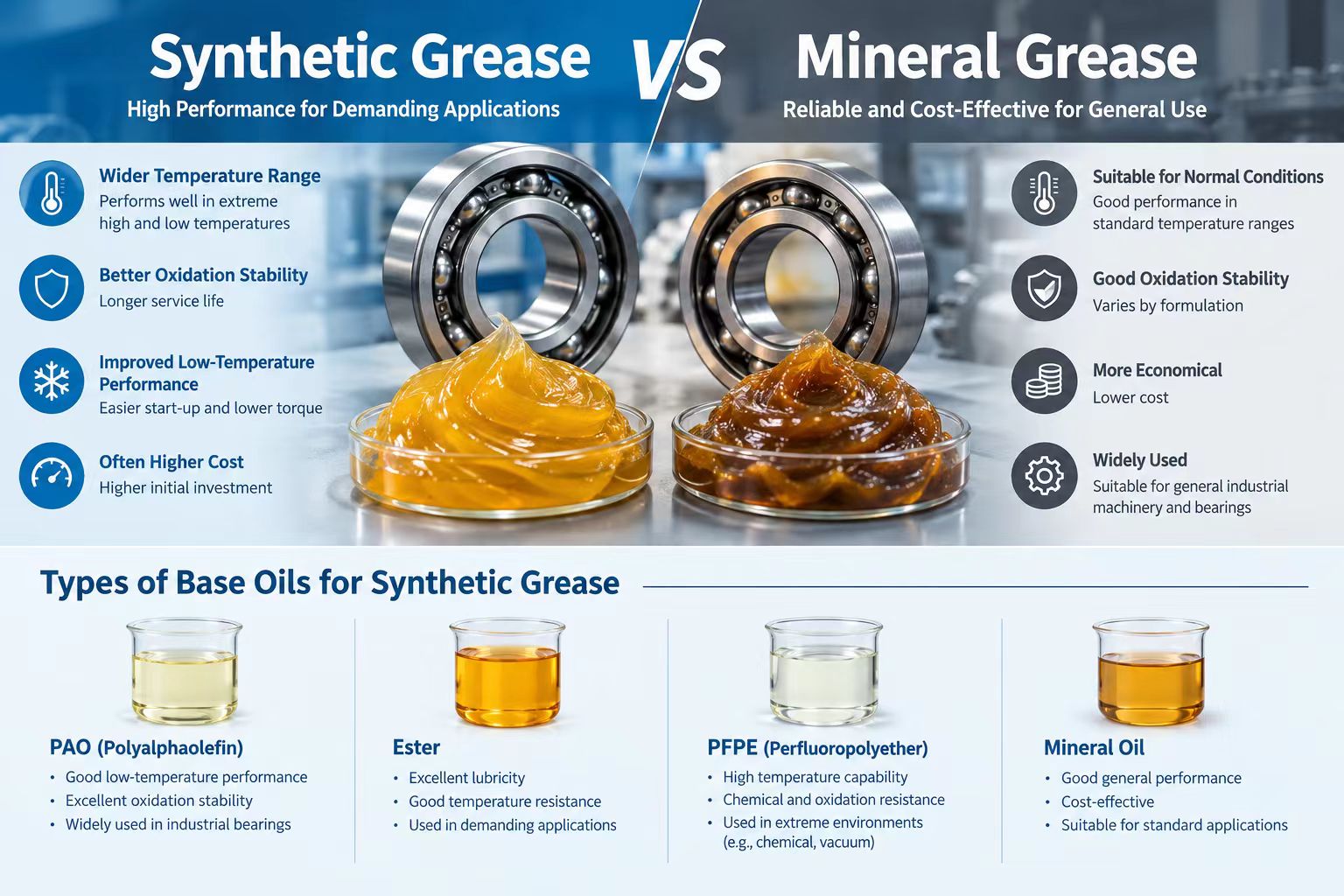
1. Use High-Quality Synthetic Grease
Synthetic greases offer:
- Better oxidation resistance
- Longer service life
- Stable viscosity under heat
2. Select Proper Thickener Type
Recommended options:
- Polyurea grease → long life, low noise
- Lithium complex → general industrial use
- Calcium sulfonate complex → water resistant, anti-corrosion
3. Improve Lubrication Interval Control
Avoid:
- Overdue relubrication
- Excessive grease aging
Implement:
- Regular maintenance schedule
- Condition monitoring
4. Prevent Contamination
Use:
- Sealed bearings
- Dust-proof systems
- Clean grease application tools
5. Avoid Grease Mixing
Always:
- Clean old grease before replacement
- Use compatible grease only
Recommended Bearing Grease Solutions
High Speed Bearings
- NSK LR3
- Kyodo Yushi Multemp SRL
General Industrial Bearings
- SKF LGMT 2
- Molykote BR2 Plus
High Temperature / Long Life
- Klüberplex BEM 41-132
- Klüber STABURAGS NBU 12
When to Replace Grease
Grease should be replaced if:
- Color becomes dark or black
- Texture becomes dry or hard
- Bearing temperature increases abnormally
- Noise or vibration increases
Conclusion
Bearing grease hardening is mainly caused by oxidation, contamination, oil separation, and improper grease selection. Using high-quality lubricants and following correct maintenance practices can significantly reduce bearing lubrication problems and improve equipment reliability.
Top 5 Causes of Grease Leakage and Oil Separation
Cleanroom Equipment Lubrication Solutions Guide
Related Article