? High Temperature vs High Speed: How to Choose the Right Grease?
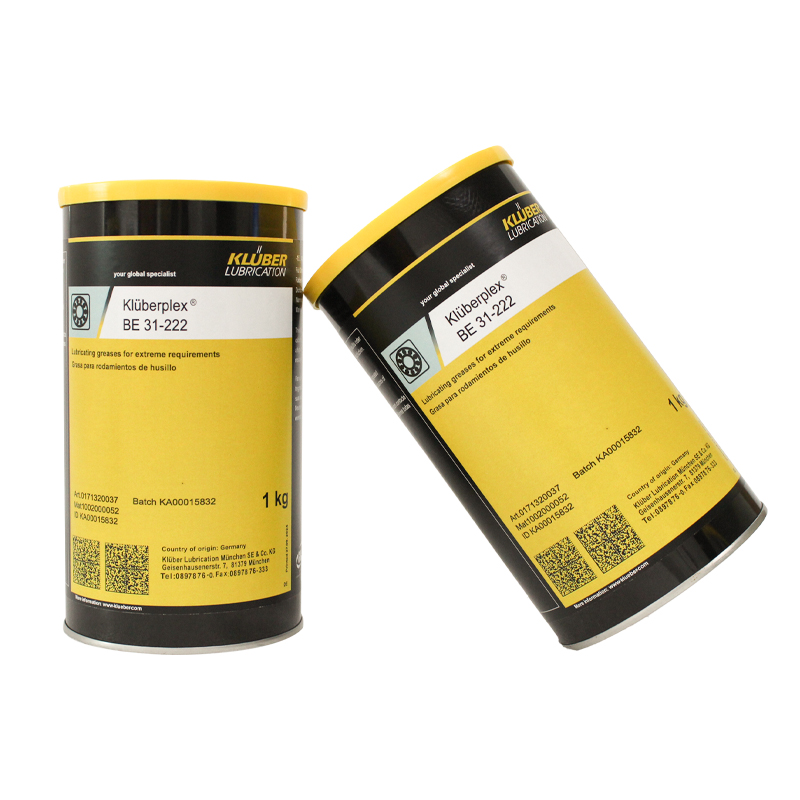
The selection of lubricating grease directly impacts the efficiency and lifespan of industrial equipment. Different operating environments impose distinct requirements on lubricants. This article provides guidance on selecting the appropriate grease for high-temperature and high-speed conditions.
? Key Considerations for High-Temperature Grease Selection
High-temperature environments demand lubricants with specific properties:
-
Dropping Point: The dropping point indicates the temperature at which grease transitions from solid to liquid. Ensure the grease's dropping point exceeds the maximum operating temperature to prevent leakage and degradation .
-
Oxidation Stability: High temperatures accelerate oxidation, leading to grease degradation. Choose greases with high oxidation resistance to maintain performance over time .
-
Base Oil Type: Synthetic base oils offer superior thermal stability compared to mineral oils, making them suitable for high-temperature applications .
-
Thickener Type: The thickener determines the grease's structural integrity at elevated temperatures. Aluminum complex and polyurea thickeners are known for their high-temperature performance .
⚙️ Key Considerations for High-Speed Grease Selection
High-speed applications require lubricants that can withstand rapid motion and associated stresses:
-
Speed Factor (DN or NDm Value): The speed factor, calculated by multiplying the bearing's inner diameter by its rotational speed, helps determine the appropriate grease properties .
-
Base Oil Viscosity: The viscosity of the base oil affects the formation of the lubricating film. For high-speed applications, lower viscosity oils are preferred to reduce drag and heat generation .
-
Channeling Characteristics: Greases with good channeling properties can effectively transport lubricant to the bearing surfaces, reducing friction and wear .
-
Dropping Point: A high dropping point ensures the grease remains stable and does not melt under high-speed conditions .
-
Thickener Type: The thickener should provide adequate lubrication without causing excessive friction. Lithium complex and polyurea thickeners are commonly used in high-speed applications .
? Comparative Overview: High-Temperature vs High-Speed Grease
| Property | High-Temperature Grease | High-Speed Grease |
|---|---|---|
| Dropping Point | High, to prevent melting | High, to maintain structural integrity |
| Oxidation Stability | High, to resist thermal degradation | Moderate, as oxidation is less of a concern |
| Base Oil Type | Synthetic for superior thermal stability | Synthetic or mineral, depending on application |
| Thickener Type | Aluminum complex, polyurea | Lithium complex, polyurea |
| Viscosity | Moderate to high, to maintain film strength | Low to moderate, to reduce drag |
| Channeling Properties | Not a primary concern | Essential for effective lubrication |
✅ Recommendations
-
High-Temperature Environments: Select greases with high dropping points, excellent oxidation stability, and synthetic base oils. Aluminum complex or polyurea thickeners are recommended for their high-temperature performance.
-
High-Speed Applications: Choose greases with low to moderate viscosity, good channeling properties, and high dropping points. Lithium complex or polyurea thickeners are suitable for high-speed conditions.
-
Dual-Condition Applications: For environments that experience both high temperatures and high speeds, select greases that meet the criteria for both conditions. It may be necessary to conduct field trials to ensure optimal performance.
Grease Storage & Handling Mistakes 90% of Users Make (and How to Avoid Them)
Has Your Grease Turned Black? FAQs on Grease in Service
Related Article