Maintenance Tip|How Often Should You Replace Grease?

In industrial maintenance, the grease replacement interval is a key factor in ensuring equipment longevity and performance. Overlubrication wastes resources; insufficient replacement risks failure. So, how often is "just right"?
✅ 1. Five Key Factors That Affect Grease Life
-
Operating Temperature
Grease oxidizes faster at high temperatures. At 180°C, some greases last less than 500 hours. -
Speed and Load
High-speed or high-load components (e.g. spindles, fans) shear grease faster, reducing its lifespan. -
Contamination
Dust, moisture, and chemicals accelerate grease degradation, requiring more frequent replacement. -
Grease Type
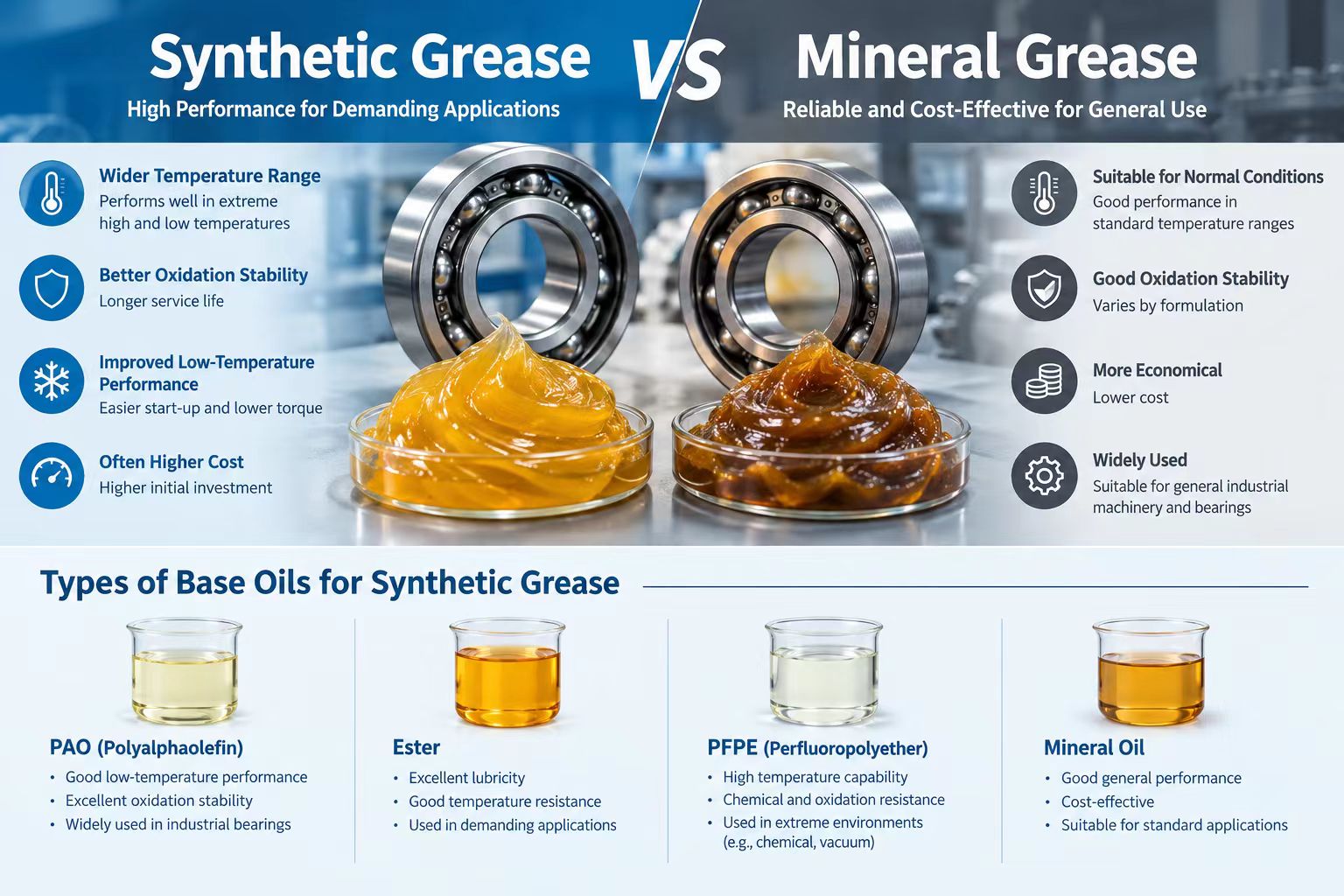
Polyurea and PFPE greases typically last longer than mineral-based ones. -
Lubrication Method
Automated or centralized systems often extend the interval compared to manual greasing.
✅ 2. Recommended Replacement Intervals by Application
| Equipment Type | Suggested Interval |
|---|---|
| Bearings (normal duty) | Every 6–12 months |
| High-speed motor bearings | Every 3–6 months |
| Fans and general motors | Every 3–12 months (load-based) |
| Injection mold guide pins | Every 1–2 months |
| Food-grade lubrication | Every 1–3 months or test-based |
| SMT nozzle sliding parts | Every 1–3 months (high use) |
✅ 3. Signs Your Grease Needs Changing
-
Discoloration or darkening
-
Strong or burnt odor
-
Thin, watery texture or hardened residue
-
Noise or friction increase during operation
-
Lab analysis shows drop in performance
✅ 4. Best Practices
-
Keep a lubrication logbook (date, quantity, product)
-
Use scheduled maintenance + condition-based monitoring
-
Choose premium greases with long service life (e.g. Kluber, Molykote, Krytox)
How to Tell If Grease Has Failed: 5 Key Failure Symptoms
SMT Nozzles Stuck or Slow? Lubrication Key Points and OEM Grease Recommendations
Related Article