The Role of Lubricants in Energy Efficiency and Maintenance Cost Control
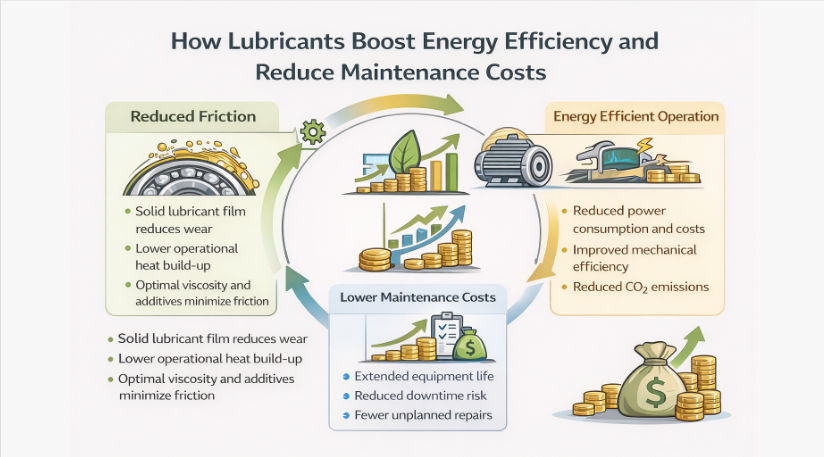
In modern industrial operations, lubricants play a critical role not only in equipment protection but also in improving energy efficiency and reducing overall maintenance costs. Proper lubricant selection and management directly influence friction losses, power consumption, component wear, and service intervals.
As manufacturers face increasing pressure to reduce operating costs and improve sustainability, lubrication strategy has become an essential part of energy and asset management.
1. Friction Reduction and Energy Savings
Friction is a major source of energy loss in mechanical systems. Bearings, gears, chains, and sliding components all consume power due to metal-to-metal contact.
High-performance lubricants help by:
-
Forming stable lubricant films that reduce friction
-
Maintaining consistent viscosity under operating temperatures
-
Minimizing internal resistance during startup and steady operation
In high-speed or continuous-duty equipment, reduced friction can lead to measurable reductions in energy consumption, especially in electric motors, conveyors, and automated production lines.
2. Lubricant Selection and Equipment Efficiency
The efficiency of a machine depends heavily on selecting a lubricant with the correct properties:
-
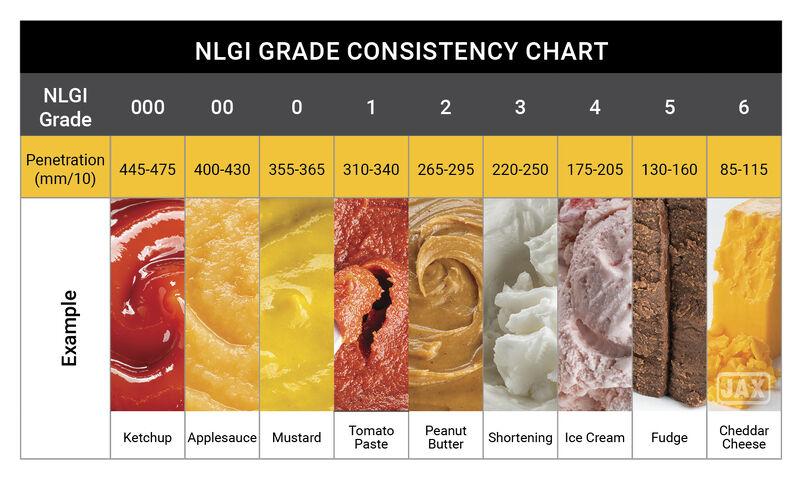
Viscosity: Too high increases drag and heat; too low reduces film strength
-
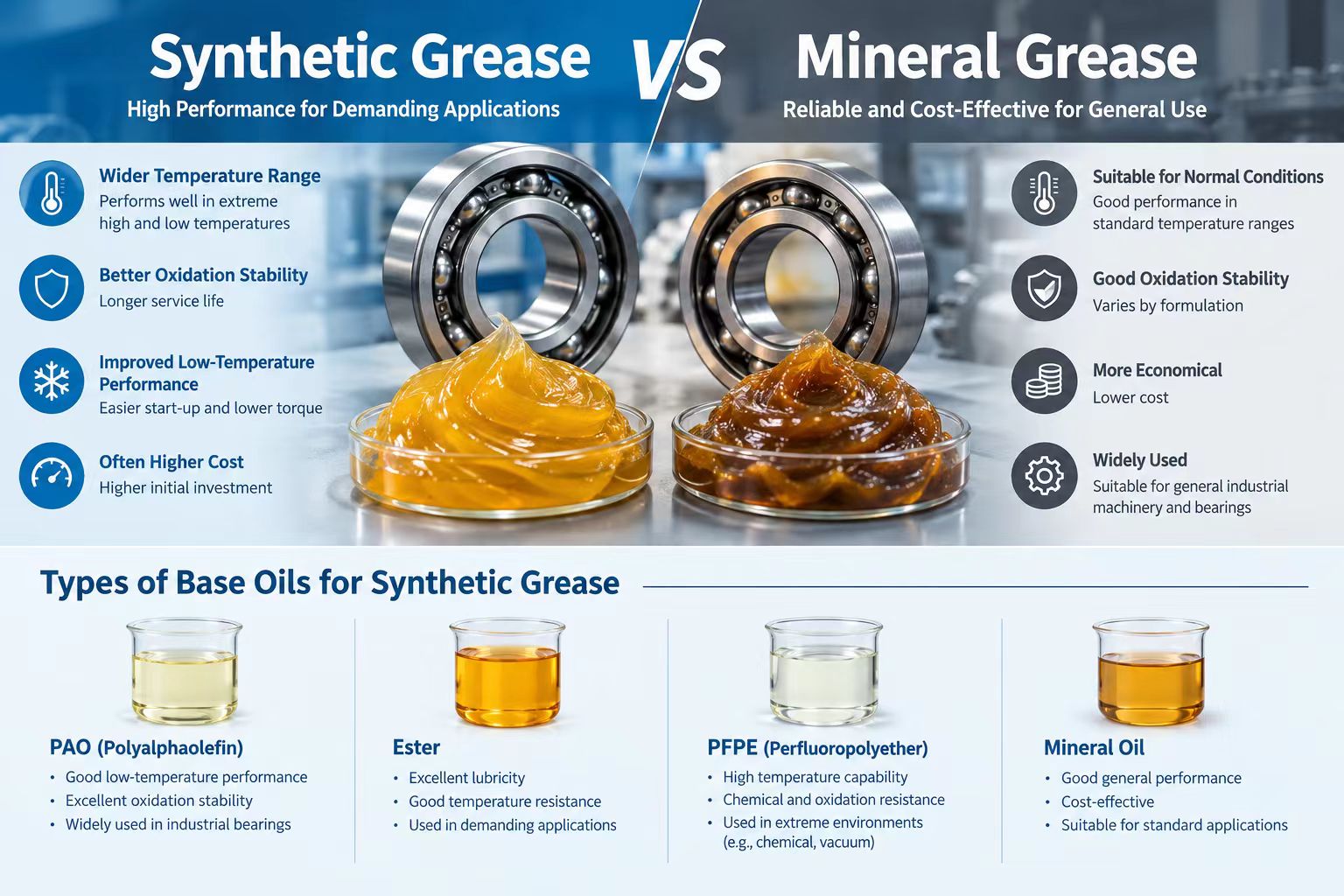
Base oil type: Synthetic oils offer better thermal stability and lower friction
-
Additive system: Anti-wear and friction-modifying additives improve efficiency
Optimized lubricant selection ensures smooth operation and avoids unnecessary energy losses caused by improper lubrication.
3. Extended Component Life and Reduced Maintenance
Effective lubrication significantly slows wear, corrosion, and surface fatigue. This leads to:
-
Longer bearing and gear service life
-
Fewer unplanned shutdowns
-
Reduced spare parts consumption
-
Lower labor and maintenance costs
By extending relubrication intervals and minimizing component replacement, lubricants contribute directly to lower total cost of ownership (TCO).
4. Reduced Downtime and Operational Stability
Unexpected equipment failure often results in high indirect costs, including production losses and emergency repairs. Stable lubrication performance helps maintain consistent operating conditions, reducing vibration, noise, and temperature fluctuations that can trigger premature failures.
Predictable lubrication performance also supports condition-based maintenance strategies.
5. Contribution to Sustainable Manufacturing
Energy-efficient lubrication supports sustainability goals by:
-
Lowering power consumption
-
Reducing lubricant usage through longer service life
-
Minimizing waste and disposal frequency
Modern industrial lubricants are increasingly designed to balance performance, efficiency, and environmental responsibility.
Conclusion
Lubricants are a key but often underestimated factor in energy efficiency and maintenance cost control. By reducing friction, extending component life, and stabilizing equipment performance, the right lubrication strategy delivers both operational and economic benefits. For industrial facilities seeking higher efficiency and lower lifecycle costs, lubrication optimization is a practical and cost-effective solution.
Lubrication Improvement Strategies for Wear Issues in Injection Molding Machine Guide Pillars and Slides
Long-Term Stable Performance of Panasonic MP Grease in SMT Placement Machines
Related Article